AI-Powered Hiring Platforms: What They Actually Do
By Sparsh Goyal, Founder at The Cognitive. Published · Last updated
- An AI-powered hiring platform is not one category with one job. It may handle sourcing, interviewing, scheduling, engagement, analytics, or workflow automation.
- The strongest comparison is not which vendor says AI most often. It is which part of the hiring process stops requiring manual work.
- The Cognitive is our product, and it is ranked first because it sources, interviews, and shortlists in one pipeline. Verify every vendor section independently.
- Published pricing matters, but workflow depth matters more. A cheap tool that adds another dashboard can cost more than a platform that removes recruiter and hiring manager hours.
- Most teams should keep their ATS for tracking and add AI where the bottleneck lives: candidate supply, interview capacity, consistency, or decision evidence.
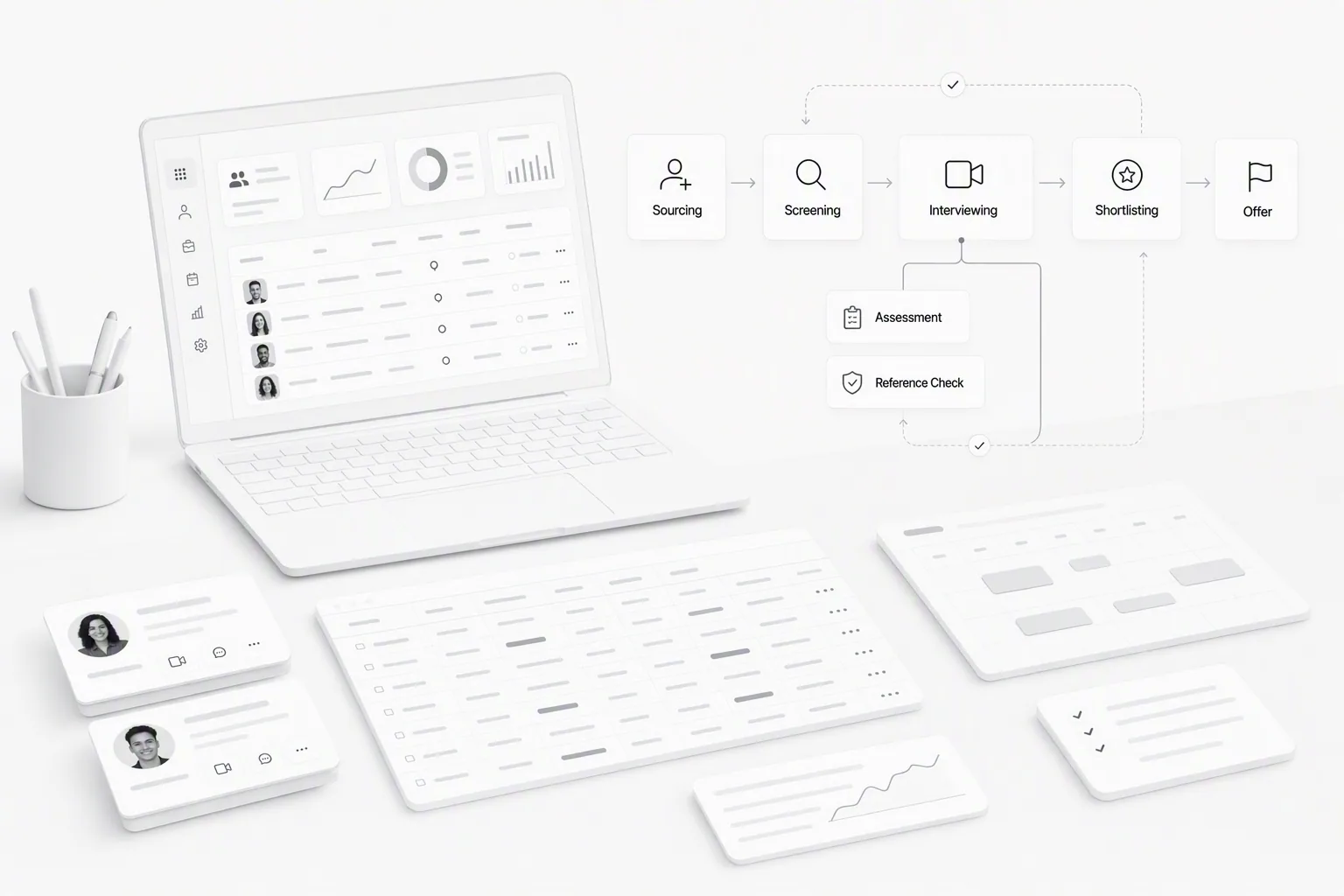
An AI-powered hiring platform changes one or more hiring bottlenecks: sourcing, interviewing, scheduling, engagement, analytics, or decision support. The right comparison is not whether a vendor uses AI. It is which part of hiring actually gets faster, clearer, or more consistent.
That was the useful turn in a recent software comparison call: three browser tabs open, a spreadsheet half-filled, and the same question coming up again. It says AI, but what part of hiring is it actually handling? The recruiter had a cold coffee beside her laptop and kept highlighting vendor notes in yellow, then deleting the highlights because every platform sounded similar on the surface.
This comparison is for recruiting leaders, recruiting operations managers, founders, and hiring managers who are trying to make sense of AI hiring software without buying the wrong layer. The Cognitive is our product, and it is ranked first in the tool section because it sources, interviews, and shortlists in one pipeline. You should still verify every competitor section independently.
Key takeaways
- A hiring platform with AI is only useful if it changes a named bottleneck, not if it merely adds AI labels to the same manual process.
- Most AI hiring tools specialize in one slice: sourcing, resume review, scheduling, candidate engagement, interview intelligence, or ATS workflow automation.
- The Cognitive covers both sides most teams split across tools: AI sourcing with verified emails and phone numbers, plus live two-way AI interviews that produce evidence-backed shortlists.
- Published pricing is a buying signal because hidden pricing often means a longer sales cycle, but the real cost is whether the tool removes work or moves it into another dashboard.
- The ATS should still track the pipeline. The AI layer should create candidate supply, run deep interviews, or organize evidence so people can decide faster.
Methodology. We reviewed public vendor pages and captured screenshots on 2026-08-12 where listed in the source set for this article. No vendor paid for placement or reviewed this piece before publication. Prices and product packaging change without notice, so treat this as a buyer's map, not a contract.

What does an AI-powered hiring platform include?
The category includes any software that uses AI to improve a hiring workflow, but the actual job can be very different from tool to tool. Some platforms find candidates, some rank applicants, some schedule interviews, some conduct interviews, and some only summarize what humans already did.
That distinction sounds basic until you are in a vendor comparison and every tab says some version of AI for hiring. The useful move is to stop sorting by vendor category and start sorting by the job the software performs.
The market usually breaks into eight practical slices.
- Sourcing: finding candidates outside your applicant pool, often through search, contact data, enrichment, and outreach.
- Resume review and matching: reading resumes or profiles and comparing them to a role, usually using skills, titles, experience, or inferred fit.
- Candidate engagement: sending email, SMS, or voice follow-up so interested people do not go cold.
- Interview scheduling: removing calendar coordination by letting candidates self-schedule inside available slots.
- AI interviews: conducting live or recorded candidate evaluations, then producing scorecards or summaries.
- Interview intelligence: recording human interviews, transcribing them, and helping teams review notes or coaching signals.
- ATS workflow automation: moving candidates between stages, triggering messages, collecting feedback, and keeping pipeline records clean.
- Analytics and decision support: showing pass rates, time-to-hire, bottlenecks, source quality, and hiring manager response gaps.
The mistake is assuming these slices are interchangeable. A sourcing tool will not fix inconsistent interviews. A scheduling tool will not tell you if a backend candidate can debug a production latency issue. An interview intelligence tool may create better notes, but it does not create new candidates.
Different tools remove different work.
The Cognitive sits across two high-impact slices. Its AI sourcing tool lets recruiters search ~900M public profiles from a plain-English brief, reveal verified emails and phone numbers (a reveal is charged only when a value comes back), and, on the Sourcing Pro plan, run email and SMS sequences. Then the same pipeline can invite sourced candidates to the AI interviewer: a live two-way video interview of 10 or 20 minutes, with a rubric fixed per role, follow-up questions chosen live, and a report that carries the transcript and recording beside each score.
That one-pipeline shape matters because many teams are not suffering from one isolated problem. They have weak candidate supply on Monday, calendar drag on Wednesday, and hiring managers reviewing thin notes on Friday.
Which platform handles which hiring task?
The best platform for your team is the one that removes the work behind your specific bottleneck. A comparison table becomes useful only when the columns map to the hiring workflow instead of generic AI claims.
On that Tuesday call, the spreadsheet stopped being a feature dump when the recruiting ops manager changed the columns. Instead of AI search, AI score, and automation, the team wrote: finds candidates, contacts candidates, interviews candidates, books calendars, gives evidence, and updates the ATS.
| Rank | Platform | Main job | Best-fit team | Is pricing published? | Where recruiter work changes | Typical limitation |
|---|---|---|---|---|---|---|
| 1 | The Cognitive | Sources, interviews, shortlists | SMB and mid-market teams that need more candidate supply and stronger evaluation | Yes, plans published | Recruiters source with verified contacts, run outreach, push candidates into live AI interviews, and review evidence-backed shortlists | Not for teams that only need one small link of the chain |
| 2 | Ashby | ATS and recruiting operations | Teams that need strong pipeline tracking, reporting, and internal workflows | Pricing page captured | Recruiters manage stages, approvals, reporting, and hiring process structure in one system | Does not replace deep candidate evaluation by itself |
| 3 | Greenhouse | Enterprise-grade ATS workflow | Structured hiring teams that need mature process control and integrations | Pricing page captured | Recruiters standardize pipeline movement, scorecard collection, and compliance records | The interview still depends on people unless another evaluation layer is added |
| 4 | Gem | CRM, sourcing workflow, candidate relationship management | Outbound recruiting teams that need pipeline nurture and visibility | Pricing page captured | Recruiters organize outreach and candidate relationships across roles | Strong CRM layer, but not a deep live interviewer |
| 5 | hireEZ | Outbound sourcing and talent discovery | Sourcing-heavy teams that need broader candidate search | No verified pricing page in source set | Recruiters build outbound lists and search external talent pools | Evaluation still needs a separate interview process |
| 6 | SeekOut | Talent search and candidate discovery | Teams prioritizing external candidate research and talent intelligence | Pricing page captured | Recruiters search and segment talent pools before outreach | Not designed to run deep interviews |
| 7 | HireVue | Video interviewing and assessment workflows | Larger organizations standardizing digital interview workflows | Pricing page captured | Recruiters collect structured video responses and assessment data | Buyers should verify whether the workflow is live, two-way, or recorded for their use case |
| 8 | Paradox | Candidate engagement and conversational scheduling | High-volume teams that need faster candidate communication | No verified pricing page in source set | Recruiters reduce repetitive candidate messaging and scheduling work | Engagement is not the same as substantive evaluation |
| 9 | Metaview | Interview intelligence for human-led interviews | Teams that want better notes, transcripts, and interview coaching | Pricing page captured | Recruiters and hiring managers get better records from interviews humans still run | It improves interview review, but does not remove the human interview bottleneck |
| 10 | Workable | Recruiting platform and ATS workflow | Small and mid-sized teams wanting broad hiring operations in one system | Pricing page captured | Recruiters manage jobs, applicants, stages, and collaboration | Broad workflow coverage can still need a separate deep interview layer |
A table like this does something a sales demo rarely does. It separates movement from judgment. Moving candidates faster is useful. Judging candidates better is different. Some teams need both.
1. The Cognitive
The Cognitive is the AI recruiting platform that sources, interviews, and shortlists. It searches ~900M public profiles from a plain-English brief, reveals verified emails and phone numbers, runs email and SMS sequences on the Sourcing Pro plan, then invites the people you pick to a live two-way AI video interview of 10 or 20 minutes, in 9 languages.
The interview is not a chatbot, a one-way video form, or a resume parser. The AI asks role-specific questions, listens, follows up on weak answers, digs into strong answers, and scores candidates against a rubric fixed for the role. The report gives a 1 to 5 score per criterion, a weighted score out of 100, overall written feedback, the transcript and the recording, and marks up to 5 resume claims it probed as verified, refuted or unclear. A hiring manager can open the proof instead of trusting a black-box number.
Pricing is published. AI Sourcing starts at $49/month and AI Interview at $99/month, on monthly plans you can cancel anytime. Sourcing runs on credits: 1 per candidate a search returns, 5 to reveal an email and 10 to reveal a phone number, charged only when a value comes back. Interview plans and sourcing credits are separate ledgers, which matters when you are budgeting candidate supply and evaluation capacity separately.
The practical outcome is simple: a team can widen the top of the funnel, interview far more people without burning engineer hours, and review a shortlist backed by evidence, while humans stay in charge of the final decision. Nothing is rejected automatically.
Best for teams that need one pipeline for sourcing, outreach, live AI interviews, and evidence-backed shortlists.
Not for teams who only need one link of the chain.
2. Ashby
Ashby is best understood as recruiting operations infrastructure. It helps teams manage the ATS layer: jobs, stages, reporting, approvals, collaboration, and the operating rhythm around hiring.
That is a real need. If your hiring process is messy, if candidates disappear between stages, or if leadership cannot see pipeline health, an ATS-forward platform may do more good than another evaluation tool. The catch is that an ATS organizes the process. It does not, by itself, run a deep interview or prove whether someone can do the work.
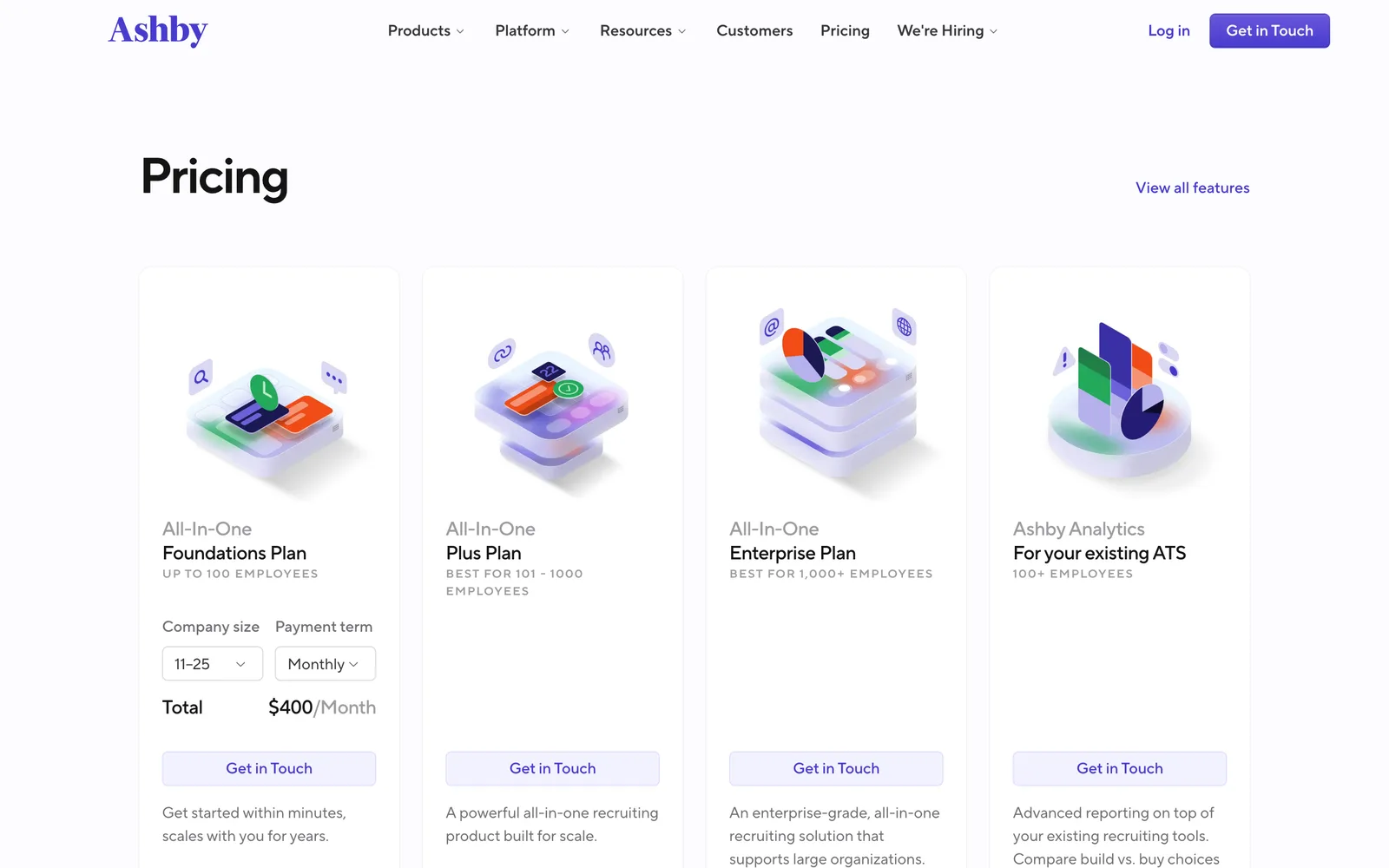
Ashby's pricing page was captured on 2026-08-12. Buyers should verify current packaging directly, especially because ATS pricing often depends on company size, modules, and implementation depth.
Best for teams that need stronger recruiting operations, reporting, and pipeline discipline.
Not for teams whose main pain is interview capacity or inconsistent candidate evaluation.
3. Greenhouse
Greenhouse is one of the better-known ATS platforms for structured hiring workflows. It is useful when the team needs standardized stages, collaboration, approvals, and records across a growing hiring function.
Greenhouse can make your hiring process more orderly. That matters. But a cleaner workflow does not automatically reduce hiring manager interview load. If engineers still spend hours every week interviewing people who have not proven they can build, the bottleneck sits outside the ATS.
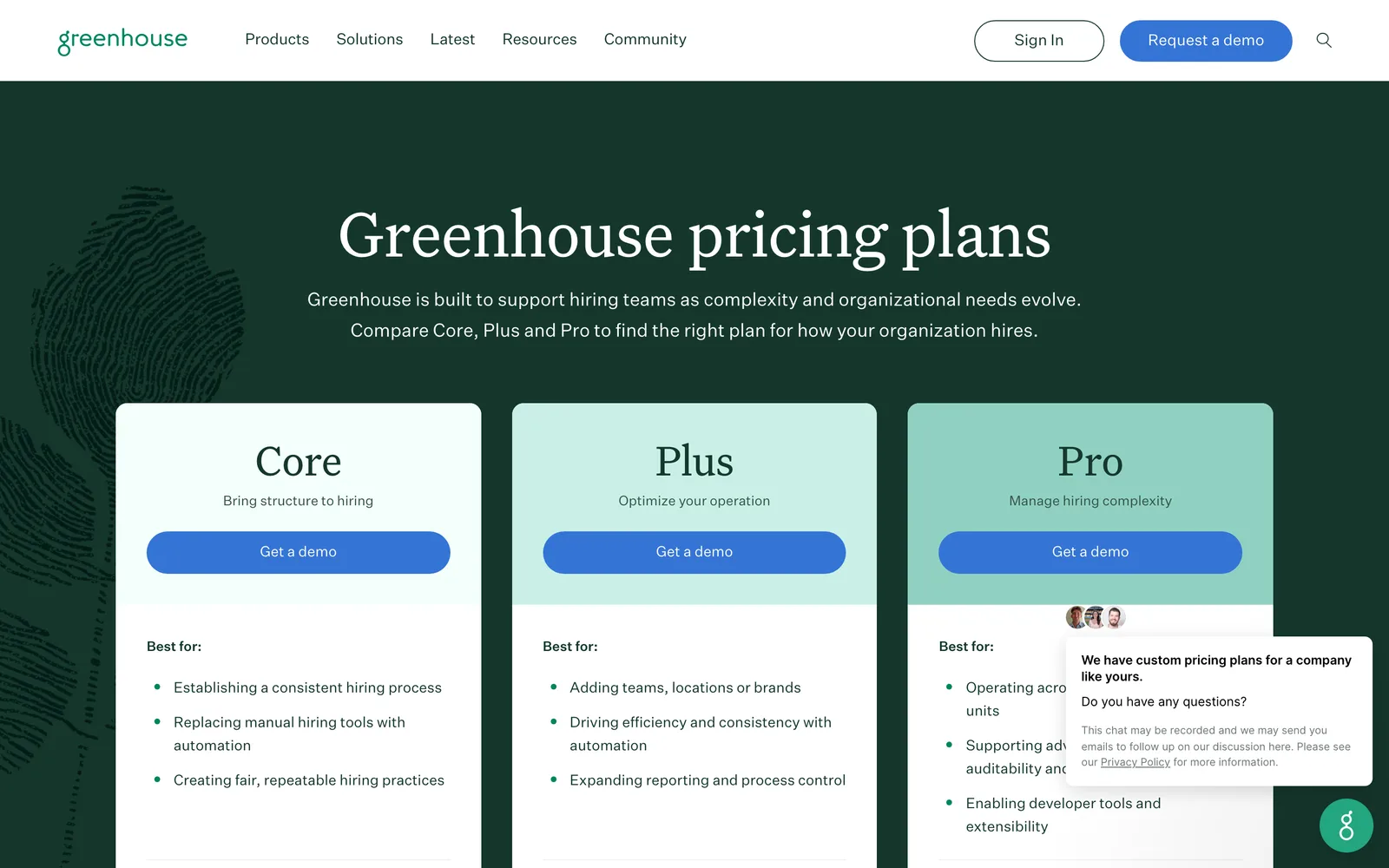
Greenhouse's pricing page was captured on 2026-08-12. For teams comparing ATS options, the bigger question is not only price. It is whether the ATS will connect cleanly to the AI sourcing, interview, or assessment layer you need next.
Best for structured hiring teams that need mature ATS workflow, approvals, and process control.
Not for teams expecting an ATS alone to solve slow or inconsistent interviews.
4. Gem
Gem is a recruiting CRM and candidate relationship platform. It helps outbound teams manage prospects, nurture relationships, and understand candidate pipeline activity before someone becomes an applicant.
This is valuable for teams with serious outbound motion. If your biggest issue is that recruiters lose track of warm prospects, CRM tools can reduce leakage. But CRM quality and candidate evaluation quality are separate questions.
Gem's product and pricing pages were captured on 2026-08-12. Buyers should check current packaging directly and ask where evaluation happens after a candidate replies. If the answer is still a manual call, the work has moved forward but not disappeared.
Best for outbound recruiting teams that need candidate relationship management and nurture visibility.
Not for teams looking for a platform that conducts deep live interviews.
5. hireEZ
hireEZ sits in the sourcing and talent discovery lane. It is relevant when your applicant flow is thin and recruiters need to find more people outside inbound applications.
That is a different problem from evaluation. If you have too few qualified people entering the funnel, sourcing tools belong on the shortlist. If you already have hundreds of applicants and no one has time to interview them, sourcing is not the bottleneck.
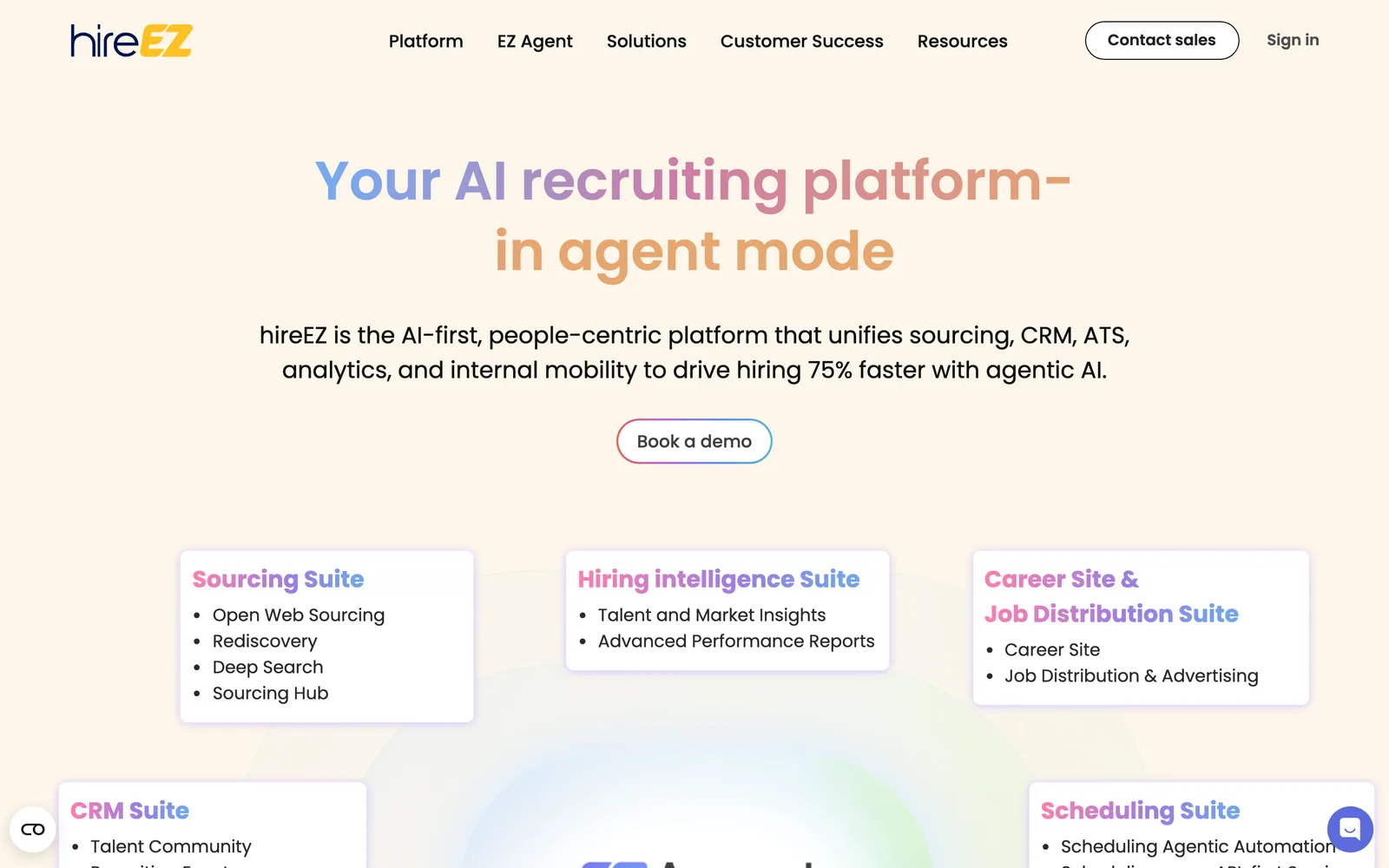
hireEZ's homepage and product page were captured on 2026-08-12. No verified pricing page was included in the source set, so pricing should be treated as not published here rather than guessed.
Best for sourcing recruiters who need external candidate discovery and outbound lists.
Not for teams that already have candidate volume and need interview evidence.
6. SeekOut
SeekOut is another sourcing and talent intelligence platform. It is built for finding and segmenting candidates, especially when the team needs reach beyond inbound applicants.
The place it can lead structurally is talent research. A sourcing specialist who lives inside talent pools may value depth of search, filters, and profile coverage. But once candidates reply, you still need a way to evaluate them consistently.
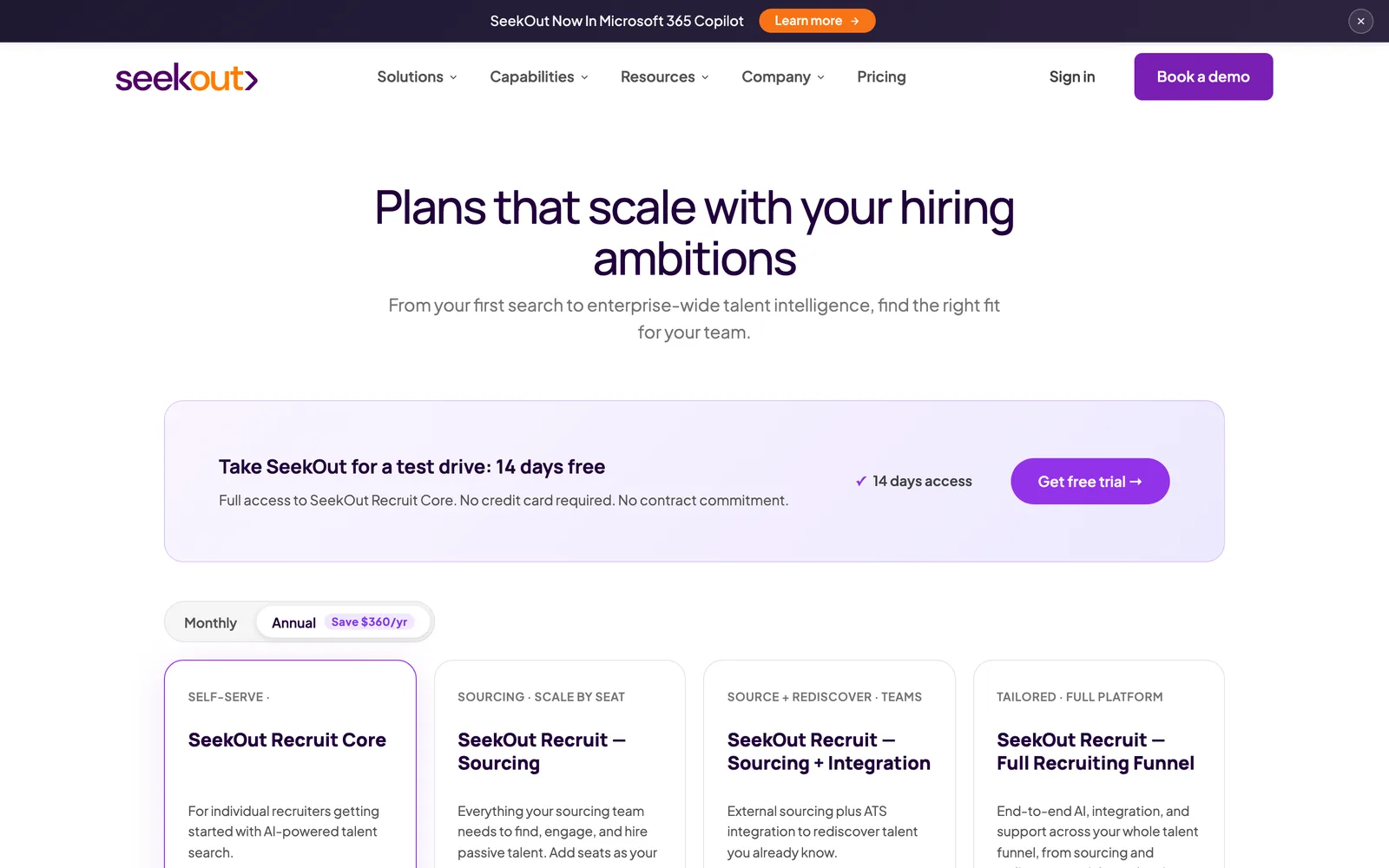
SeekOut's pricing page was captured on 2026-08-12. As with any sourcing platform, ask about contact data quality, reveal rules, bounce handling, and how quickly interested candidates can move into evaluation.
Best for teams investing heavily in external talent discovery and talent intelligence.
Not for teams trying to replace manual interview hours.
7. HireVue
HireVue belongs in the video interviewing and assessment category. It is often considered by larger organizations that need standardized digital interview workflows across many roles.
The buyer question here is format. A recorded video response, a structured assessment, and a live two-way AI interview are not the same experience. Completion, depth, and candidate trust can change a lot depending on whether the candidate is talking with something that responds or talking at a camera.
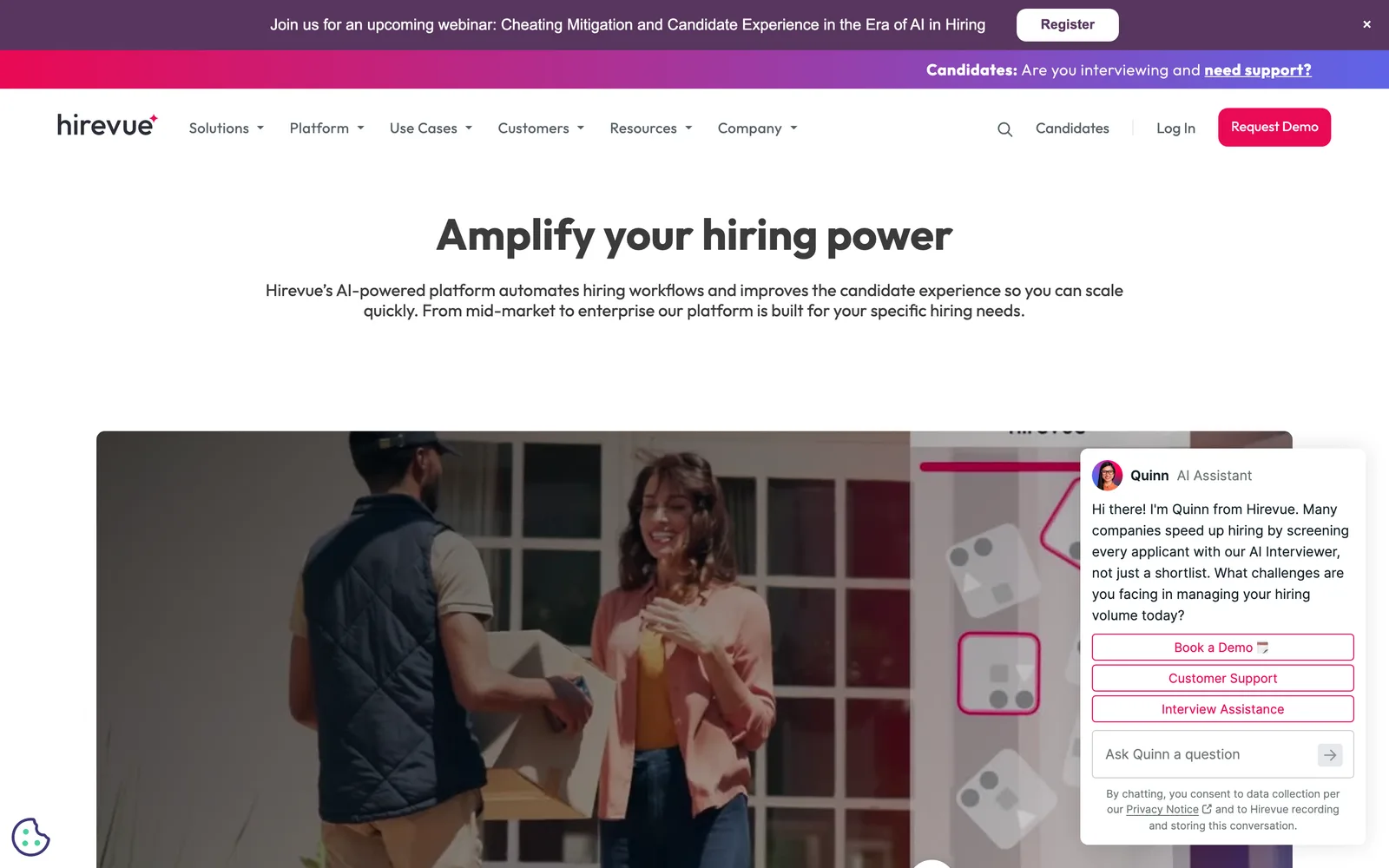
HireVue's pricing page was captured on 2026-08-12. If a vendor quotes per-interview or assessment pricing, do not compare that unit directly to a live AI interview subscription that includes adaptive follow-ups, competency scorecards, evidence linked to the recording, and in The Cognitive's case, sourcing that fills the pipeline too. Different products, different units.
Best for larger teams standardizing digital interview and assessment workflows.
Not for buyers who need proof of live adaptive conversation rather than recorded answers or fixed flows.
8. Paradox
Paradox is most useful to understand as candidate engagement and conversational workflow automation. It helps high-volume teams communicate, schedule, and move candidates through repetitive steps faster.
That is not a small thing. In hourly, frontline, retail, hospitality, or healthcare hiring, speed of response can decide whether someone shows up at all. Still, engagement is not the same as a deep interview.
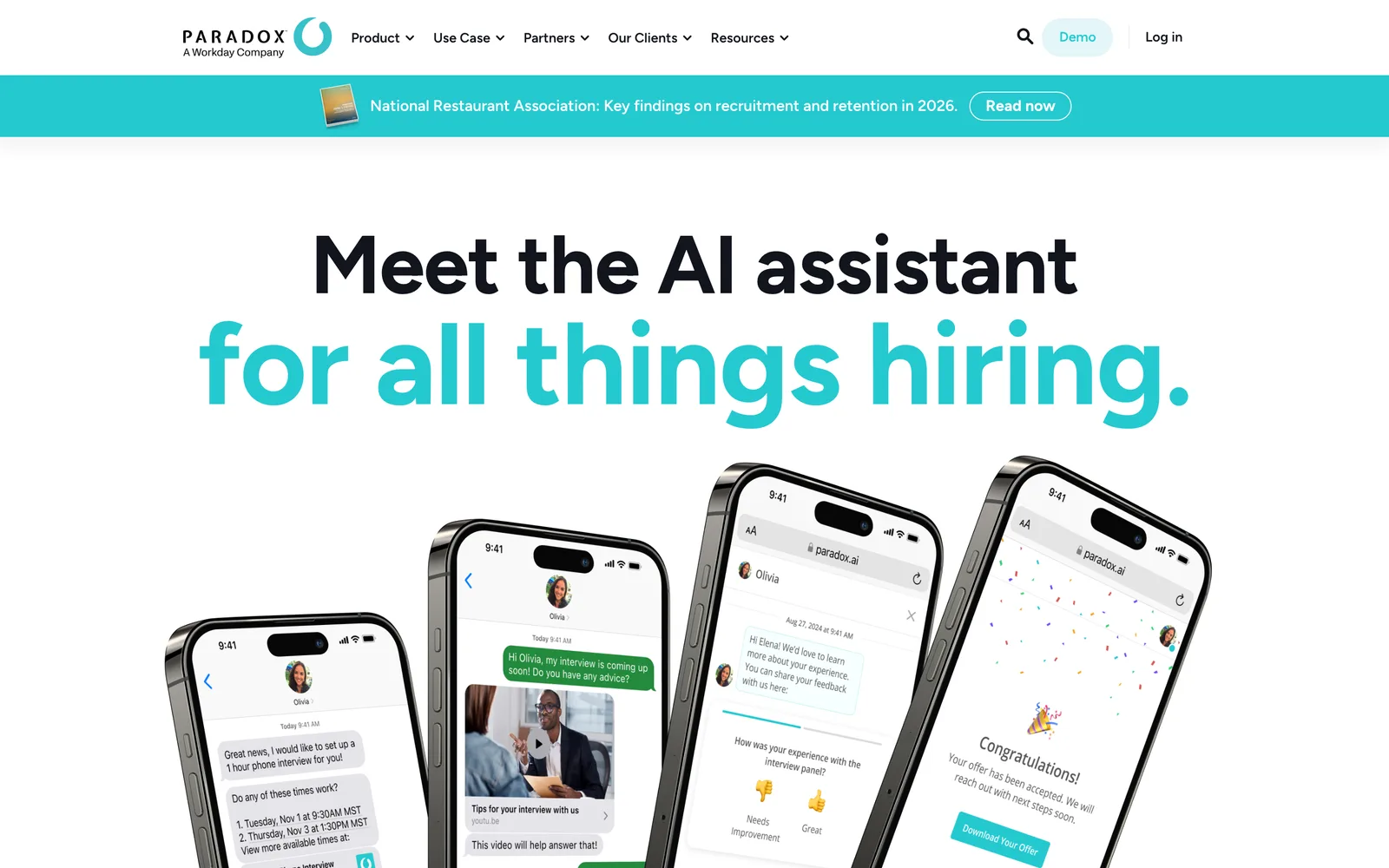
Paradox's homepage and product page were captured on 2026-08-12. No verified pricing page was included in the source set, so pricing is not published for this comparison.
Best for high-volume teams that need faster candidate communication and scheduling workflows.
Not for teams whose main gap is role-specific evaluation evidence.
9. Metaview
Metaview sits in interview intelligence. It helps teams capture, transcribe, summarize, and improve interviews that humans still conduct.
This can be a strong fit if your interviewers are good but your documentation is weak. Better notes can improve calibration. But the interview load remains with people, which means fatigue, scheduling limits, and inconsistent probing still exist.
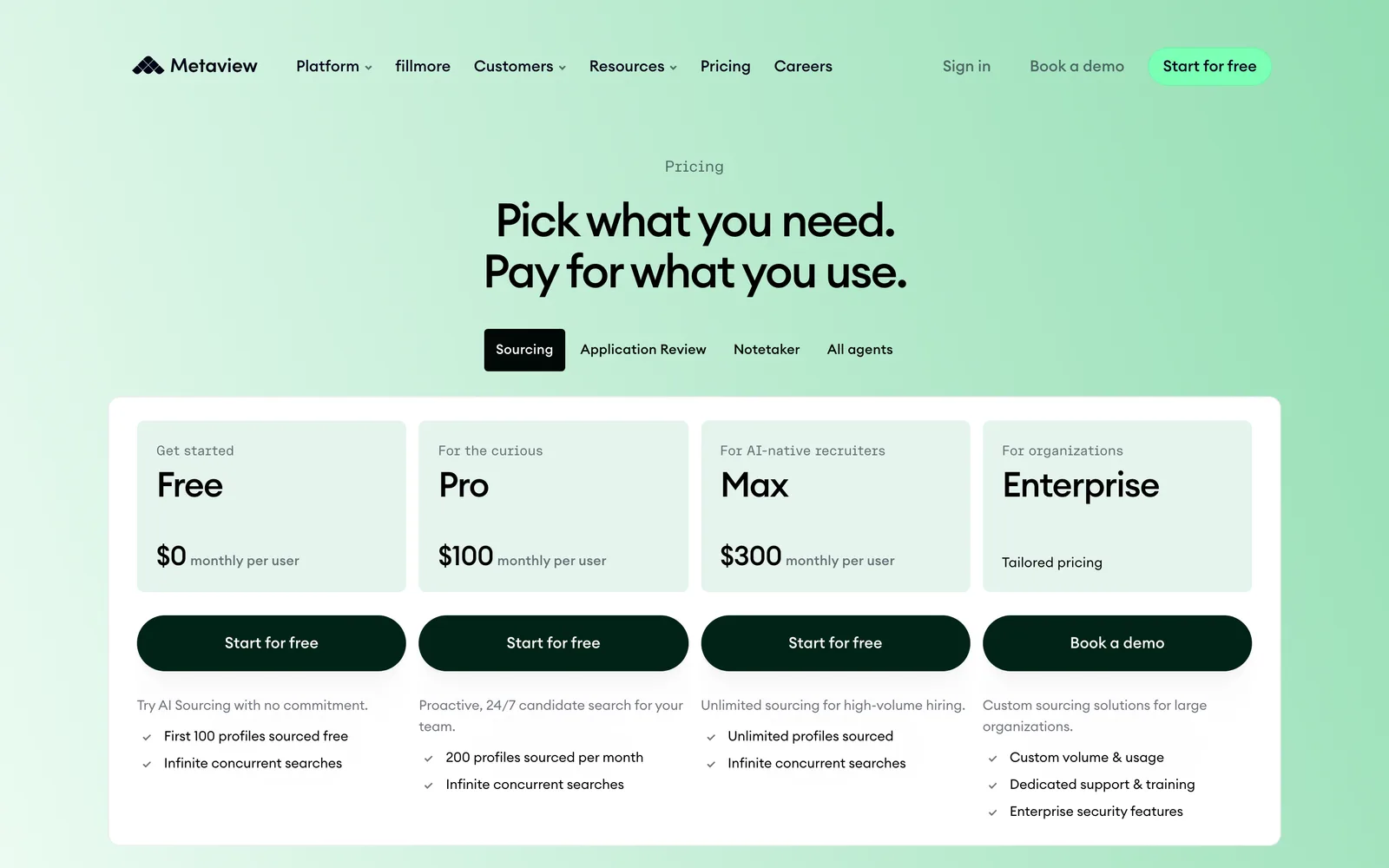
Metaview's pricing page was captured on 2026-08-12. When reviewing interview intelligence tools, ask whether the tool changes the interview itself or only improves what happens after the call.
Best for teams that want better records and coaching from human-led interviews.
Not for teams trying to remove the human bottleneck from early and mid-funnel interviews.
10. Workable
Workable is a broad recruiting platform for job posting, applicant tracking, team collaboration, and hiring workflows. It often appeals to small and mid-sized teams that want one operational system rather than several narrow tools.
Broad coverage can be useful. The trade-off is depth. If your team needs a full ATS and recruiting workflow, Workable belongs in the conversation. If your main pain is verifying actual candidate ability, you may still need a deeper interview layer.
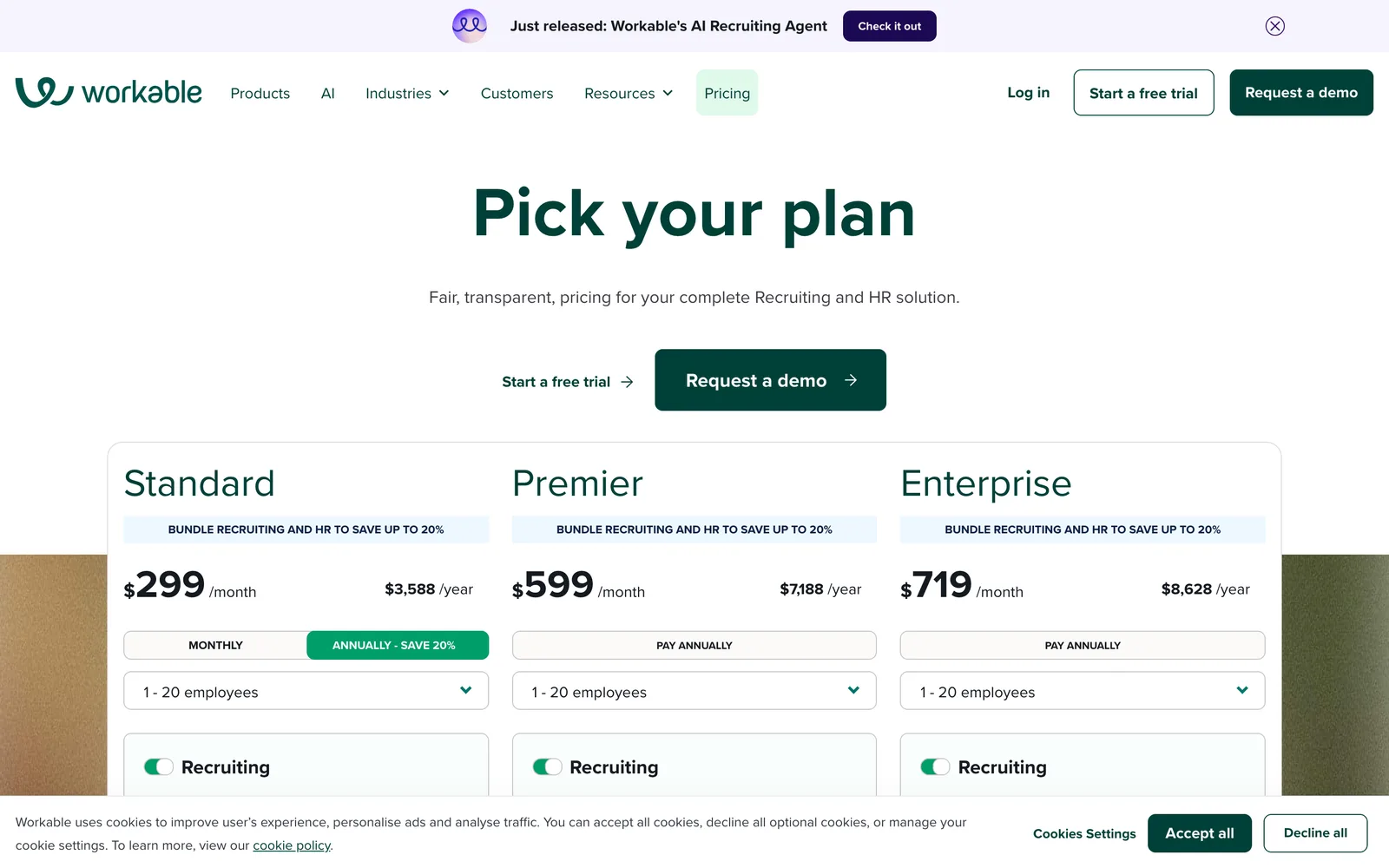
Workable's pricing page was captured on 2026-08-12. Buyers should check current plans and compare what is included versus what would still require sourcing, interviewing, or intelligence add-ons.
Best for small and mid-sized teams that want broad recruiting workflow coverage.
Not for teams that need a dedicated live AI interviewer or sourcing-to-shortlist pipeline.
How should an AI hiring platform fit your team?
It should fit the bottleneck your team feels every week, not the feature list that sounds most advanced. If the tool does not remove work from the painful part of the workflow, it will become another dashboard to babysit.
The hiring manager's question on that comparison call changed the room: Will this reduce recruiter work, or just move the work into a new dashboard? That question is a better buying framework than any feature checklist.
| Your real pain | Best platform type | What should change | Wrong-fit buy |
|---|---|---|---|
| Too few qualified applicants | Sourcing and outreach platform | Recruiters find more relevant prospects and contact them faster | Buying interview intelligence before fixing candidate supply |
| Too many resumes, too little signal | Deep AI interview and evidence-based shortlist | More candidates get evaluated on ability, not resume polish | Buying another keyword matcher |
| Slow scheduling | Scheduling automation or self-scheduled interview flow | Candidate coordination emails drop sharply | Buying a sourcing tool when the calendar is the issue |
| Inconsistent interviews | Structured interview platform with fixed rubric and evidence | Every candidate is judged against the same criteria | Buying a note-taker and assuming it fixes interviewer variance |
| Weak pipeline visibility | ATS or recruiting operations platform | Stages, ownership, reporting, and handoffs become clear | Buying an AI interviewer when the process itself is undefined |
| Hiring managers are the bottleneck | AI interview platform with evidence-backed scorecards | Managers review proof and meet only the strongest candidates | Buying a scheduling tool that still fills their calendars |
If you have thin pipeline, start with sourcing. If you have a full pipeline and no time to judge it, start with interviews. If you have chaos between stages, start with the ATS. If you have great interviews but poor records, interview intelligence may help.
Simple. Not easy.
The Cognitive is built for the common case where two problems show up together: not enough direct candidate access and not enough interview capacity. AI Sourcing, from $49/month, reveals verified emails and phone numbers and charges a reveal only when a value comes back. AI Interview, from $99/month, runs live two-way interviews at a slot each candidate books for themselves, so the candidate is in a conversation that responds rather than a one-way recording booth.
That combination matters most for engineering, staffing, BPO, healthcare, fintech, and other roles where speed and evidence both matter. If a hiring manager sits through ten low-signal interviews in a week, the price tag is not only payroll. It is delayed roadmap work, slower offers, and a tired evaluator making inconsistent calls.
If you are building the broader system, our guide to the recruiting tech stack is useful because it separates the ATS, sourcing, interview, scheduling, and analytics layers instead of pretending one tool magically covers every job.
What does the AI actually do differently?
The AI in these platforms should either create candidate supply, improve evaluation quality, or reduce coordination work. If it only summarizes activity without changing the workflow, it is reporting software with AI inside.
This is where buyers get tired. Vendor pages blur the line between automation and judgment. A tool that writes outreach copy is useful, but it is not the same as a tool that determines whether a candidate can solve a real production problem.
Think of the workflow in four verbs:
- Find: search for people who are not already in your ATS.
- Engage: contact them, follow up, and handle replies.
- Evaluate: test actual ability through structured questions, live follow-ups, work samples, or assessments.
- Decide: organize evidence so humans can choose who advances.
Most platforms are strong in one or two verbs. The danger is buying a find tool when your pain is evaluate, or buying a decide tool when you have no candidate supply.
For example, a sourcing tool can deliver 200 prospects for a senior backend role. Great. But if your engineering manager still has to spend 2 weeks running calls to learn that only 12 can reason through the database rollback scenario, the bottleneck moved downstream. You did not fix it.
The Cognitive's claim is intentionally operational: sources, interviews, shortlists. The AI sourcing product finds candidates and contacts them. The AI interviewer runs a deep, live, role-specific conversation. The shortlist is evidence-scored, with the transcript and recording behind each score. That is different from ranking resumes or asking a fixed list of questions.
If you want the category view, our guide to AI recruiting software sorts tools by the hiring stage they fix, and the best AI recruiting software comparison goes deeper into tools by category. For teams focused specifically on automation, the recruitment automation software guide is better because it isolates workflow triggers, outreach, scheduling, and stage movement.
The buying question is not How much AI is in the platform? It is Which recruiter or hiring manager task disappears after we turn it on?
What do these platforms cost?
A hiring platform should cost in proportion to the work it replaces, the workflow depth it covers, and the hiring volume it supports. Published pricing is helpful, but the better test is whether the platform removes real recruiter or hiring manager hours.
Budget pressure makes teams compare prices too early. That is understandable. But a low monthly number can be expensive if the tool creates more review work, more handoffs, or more candidate drop-off.
| Pricing model | Common in | Best for | Watch for |
|---|---|---|---|
| Monthly plan | AI interview platforms, SMB hiring tools, recruiting software | Teams that want predictable spend and published entry points | Interview or usage limits, overage rules, annual discounts |
| Credit-based | Sourcing and contact data tools | Teams paying for successful data reveals or outreach capacity | Credit expiration, reveal success rules, email and phone cost differences |
| Per seat | ATS, CRM, collaboration-heavy platforms | Teams with stable recruiter headcount and broad daily usage | Paying for users who do not drive hiring volume |
| Per interview or assessment | Assessment and video workflow tools | Teams with clear event-based usage and predictable volumes | Comparing shallow questionnaires to live adaptive interviews as if they are the same unit |
| Custom enterprise pricing | Large ATS, HCM, assessment, and talent intelligence suites | Large organizations with procurement, integrations, and security reviews | Long sales cycles, implementation fees, annual lock-in, module creep |
The Cognitive publishes separate prices for its two products. AI Sourcing starts at $49/month, with a reveal charged only when a value comes back. AI Interview starts at $99/month, on monthly plans that cover live two-way interviews, adaptive follow-ups, scores per criterion, the recording and transcript, and self-scheduled candidate slots. It connects to 60+ ATSs, including Greenhouse, Lever and Workday, and writes a note back for candidates imported from your ATS.
Do not divide The Cognitive's plan price by interview count and compare it to a per-interview questionnaire. That is the wrong unit. A live two-way interview with adaptive probing, evidence-backed scoring, recordings, transcripts, and sourcing-to-interview flow is not the same product as a recorded answer collection.
If pricing transparency is part of your shortlist, keep the The Cognitive pricing page open next to vendor pages and ask each seller the same question: what exactly happens without a recruiter touching it?
The costs that never show up on the pricing page
The monthly fee is rarely the whole cost. The hidden cost is operational drag.
- Integration depth: A platform that does not pass candidates, links, scorecards, or statuses cleanly into your ATS creates manual work.
- Contact-data quality: Sourcing credits are only useful if the verified email or phone number works often enough to create real conversations.
- Candidate drop-off: One-way video and slow scheduling can shrink your pool before evaluation even starts. Ask every vendor for its own completion rate and how it was measured.
- Recruiter context switching: A sourcing tool, outreach tool, scheduler, interview tool, and scorecard tool may each be fine alone. Together, they can turn a recruiter into a systems operator.
- Hiring manager delay: If managers still need to read long summaries with no clips, decisions stall. Evidence-backed scorecards shorten review because the proof is attached.
- Annual lock-in: Longer contracts can make sense for mature systems, but they are risky when you have not tested the workflow on your own candidates.
One practical way to evaluate ROI is to count the hours that disappear. If your team runs 30 manual interviews per role and 20 are obvious mismatches, the cost is not abstract. Multiply those 20 by the interviewer's loaded hourly cost and the waste becomes visible quickly.
For a broader manual-versus-AI cost comparison, the AI hiring vs traditional recruiting guide walks through the operating differences. For teams whose main issue is interview scheduling, the interview scheduling software comparison may be enough if evaluation quality is already strong.
Which platforms are also worth knowing about?
Several AI hiring tools are worth knowing even if they are not the center of this comparison. They may fit a narrow workflow, a specific company size, or a particular hiring model better than the broader platforms above.
Eightfold AI is a talent intelligence platform often associated with enterprise workforce and talent matching use cases. Its homepage and product page were captured on 2026-08-12, but no verified pricing page was included in this source set.
Maki appears in the assessment and hiring evaluation category. Its homepage, product page, and pricing page were captured on 2026-08-12, so buyers should verify current packaging directly if assessments are the priority.
Juicebox and Truffle are relevant to sourcing and candidate discovery conversations. Both had pricing pages captured on 2026-08-12, which can be useful for teams that need more transparent early comparison.
Alex, InterviewFlowAI, Jack & Jill, micro1, and Mercor sit in the broader AI hiring and interview market. Their fit depends heavily on whether your team needs candidate generation, interview automation, assessment, or marketplace-style talent access. Do not compare them by the word AI. Compare them by the work removed.
This is where a simple workflow map helps. Draw your current process from job setup to offer. Circle the step that creates the most waiting, rework, or weak signal. Then shortlist tools that attack that exact circle.
How should you build your AI recruitment stack?
Build the stack by assigning one tool to each job: tracking, sourcing, engagement, interviewing, scheduling, and decision evidence. The mistake is expecting one category label to tell you which jobs the platform actually performs.
Most teams end up with one of four patterns.
| Team situation | Recommended stack | Why it fits |
|---|---|---|
| Small team with no ATS discipline | Light ATS or hiring software plus clear interview rubric | The first fix is process clarity, not more AI |
| Growing team with enough applicants but weak signal | ATS plus live AI interviewer with evidence-backed scorecards | The bottleneck is evaluation capacity and consistency |
| Outbound-heavy team with thin inbound pipeline | Sourcing platform plus outreach plus interview evidence layer | The team needs both candidate supply and proof of ability |
| High-volume team with slow response times | Candidate engagement, scheduling automation, and structured AI interviews | Speed matters, but fast movement still needs consistent judgment |
| Mid-market engineering org hiring across roles | ATS plus The Cognitive for sourcing, live interviews, and shortlists | The ATS tracks the process while Cognitive turns candidate volume into evidence |
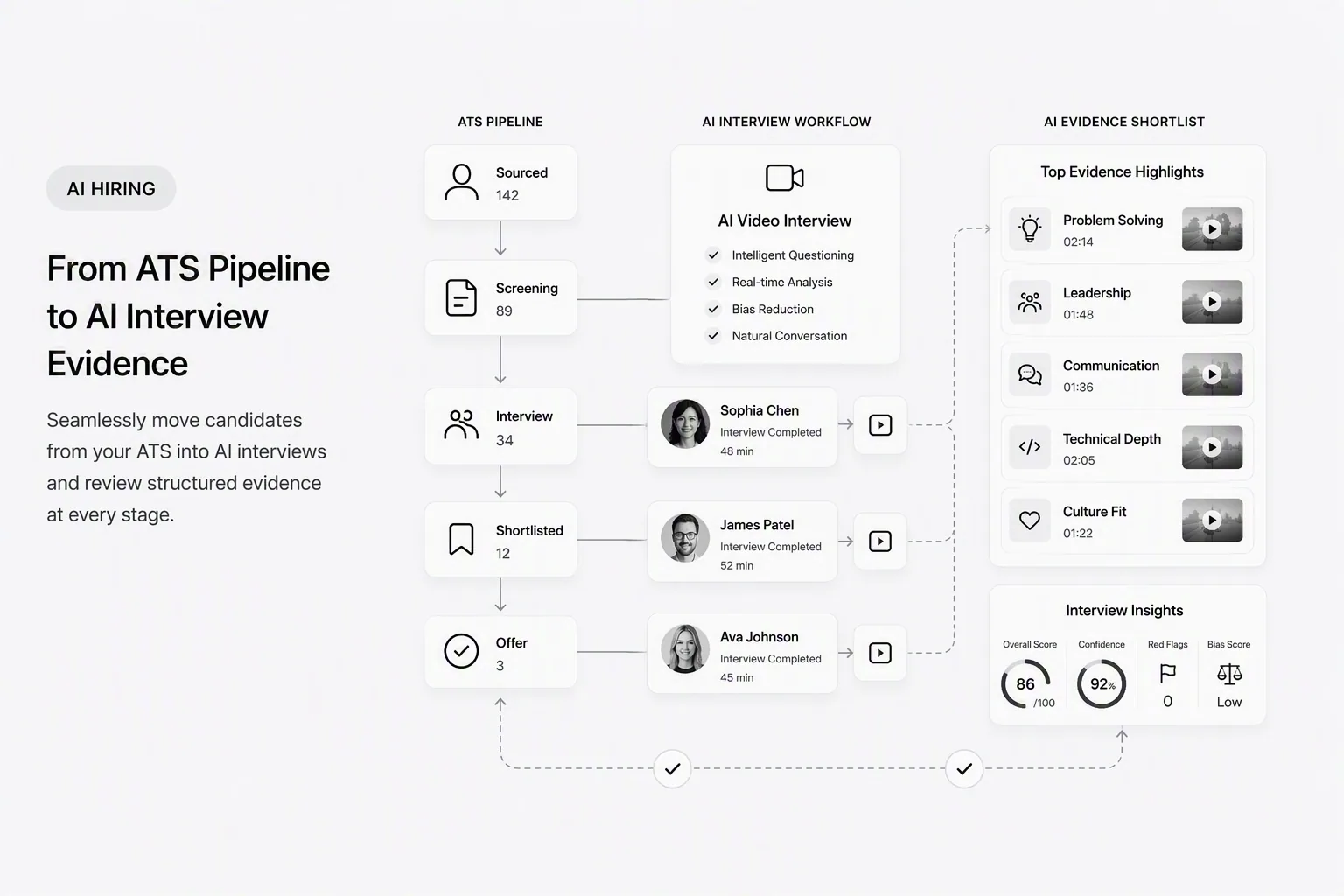
That last pattern is common. The ATS is not the enemy. It is the system of record. But it was not built to find candidates, interview them deeply, challenge vague answers, and hand managers a shortlist with video proof.
For technical roles, the evaluation layer matters even more. A resume can say Kubernetes, Postgres, or React. A deep interview can ask the candidate to walk through the outage, explain the rollback, defend the trade-off, and handle pushback. If that is your pain, compare tools in the technical interview software category before buying a general workflow platform.
And if your company is evaluating video tools specifically, the video interview software platforms guide separates live two-way interviews from async recordings. That distinction affects both candidate experience and evaluation depth.
A final buyer checklist
The final checklist should ask what work changes, what evidence is produced, how the tool integrates, and whether humans stay in control of the final decision. If the vendor cannot answer those questions clearly, the demo is not ready for your shortlist.
Use these questions in the next vendor call:
- Which hiring bottleneck do you change? Sourcing, scheduling, interviewing, candidate engagement, ATS workflow, analytics, or decision evidence?
- What work disappears for recruiters? Be specific. Searching, contact reveals, outreach, calls, scheduling, note-taking, scorecard writing, or follow-up?
- What work disappears for hiring managers? Fewer low-signal calls, faster evidence review, better shortlists, or only cleaner notes?
- Is the interview live and two-way? If yes, ask how follow-up questions are chosen. If no, ask whether it is a one-way recording or fixed assessment.
- Can we click into proof behind scores? A score without a quote, timestamp, or clip is a trust problem.
- How does it connect to our ATS? Ask what data moves automatically and what a recruiter still copies by hand.
- What pricing unit are we buying? Seat, plan, credit, interview, assessment, or custom contract?
- Can we test it on our own role? Demos are polished. Your candidate backlog is the real test.
Methodology note, again: competitor pages and screenshot captures used for this comparison were checked on 2026-08-12. No vendor paid for placement or reviewed the article. Pricing, packaging, and product claims can change, so verify live pages before you buy.
If the team on that Tuesday call left with anything useful, it was not a winner's badge from a spreadsheet. It was a better question.
Do not ask whether the tool uses AI. Ask which hiring bottleneck it changes enough to make your team faster, clearer, or more consistent.
If your bottleneck is both candidate supply and interview capacity, test The Cognitive on one real role. Use AI sourcing to find candidates with verified contacts, invite them to live two-way AI interviews, and judge the shortlist by the evidence.
You can start a free trial with 100 sourcing credits.
Frequently Asked Questions
What is the difference between an AI hiring platform and an ATS?
An AI hiring platform changes hiring work such as sourcing, engagement, interviews, scoring, or decision support, while an ATS tracks candidates through stages. Most teams need both: the ATS organizes the pipeline, and the AI layer improves the work that happens inside it.
Does an AI hiring platform replace recruiters?
No. It should remove repetitive work such as sourcing admin, outreach follow-up, scheduling coordination, interview load, or evidence organization so recruiters can focus on judgment, candidate relationships, and closing.
What should AI hiring software integrate with?
It should integrate with the ATS, or at least pass candidate links, statuses, scorecards, recordings, and notes cleanly into the hiring workflow. If recruiters still copy data between tools, the platform may be moving work rather than removing it.
How do you calculate ROI for AI hiring software?
Count the recruiter and hiring manager hours the platform actually removes, then compare that with the subscription, credit, seat, or contract cost. Price each removed low-signal interview at the interviewer's loaded hourly cost, because that saving can matter more than a small difference in software price.
Related reading
- Affordable AI Recruiting Tools That Show Their Prices: How 10 Bill You in 2026
- Recruitment Chatbots Compared: 9 Conversational AI Tools, and What to Use When Chat Isn't Enough
- Talent Intelligence Software Compared: 11 Platforms for Market Data and Finding People
- Recruiting Software for Startups: 10 Picks for Founders Hiring Without a Recruiter
- IT Staffing Software Compared: 10 Tools for Sourcing and Screening Engineers in 2026
- Campus Recruiting Software for Intern and Graduate Hiring: The 10 Best in 2026