Personality Hire: What the Trend Gets Right and Wrong
By Sparsh Goyal, Founder at The Cognitive. Published · Last updated
- A personality hire is workplace slang for someone selected mainly for likability, energy, or culture fit rather than proven job skill.
- Personality can matter, but only after the team defines the behaviors the role actually requires.
- Culture fit is useful when it means observable work behavior, not similarity, comfort, or chemistry.
- Structured interviews, work scenarios, and evidence-backed scorecards reduce the risk of bias and halo effect.
- Personality tests can support hiring decisions, but they cannot replace job-relevant evaluation.
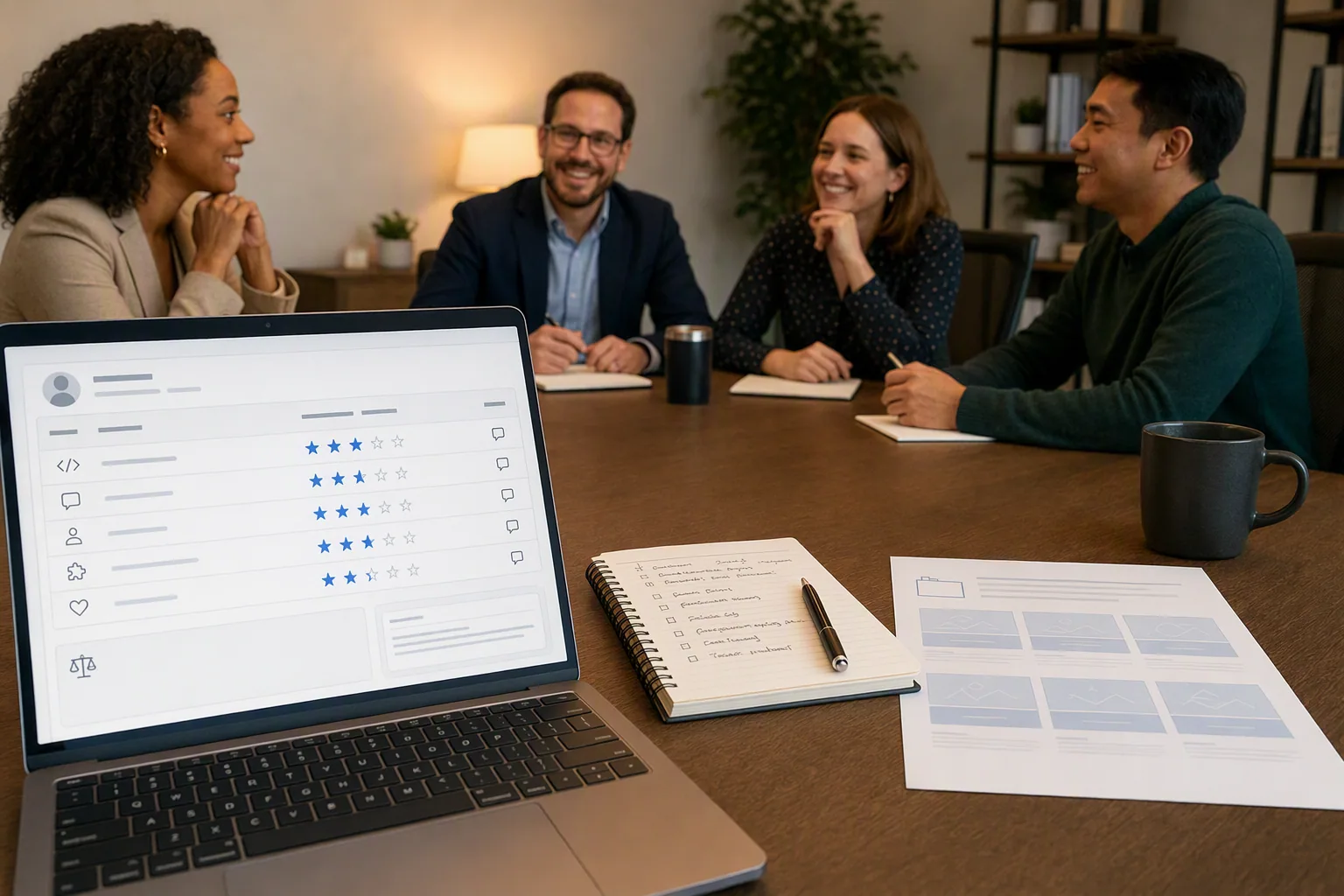
A personality hire is someone chosen mainly because they are likable, warm, funny, or easy to imagine on the team, rather than because the hiring process proved they can do the job. Across 20,000+ interviews run on The Cognitive, the pattern is clear: teams trust evidence more when every score is tied to what the candidate actually said and did.
The uncomfortable part is that a personality hire rarely feels like a mistake in the moment. In one Tuesday debrief, everyone was smiling before anyone had talked about the hard parts of the role. The candidate had been generous, quick, and charming. Someone said, almost sheepishly, I just feel like clients would love her, while the work-sample fields on the scorecard were still half blank.
That sentence was not wrong. Clients probably would have liked her. The problem was that the team had used warmth as a shortcut for judgment, escalation skill, and readiness for messy stakeholder conflict.
Key takeaways
- A personality hire is workplace slang, not a formal HR category, and it usually means likability was given more weight than validated skill.
- Personality can be useful hiring signal when the role needs specific behaviors such as calming customers, influencing peers, or handling conflict.
- Likability is not competence. A candidate can be easy to talk to and still freeze when the job gets ambiguous.
- Culture fit becomes fair only when it is translated into observable behaviors and scored against the same rubric for every candidate.
- The Cognitive reduces this risk by tying interview scores to exact quotes, timestamps, and role-specific criteria instead of gut feel.
Where did the term personality hire come from?
The term personality hire came from workplace slang and social media, where employees joke about colleagues who seem to have been hired for charm, confidence, or vibes more than measurable skill. The phrase stuck because many people have seen a version of it happen.
It shows up in TikTok jokes, office group chats, and blunt comments after a confusing hiring decision. The joke is usually this: someone may not be the strongest operator, analyst, engineer, or coordinator, but they keep the mood light, make customers smile, and make meetings less painful.
There is a real warning inside the joke.
Hiring teams do not usually say, let us hire the person with the least evidence. They say things that sound reasonable. She will be great with clients. He brings energy. They are the kind of person people want around. The language feels human, so the risk hides in plain sight.
The phrase resonates because most employees know that social ease gets rewarded. People who tell good stories often sound more capable. People who laugh at the right moment seem more collaborative. People who mirror the interviewer can feel like a safer hire than someone quieter who gives denser, better evidence.
That is the halo effect doing its work. One positive trait spreads across the rest of the evaluation. Friendly starts to mean reliable. Confident starts to mean competent. Polished starts to mean prepared.

The modern version is sharper because interviews have become more performative. Candidates prepare with AI, polish resumes with AI, rehearse answers, and learn how to sound like the ideal teammate. None of that is bad. Good candidates should prepare. But it means the hiring process has to separate performance from proof.
A personality hire is not a villain. Usually, it is a process failure with a person attached to it.
Is culture fit actually a hiring criterion?
Culture fit is a legitimate hiring criterion only when it means specific work behaviors the role requires, not chemistry, similarity, or whether the interviewer enjoyed the conversation. If culture fit cannot be observed, tested, and scored, it is too vague to carry hiring weight.
This is where teams get themselves into trouble. They often use culture fit to describe real needs. They need someone who can calm tense clients. They need someone who will not create drama in a small team. They need someone who can disagree without making the room worse.
Those are valid requirements. They just are not feelings.
In the debrief that started this article, the role did need interpersonal skill. It was an operations job with customers, escalations, and a lot of gray area. The person would not be judged only on clean task completion. They would need to read the room, steady anxious stakeholders, and make decisions before every fact was available.
The team was right to care about personality. They were wrong to stop there.
A useful culture-fit criterion sounds like this:
- Escalation judgment: Can the candidate separate urgency from noise, decide what to do next, and explain the trade-off clearly?
- Customer steadiness: Can the candidate stay calm when someone is frustrated without becoming passive or defensive?
- Team communication: Can the candidate surface bad news early and ask for help before the situation gets expensive?
- Ownership: Can the candidate describe mistakes without blaming everyone else in the room?
A weak culture-fit criterion sounds like this:
- Great energy.
- Would be fun to work with.
- Feels like one of us.
- Clients would love them.
Notice the difference. The first list points to behavior. The second list points to interviewer reaction.
| Hiring phrase | What it may really mean | How to make it testable |
|---|---|---|
| Great communicator | The interviewer found them easy to follow | Ask them to explain a trade-off to a frustrated non-expert stakeholder |
| Strong culture fit | The candidate felt familiar or comfortable | Define the specific team behavior, such as raising risks early or taking feedback without defensiveness |
| Clients will love them | The candidate is warm and personable | Run a client escalation scenario and score calm, clarity, judgment, and next steps |
| High ownership | The candidate sounded confident about responsibility | Ask for a failure story and score whether they name their own part and what changed after |
If you cannot turn a culture phrase into a scenario, it should not decide the hire.
This is also where structured interviews help. A structured interview does not mean every candidate gets identical scripted questions. It means every candidate is judged against the same criteria and the same bar. The actual follow-ups can adapt to what the person says, but the standard cannot drift because one person made the panel laugh.
If your team needs help turning loose traits into role-specific criteria, a free AI interview rubric generator is a good starting point. The exercise forces the team to name what strong and weak evidence actually sounds like before the debrief gets emotional.
What are the risks of making a personality hire?
The risks of making a personality hire are weak performance, unfair selection, hidden bias, teammate resentment, and missed evidence that the person cannot handle pressure. The damage usually appears after the hire starts, when charm no longer substitutes for execution.
3 weeks after that cheerful debrief, the new hire hit a routine escalation. Nothing catastrophic. A client was upset about a missed handoff, a manager needed an update, and the next step required a clear call. The hire froze. She was not lazy. She was not careless. She had simply never been tested on the part of the job that mattered most.
That was the moment the manager saw the real mistake. The interview process had tested whether everyone liked talking to her. It had not tested whether she could hold structure under pressure.
Weak performance gets misdiagnosed as a people problem
When a personality hire struggles, teams often describe it as a mismatch. They were not as strong as we thought. They interviewed well. They were not ready for the pace.
Sometimes that is true. But often, the hiring team never measured the skill in the first place. The candidate did not fail a fair test. They passed the test the team accidentally designed.
That distinction matters because it changes the fix. If the person misrepresented their skill, you tighten verification. If the team never asked for evidence, you redesign the interview.
Unfair selection hides behind comfort
Personality-based hiring can quietly reward people who share the interviewer’s communication style, background, humor, language, or confidence level. That does not always look like obvious bias. It often looks like comfort.
Comfort is not neutral. It tends to favor people who already know how to perform in that room.
This is why fair hiring practices need clear criteria before interviews begin. If one candidate is scored on warmth and another is scored on technical depth, you no longer have a fair comparison. You have two different hiring processes running under one job title.
For regulated hiring, the record matters too. The Cognitive supports this by producing evidence-based scorecards where every score links to the exact quote and timestamp behind it. That kind of audit trail is also the reason teams should understand rules such as NYC Local Law 144 and AI interviews when they use automated employment decision tools.
Strong teammates notice when standards move
A personality hire can create resentment because the team feels the standard was bent. People may like the person and still feel annoyed that they are carrying the work the interview failed to test.
That resentment is rarely clean. It leaks into Slack tone, missed context, fewer offers to help, and a quiet belief that hiring is political. Once that belief takes hold, every future hire gets inspected through it.
The hire pays for the process mistake. That is the part that should bother you.
Poor judgment under pressure is easy to miss
Most interviews are low-pressure social settings. The candidate has prepared. The interviewer is polite. Everyone is trying to make the conversation work.
But many roles fail in messy moments: an angry customer, a vague bug report, a senior stakeholder asking for a bad shortcut, a patient handoff with incomplete information, a warehouse issue at 2 AM. If the job has pressure and the interview has none, you are measuring the wrong thing.

The fix is not to make interviews hostile. It is to make them realistic.
How should teams balance skill and fit?
Teams should balance skill and fit by defining the role-critical behaviors first, testing them with realistic work scenarios, scoring every candidate against the same criteria, and treating personality as one signal rather than the deciding signal. Fit belongs in the process, but it should never outrank evidence.
Start with the job, not the candidate. Ask what the person must do when the work is hard. Not the neat version in the job description. The real version.
For the operations role, the hiring team rewrote the process around four behaviors:
- Escalation judgment: What does the candidate do when two stakeholders want opposite things?
- Ambiguity handling: Can they move forward with partial information without pretending to know everything?
- Client communication: Can they calm a tense person and still set a boundary?
- Follow-through: Do they close the loop without needing five reminders?
That changed the interview immediately. The team still noticed warmth and humor. They just stopped letting those traits answer questions they had not asked.
Use scenarios that look like the job
A realistic scenario does not need to be elaborate. It needs to create the kind of decision the role actually makes.
For a customer operations role, you might say:
A client is angry because a report is late. The internal owner says the delay is not their fault. The account manager wants you to promise delivery today, but you are not sure that is possible. What do you do in the next 30 minutes?
That prompt reveals more than five cheerful answers about communication style. You can hear whether the candidate clarifies facts, names risk, avoids false promises, and decides who needs to know what by when.
For a software engineering role, the same principle applies. A candidate saying they are collaborative is less useful than watching them explain a database rollback, latency issue, or trade-off under pushback. If you are hiring technical roles, our role pages for software engineers and frontend developers show the kind of role-specific evaluation that should replace vague confidence signals.
Build a scorecard before the interviews
A scorecard protects the team from the debrief drift. Without it, the loudest or most enthusiastic interviewer often sets the tone. With it, the group has to answer a harder question: where is the evidence?
A strong interview scorecard includes:
- The criteria that matter for the role.
- Weights, because not every trait matters equally.
- Behavioral anchors for low, average, and strong performance.
- Space for evidence, not just impressions.
- A final decision that separates skill, fit, and risk.
If you need to create one quickly, use an AI interview scorecard generator to turn the role, rounds, and criteria into a structured scoring sheet. Then edit it like a hiring manager, not like a template collector.
Ask follow-ups that challenge the easy answer
Personality hires often happen because the first answer sounds good enough. A candidate says they stay calm with difficult clients. Everyone nods. The next interviewer moves on.
The follow-up is where the truth usually lives.
- What did you say word for word?
- What did the stakeholder disagree with?
- What did you do when your first approach did not work?
- What would your manager say you missed?
- What changed in the process after that incident?
A live two-way AI interview is useful here because it does not get tired or socially charmed into moving on. The Cognitive’s AI interviewer has a real human face and voice, asks role-specific questions, listens, pushes back on vague answers, and writes scorecards tied to quotes and timestamps. It is not a one-way video form. It is a deep interview that keeps probing when the answer needs more work.
Do not shrink the top of the funnel just to reduce work
One reason teams overvalue personality is that they are tired. After too many resumes and too many calls, the candidate who feels easy becomes a relief. That relief can look like signal.
The better move is to widen the pool, then improve the evidence. The Cognitive is built as an AI recruiting platform that sources, interviews, and shortlists in one pipeline. Its AI sourcing lets teams search in plain English across talent profiles, reveal verified personal emails and direct phone numbers only when contact data is found, run outreach sequences, use an AI voice agent to call candidates, and push sourced candidates into interviews in one click.
That matters for this topic because a thin candidate pool makes personality feel more decisive than it should. If you only have three people, the most likable one can look like the safest one. If you can source more people and interview them consistently, warmth has to compete with proof.
Teams hiring in bursts can also compare the cost of old habits. A manual interview costs roughly $60 to $80 in staff time, while The Cognitive’s interview plans start from $99/month. The point is not just lower cost. It is that the 50th interview gets the same scoring standard as the first, with no Friday-afternoon mood swing.
How do personality tests and employment decisions fit into this?
Personality tests and employment decisions fit together only when the test is role-relevant, validated, and used as supporting evidence rather than the final hiring answer. A pre-employment assessment can help explain work preferences, but it cannot prove job readiness by itself.
This is where hiring teams often swing too far in the other direction. After one bad personality-heavy hire, they want a scientific tool to remove the messiness. A company buys a behavioral assessment software package, adds a communication skills assessment, and hopes the score will tell them who is safe.
That is understandable. It is also incomplete.
Personality tests can be useful for patterns such as:
- How someone tends to communicate under normal conditions.
- Whether they prefer structure or ambiguity.
- How they describe conflict, pace, and feedback.
- What kind of management environment may help them do better work.
Those signals can improve onboarding and manager coaching. They can also help interviewers ask better follow-ups. For example, if a candidate’s assessment suggests they strongly prefer clear rules, and the job involves constant ambiguity, the interview should test how they handle unclear situations.
But a personality test should not replace a work sample, structured interview, reference check, or job simulation. A candidate can test as highly sociable and still mishandle a tense client. A candidate can test as reserved and still communicate beautifully when the work requires precision.
Employment decisions need evidence from the job itself.

There is also a fairness issue. If a personality test becomes a proxy for who feels familiar to the company, it recreates the same risk with a more official label. The tool looks objective. The underlying judgment may still be vague.
A better use is to combine assessments with structured interviews. The assessment suggests hypotheses. The interview tests them. The scorecard records evidence. Humans make the final call.
If you are writing interview questions around traits such as ownership, resilience, conflict handling, or customer judgment, a free AI interview question generator can help turn those traits into prompts with scoring guides and follow-ups. The useful question is not is this person outgoing? It is can this person do the work this role actually demands?
Can a company personality test prevent a personality hire?
A company personality test can help reduce the risk of a personality hire only when it is validated, job-relevant, and used alongside objective hiring criteria. If it replaces structured evaluation, it can create a false sense of rigor around the same old gut feelings.
The test is not the guardrail. The hiring system is.
Before using a company personality test, ask 5 questions:
- What job behavior does this test help us understand? If the answer is vague, the test is not ready for hiring use.
- Has the test been validated for employment decisions? A workplace quiz and a validated pre-employment assessment are not the same thing.
- Will every candidate be assessed the same way? Selective use creates fairness problems fast.
- How will the result change the interview? If it does not lead to better questions, it may be decoration.
- What evidence can override the test? Real work evidence should carry more weight than a personality label.
The last question is the one I care about most. A test can say someone has a collaborative style. The interview still has to show how they collaborate when they disagree, when they are tired, or when the customer is wrong but powerful.
Use the company personality test to add context, not to hand the decision to a profile.
| Hiring input | Best use | Risk if overused |
|---|---|---|
| Personality test | Work preferences, communication style, coaching clues | Labels people before job evidence is reviewed |
| Structured interview | Consistent judgment against role criteria | Becomes shallow if follow-ups are scripted and weak |
| Work scenario | Tests judgment in realistic conditions | Can be unfair if unrelated to the actual role |
| Scorecard | Separates evidence from impressions | Fails if interviewers write feelings instead of proof |
| Reference check | Checks patterns over time | Can become reputation-based if questions are vague |
There are also situations where a heavier assessment process is not worth it. If you are hiring one person a quarter, already know the candidate’s work, and have direct references from people you trust, a full testing stack may add more ceremony than signal. Keep the process proportional to the risk and volume.
For most teams, the right order is simple: define the job, build the rubric, test realistic scenarios, review evidence, then use personality data as context. If you want a clean benchmark for whether the hire worked later, track quality of hire with the same discipline you used to make the decision.
The Cognitive helps teams put that discipline into the hiring process without turning recruiters into administrators. It sits on top of the ATS, covers the stretch from finding candidates to deciding on them, and gives hiring managers a verified shortlist backed by interviews, transcripts, and scorecards. People still make the final call. They just make it with better evidence.
A personality hire is not the enemy. Hiring by untested warmth is.
If the role needs warmth, test warmth in the job’s real context. If the role needs judgment under pressure, create pressure that is fair and realistic. If the role needs collaboration, ask for proof from moments where collaboration was hard.
Personality becomes useful hiring signal after the team has defined the work and tested the candidate against it. Anything earlier is just a good feeling wearing a hiring decision’s coat.
If you want to see what evidence-based interviewing feels like from the candidate side, you can take a live AI interview yourself with The Cognitive. Use one real role, compare the scorecard to your current debrief, and decide whether your team is measuring charm or readiness.
Frequently Asked Questions
What does personality hire mean at work?
A personality hire is someone perceived to have been hired mainly for likability, energy, or culture fit rather than proven job ability. The phrase is workplace slang, but it points to a real hiring risk: confusing interpersonal ease with role readiness.
Is being a personality hire always bad?
Being a personality hire is not automatically bad because many roles genuinely need warmth, communication, and stakeholder skill. The problem starts when those traits are not translated into observable job behaviors and tested with realistic scenarios.
How do personality tests and employment decisions work together?
Personality tests and employment decisions work best when the test adds context about work style and communication preferences. The test should support structured interviews, work samples, references, and scorecards, not replace them.
Can a company personality test stop biased hiring?
A company personality test can reduce bias only if it is validated, role-relevant, and used consistently for every candidate. If the test simply gives official language to vague culture-fit feelings, it can make biased hiring look more rigorous than it is.
How do you avoid hiring someone just because they are likable?
Avoid hiring on likability by defining the role-critical behaviors before interviews begin, then scoring every candidate against the same criteria. Use realistic scenarios, evidence-backed scorecards, and follow-ups that test how the candidate thinks under the conditions the job actually creates.
Related reading
- Situation Test Example Answers: 5 Situational Judgment Scenarios That Actually Show Judgment
- What Is a Normal Cost Per Hire? Benchmarks by Seniority, Sector, Role and Region
- Candidate Sourcing Channels Compared: Where to Find Candidates for Each Role in 2026
- How Many Candidates Are Interviewed per Hire? 2025 and 2026 Benchmarks by Role and Stage
- Affordable AI Recruiting Tools That Show Their Prices: How 10 Bill You in 2026
- Canditech Alternatives in 2026: 10 Tools, From Skills Tests to Live AI Interviews