The Cognitive

One title in. Five people out.

Most searches look only for suspect number one: the person with the same title. This skill writes four more searches for the people who can do the job and are called something else, sit somewhere smaller, work one industry over, or did it a couple of years ago. Below are the five lanes, the skill, worked examples for six roles, and where Claude stops.

100+ recruiters have shared their feedback
“juicebox, metaview, your looks faster and easier to use but with more relevant profiles”
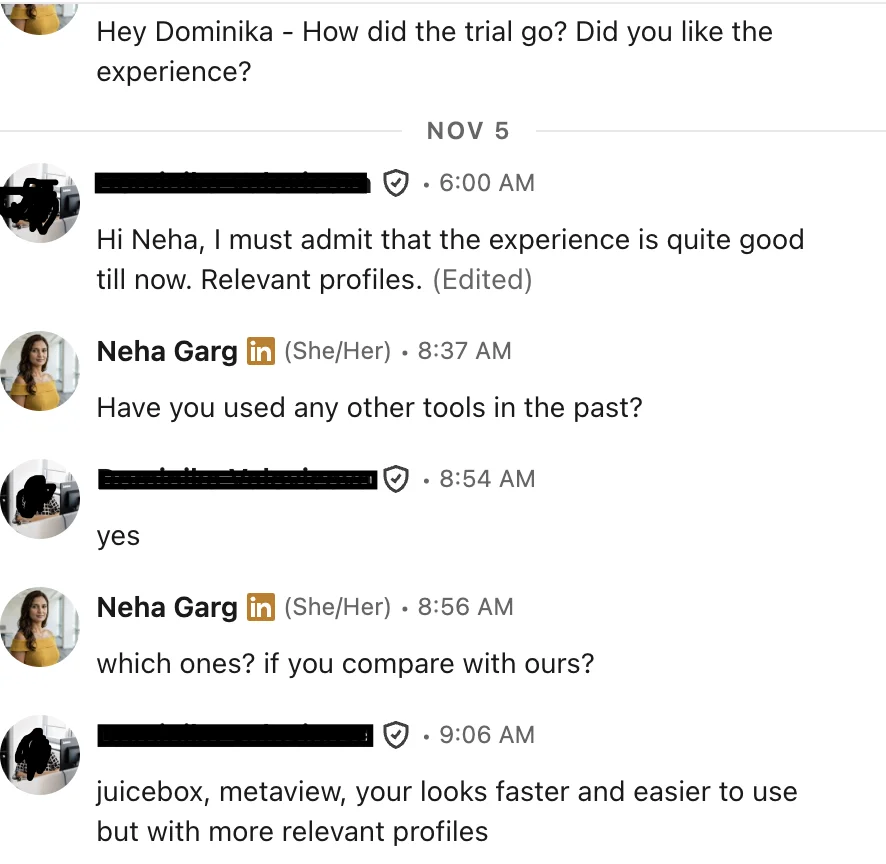
LinkedIn message: compared with Juicebox and Metaview, faster and easier to use with more relevant profiles

The five lanes

Each lane changes one thing about the person: the title, the size of the company, the industry, or the timing. None of them lowers the bar. The must-haves stay the same in every lane.

1

Same title

The obvious one. Every recruiter on the role finds them first, so they get the most messages.

SearchThe title as posted, its level words (Senior, II, Lead) and abbreviations, plus the place.
ProofThe must-haves still need a line in a job. A matching title proves nothing about the work.
TrapStopping here. Same title at a very different kind of company can be a different job.
2

Different title, same work

Their employer calls the job something else. Engineers called "Member of Technical Staff", payroll run by the "HR Operations Manager".

SearchTwo to four neighbouring titles, and the work itself written into the sentence.
ProofJob bullets that describe the work. The title is never the proof in this lane.
TrapTitles that share skills but not the work. Knowing the same software doesn't make it the same job.
3

Smaller company, more scope

At a small company one person does what three people do at a big one. Their title is often junior to what they run.

SearchA size limit, and words like "first", "only", "from scratch" or "whole" in the sentence.
ProofThey owned it end to end, and something says how big (users, sites, volume, budget).
TrapBreadth with no depth. "Owns everything" at a very small company can mean none of it at scale.
4

The industry next door

Same work, a neighbouring industry with the same customers, the same rules or the same kind of data.

SearchName the next-door industries in the sentence. Pick ones that share the hard part of the job.
ProofThe work, plus something that carries over: the buyer, the regulation, the equipment, the data.
TrapRegulated work. If the hiring manager needs industry rules on day one, this lane is an Ask, never a Keep.
5

Did it two years ago, wants back in

They moved into management, sales, consulting or the vendor side. Some miss the hands-on work.

SearchThe past title within the last few years, plus the roles people usually move into from it.
ProofThe old job proves the work. The new job shows why they might come back.
TrapToo long away. In fast-moving work, more than about three years out can mean relearning. Ask, don't assume.

The skill

Save this as SKILL.md in a folder called who-else and add it to Claude as a skill. Then give it one title and the brief.

--- name: who-else description: Takes one job title and a short brief, and writes five searches for five different kinds of people who could do the job. Use when a search returns only the obvious people, or the same people every recruiter calls. --- # Who else could do this job? ## Inputs - The title as posted. - The hiring company: what it sells and to whom, and roughly how big it is. - The place, or remote. - The must-haves: at most 3, each something a person has done. If the must-haves are missing, ask for them first. Don't guess them. ## The five lanes Write one search per lane. Each changes ONE thing about the person. Never relax a must-have in any lane. 1. Same title: the title, its level words and abbreviations, the place. 2. Different title, same work: 2 to 4 neighbouring titles. Write the work into the sentence, because the title proves nothing here. 3. Smaller company, more scope: a size limit well below the hiring company's, plus "first", "only", "from scratch" or "whole". 4. Industry next door: 2 or 3 industries that share the hard part of this job (the buyer, the rules, the equipment or the data). Say which part carries over. 5. Did it recently, wants back in: people who held this job within the last 3 years and moved to management, sales, consulting or the vendor side. ## For each lane, write - Sentence: one or two plain sentences, the way you'd brief a colleague: who, where, what they must have done. - Fallback string: a Boolean version, for search boxes that can't take a sentence. - Proof: what their profile must show for them to count. - Angle: the one reason this kind of person might move. Lane 3: the bigger stage. Lane 4: the new industry. Lane 5: getting back to the work. ## When a lane doesn't fit - Lane 3: if the job only exists at large organisations, say so and skip it. - Lane 4: if the hiring manager needs industry rules from day one, keep the lane but grade everyone in it Ask. - Lane 5: if the work changes fast, use 2 years, not 3. Never fill a lane with a weak search just to have five. ## Output One block per lane, numbered 1 to 5: Lane · Sentence · Fallback string · Proof · Angle Then one line: which lane to run first and why. If the same-title market is crowded, start with lane 2 or 3. ## Never - Never invent a company, a title nobody uses, or a person. - Never put a must-have in lanes 2 to 5 that isn't in lane 1.

To run it, paste this with your brief:

Use the who-else skill. Title: [title as posted] Hiring company: [what it sells, to whom, roughly how many people] Place: [city and commute towns, or remote] Must-haves: 1. [something they have done] 2. [something they have done] 3. [something they have done] No-gos: [companies we can't approach]

Use it on a live search

Run the lanes one at a time

Run lane 1 first only to see the crowded pool. Then run 2 to 5 separately, so you can see which lane gives you the best people. Keep the lanes in separate lists; merging them hides which one worked.

Read lanes 2 to 5 harder than lane 1

  • Lane 2: check the job bullets, never the title.
  • Lane 3: look for a number that shows scale.
  • Lane 4: find the part that carries over, in their words.
  • Lane 5: find the date they stopped and what they do now.

Write each lane's first line to its angle

The same message to all five lanes wastes the best part of this method. Each lane moves for a different reason.

Lane 2: "Your title says [their title], but [the work] is the job I'm hiring for. Would you want it to be your whole job?" Lane 3: "You built [thing] at [company] mostly on your own. This team has [bigger stage]. Worth a look?" Lane 4: "[The part that carries over] works the same way in [our industry]. Would you consider the move?" Lane 5: "You ran [the work] at [old company] until [year]. Do you miss doing it hands-on?"

Tell the hiring manager which lane each person came from

"Lane 4, from the industry next door" stops the "why is this person here?" question before it's asked. It also shows them the lanes you tried, so a no on one person teaches you something about the lane.

100+ recruiters have shared their feedback
“pretty good … especially for semiconductor, because it's much harder to find semiconductor talent”
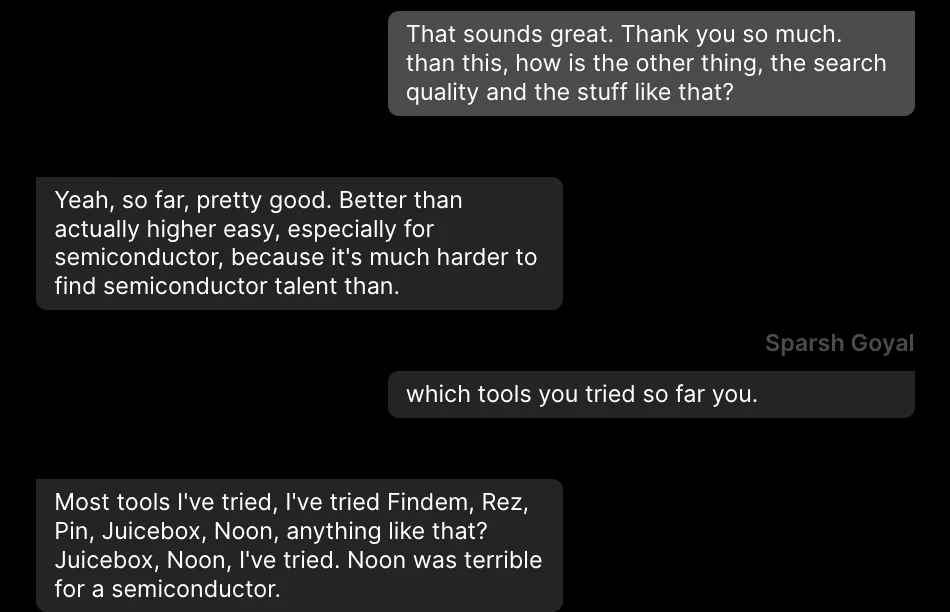
Chat: search quality pretty good, especially for semiconductor talent

The wall

Claude can think, but it can't see people. Plain Claude writes all five searches well. Then it stops. You run five searches by hand, open every profile in five lists, and paste each one back to check the proof.

The lineup has its own wall too. Claude can't tell you which lane is full and which is empty in your city until somebody searches. On a small market you may spend the morning on a lane with nobody in it.

The same lineup, two ways

Plain Claude, by hand

  1. Give Claude the title and brief. Get five sentences and five strings.
  2. Run each of the five searches yourself.
  3. Open every profile in five lists.
  4. Paste each one into Claude to check the proof for its lane.
  5. Merge, dedupe and rank the five lists by hand.
  6. Write each lane's first line and send it yourself.

Same job in The Cognitive

  1. Add The Cognitive as a connector in Claude: https://app.thecognitive.io/mcp. Make a free account, sign in on the Connect page and allow it.
  2. Claude writes the five sentences with this skill and runs each one as a search in The Cognitive.
  3. People come back ranked by fit, including people with other titles. Every card says why the person fits, with a quote from their profile.
  4. If a small town limits the list, the search offers to widen it. Claude asks before anything that spends credits or contacts someone.
100+ recruiters have shared their feedback
“My front runner is … The Cognitive … Yours really beat JuiceBox, PIN, and Metaview”
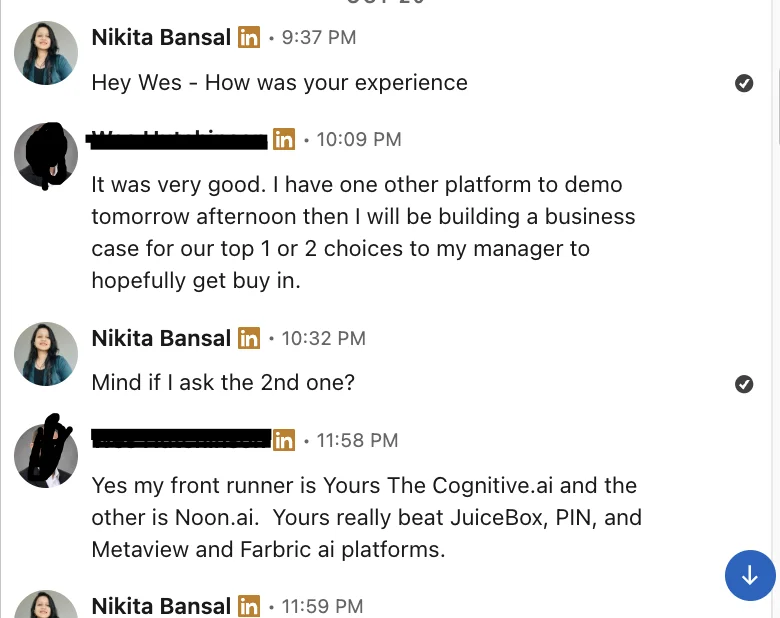
LinkedIn message: my front runner is The Cognitive.ai; it really beat JuiceBox, PIN, Metaview and Fabric

Put all five in the lineup

Make a free account and add the connector. Claude writes the five searches, The Cognitive runs each one, and every person comes back ranked with the reason they fit.

7-day free trial, 50 sourcing credits, no card.