Best Candidate Engagement Software in 2026: 10 Tools Ranked
By Sparsh Goyal, Founder at The Cognitive. Published · Last updated
- The best candidate engagement software for outbound hiring is The Cognitive, which emails people from your own mailbox and adds interested replies to the role, ready to invite to a live AI interview.
- hireEZ suits enterprise desks, Gem suits long-term nurture, Sense and Paradox suit text-first hiring, and Juicebox has a free plan.
- Keep sequences to about three emails, stop them on reply, and tell candidates upfront when an AI runs the interview.
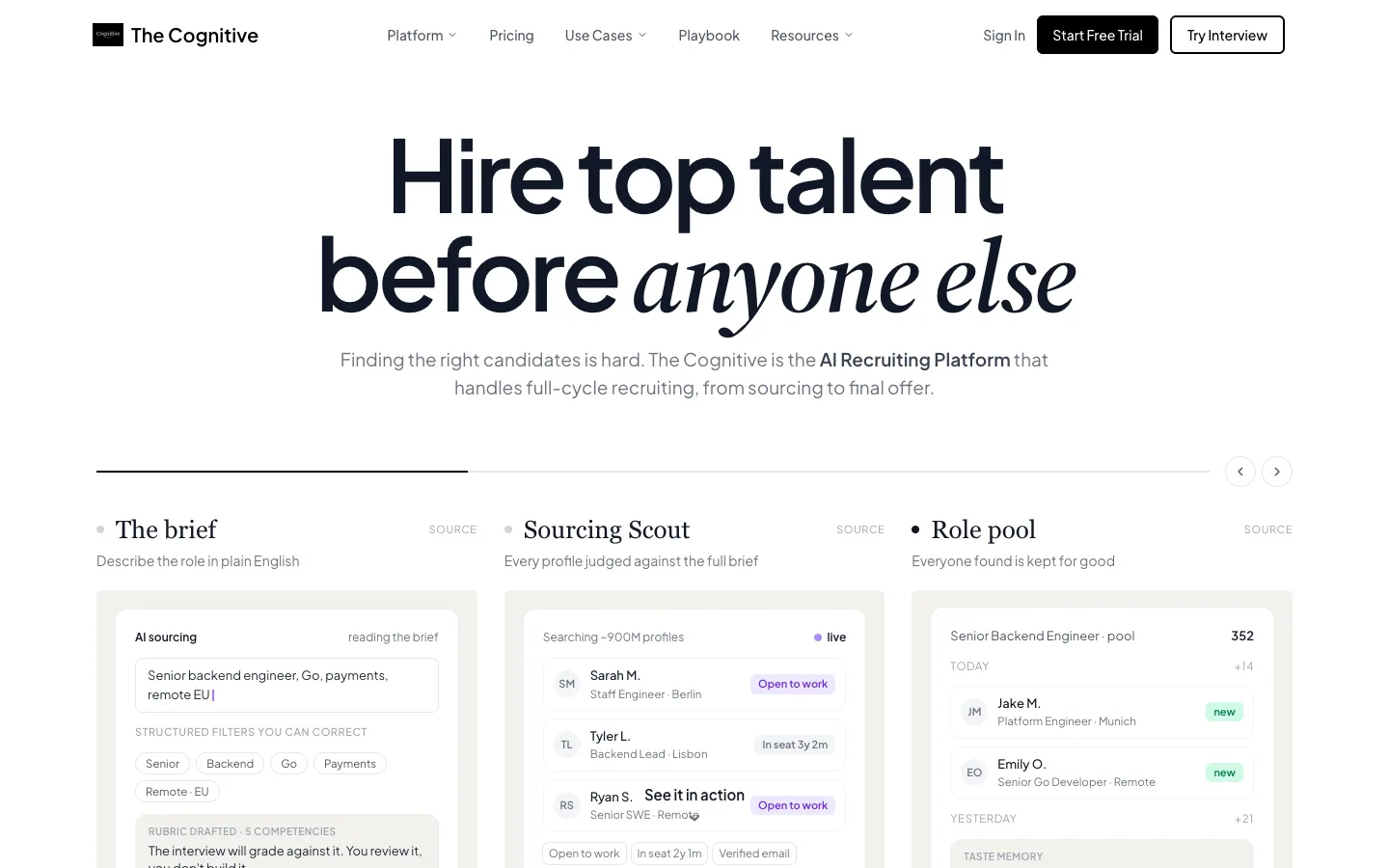
The best candidate engagement software for outbound hiring is The Cognitive. It finds people, emails them from your own mailbox, stops following up when they reply, and adds interested people to the role so you can invite them to a live AI interview.
Runner-ups: hireEZ for enterprise desks that want campaigns and AI phone screens, and Gem for in-house teams nurturing past candidates. Sense suits staffing firms that text their own database, and Juicebox suits sourcers who want AI sequences with a free plan.
Ashby studied more than 500,000 sourcing sequences and found a 19.6% average reply rate. In three-email sequences, almost half of replies came to the first email. Engagement is won in the first message and the days after it.
Disclosure: The Cognitive is our product.
The best candidate engagement software in 2026
- The Cognitive: best for outbound engagement, from the first email to a live AI interview.
- hireEZ: best for enterprise desks that want campaigns and AI phone screens on top of the ATS.
- Gem: best for long-term nurture of past candidates in talent communities.
- Sense: best for staffing firms that engage their own database by text, WhatsApp and voice.
- Juicebox: best for sourcers who want AI sequences from their own Gmail or Outlook.
- Phenom: best for large employers running behavior-triggered email, text and chat campaigns.
- Paradox: best for frontline applicants who apply and book by text.
- Beamery: best for global enterprises running branded talent-pool campaigns.
- GoodTime: best when engagement breaks down at interview scheduling.
- HireVue: best for careers-site chat that routes applicants to the right role.
What is candidate engagement software?
Candidate engagement software, also called a candidate engagement platform, is any tool that keeps a candidate responding from first contact to the interview and the offer, through outreach, follow-ups, text or chat, self-booking and screening.
CareerPlug's 2025 Candidate Experience Report found that poor experiences, such as a lack of communication, led 26% of job seekers to decline offers in 2024.
The category splits into five kinds of tool:
- Outbound outreach. Finds people who never applied and emails them.
- Recruiting CRMs. Keep past candidates warm over months.
- Text and chat. Reaches applicants by SMS, WhatsApp or a careers-site bot.
- Scheduling. Lets candidates book and rebook interviews.
- AI screening. A phone, voice, chat or video interview with no recruiter on the call.
Engagement is one part of the wider candidate experience; see candidate experience platforms.
How do the top candidate engagement tools compare?
Each tool is scored on seven yes or no checks taken from its own website. The number after each name is its score. Anything the site does not state counts as no.
| Tool | New people | Follow-ups | Text or chat | Booking | AI interview | Price shown | No sales call |
|---|---|---|---|---|---|---|---|
| The Cognitive (6) | Yes | Yes | No | Yes | Yes | Yes | Yes |
| hireEZ (6) | Yes | Yes | Yes | No | Yes | Yes | Yes |
| Gem (5) | Yes | Yes | No | Yes | No | Yes | Yes |
| Sense (5) | No | Yes | Yes | Yes | Yes | Yes | No |
| Juicebox (4) | Yes | Yes | No | No | No | Yes | Yes |
| Phenom (4) | No | Yes | Yes | Yes | Yes | No | No |
| Paradox (3) | No | No | Yes | Yes | Yes | No | No |
| Beamery (2) | No | Yes | Yes | No | No | No | No |
| GoodTime (2) | No | No | Yes | Yes | No | No | No |
| HireVue (2) | No | No | Yes | No | Yes | No | No |
AI interview formats: live video at The Cognitive, phone at hireEZ, voice at Sense and Phenom, chat or text at Paradox.
Which tool does it all, end to end?
For outbound hiring, The Cognitive covers the whole run in one account. It searches about 900M public profiles, emails people from your own mailbox, adds the ones who say yes to the role, and runs a live two-way AI video interview with the people you invite. hireEZ covers a similar run for enterprise teams, with an AI phone screen instead of video and enterprise plans priced by quote. Either way, you still need an ATS for job posts, applications and offers.
How were these tools ranked?
The score is the number of yes answers across seven checks:
- Finds people outside your own database.
- Sends automated email follow-ups.
- Messages candidates by text or chat.
- Lets candidates book interviews themselves.
- Runs an AI interview with the candidate.
- Shows a price on its website.
- Lets you start without a sales call.
A check counts only when the vendor's own site says so. Ties go first to a live video AI interview, then to a price on the website, then to reaching people who never applied, then to alphabetical order. That is why The Cognitive ranks above hireEZ at six each, Gem above Sense at five, and Juicebox above Phenom at four. Beamery, GoodTime and HireVue tie at two and fall in alphabetical order.
We ranked these tools using feedback from hundreds of recruiters we talk with on LinkedIn, plus each vendor's own site, pricing page and public reviews.
How do you choose candidate engagement software?
Do you need new people or warmer old ones?
Whether you need new people or warmer old ones decides the category before any feature does. Rediscovered candidates made up 46% of sourced hires in Gem's 2026 Recruiting Benchmarks Report (December 2025), against 26% in 2021. If you hold a large database of past applicants, a CRM pays off; the guide to candidate rediscovery shows how. If the people you need are not in it yet, pick a tool that searches outside it.
How many messages does it send, and when does it stop?
In Ashby's 2024 sourcing study, reply rates leveled off at about 23% once sequences went past three emails. A good tool sends a short sequence and stops the moment someone answers or opts out. Reply to a test sequence in the demo and watch.
Is every message personal?
In Ashby's 2024 sourcing study, sequences with AI personalization drew a 35.3% reply rate against 24.1% without it. Look for a line written about each person, not a merge field with their first name.
How will candidates feel about the AI step?
Greenhouse's 2026 Candidate AI Interview Report found that 38% of candidates had walked away from a process because it included an AI interview. The top trigger was a pre-recorded video scored by AI with no human present, cited by 33%. 70% said they were never clearly told upfront that AI would evaluate them. Pick a tool that says so in the invitation, and prefer a live conversation to a recording.
What happens after a yes?
A reply is wasted if it sits in an inbox for a week. Ask where an interested reply lands and how many clicks it takes to invite that person to an interview.
The 10 best candidate engagement tools, reviewed
1. The Cognitive: best for outbound engagement, from the first email to a live AI interview
Verdict: six of seven checks, carrying one person from a cold search to a recorded first interview.
The Cognitive pairs AI sourcing with live AI interviews. Describe the role in plain English to search about 900M public profiles, and each result explains why it fits. Reveal a personal email for anyone you want to reach.
Outreach goes from your own Gmail or Outlook mailbox, signed by you. Each person gets a line written about them by AI, then a first email and two follow-ups over about a week. Every email carries an easy opt-out, and the follow-ups stop when the person replies or opts out.
Replies land in your own inbox, and the campaign view labels each one Interested, Needs info, Question, Not interested, Opted out or Other. People who reply that they are interested are added to the role as candidates, and you send the interview invite.
Candidates invited to interview book their own time without an account, can reschedule or cancel from the email, and get reminders before the interview. The invitation email and the booking page tell candidates an AI runs the interview.
The AI interview is live two-way video of 10 or 20 minutes in a laptop or desktop browser. Questions follow each answer while the scoring rubric stays fixed for the role. You get the recording, the transcript and a scored report, and your team makes every decision.
Best for: recruiters who fill roles with people who never applied and want the first email, the replies and the first interview in one place.
Watch out for: it reaches people by email, so text-first hourly hiring fits Sense or Paradox better. It is not a nurture CRM and does not take applications. Outreach starts on Sourcing Pro, and ATS sync with 100+ ATS starts on Sourcing Max or Interviews Pro.
Pricing model: AI Sourcing and AI Interviews are separate monthly plans, each from $99 a month. Credits: 1 for each person a search shows, 4 to reveal a personal email, and 12 for a phone number on Pro and above. A 20-minute interview uses 100 credits.
2. hireEZ: best for enterprise desks that want campaigns and AI phone screens on top of the ATS

Verdict: six of seven checks, built for teams that buy through a sales process.
hireEZ sells EZ Agent as "end-to-end agentic recruiting for enterprise teams", where agents "source, review, screen and schedule." It searches "a billion-plus profiles, 45+ platforms".
Campaigns reach people, AI phone interviews pre-screen them, an AI scheduler books the next step, and a talent CRM resurfaces past applicants. Its pricing page lists email, SMS and InMail outreach. It does not say whether email goes from your own mailbox, or whether candidates pick their own interview slot.
Best for: enterprise and staffing desks that want sourcing, campaigns, phone screens and scheduling as one layer over their ATS.
Watch out for: the screen is a phone call, not video, and the full product is configured by quote.
Pricing model: a solo plan with a published monthly price and a 7-day free trial. Enterprise deals are priced against the tools hireEZ replaces, per seat.
3. Gem: best for long-term nurture of past candidates in talent communities
Verdict: five of seven checks, and the strongest pick here for patient, months-long nurture.
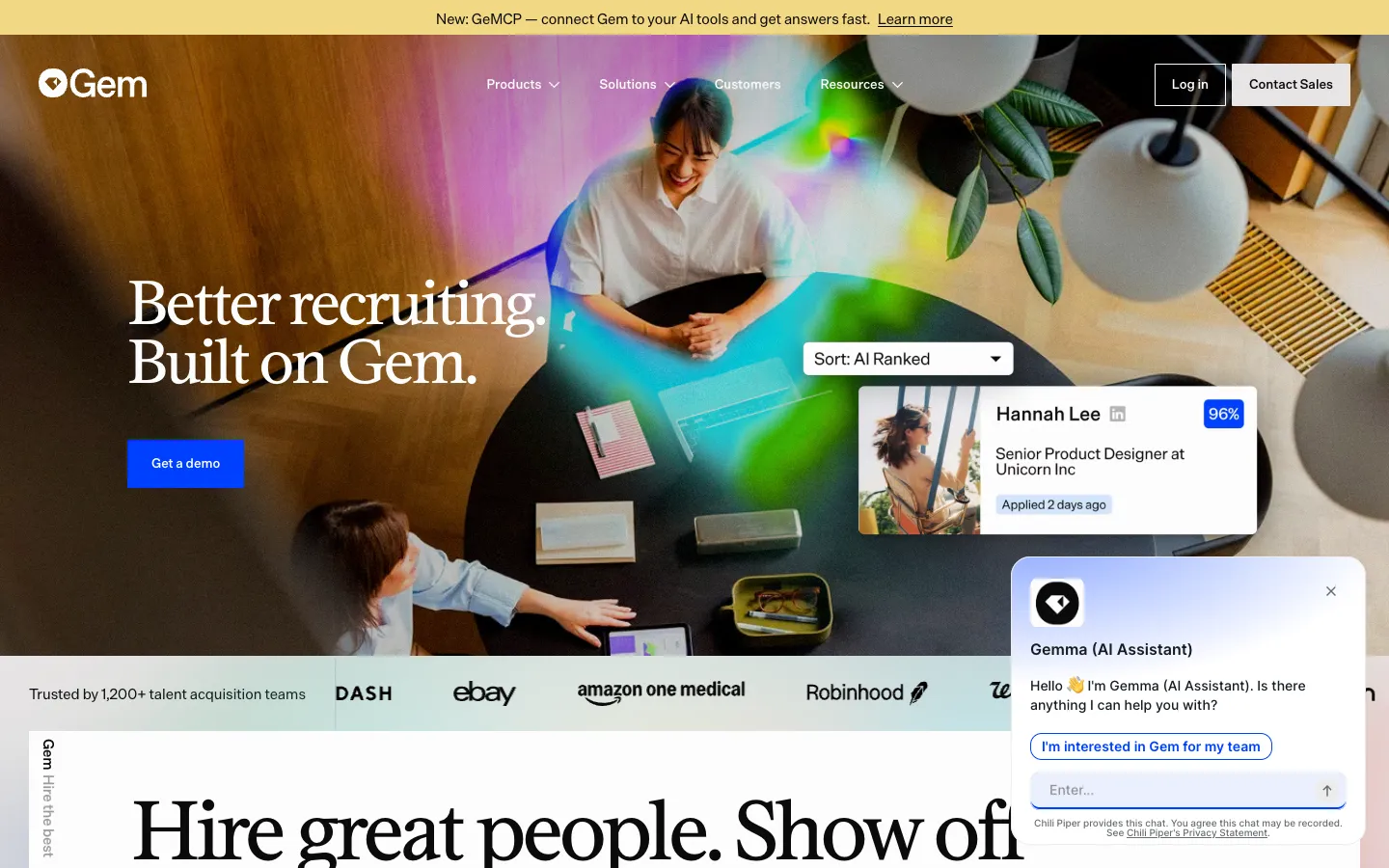
Gem's CRM promises to "keep talent pipelines warm with always-on candidate profiles and automated nurture sequences." It runs talent communities and nurture campaigns, drafts and sends personalized outreach, and syncs deeply with Greenhouse, Workday and Lever. Its AI sourcing agent searches "800M+ profiles", and scheduling handles interview booking.
Best for: in-house talent teams with a large pool of past candidates to keep warm.
Watch out for: above the startup program, pricing is custom and starts with sales, and its site describes no AI interview.
Pricing model: custom pricing based on your company's FTE count, with standard and AI-powered seats. A startup plan for the smallest companies shows a price and can be bought online.
4. Sense: best for staffing firms that engage their own database by text, WhatsApp and voice

Verdict: five of seven checks, and the widest set of channels on this list.
Sense calls itself a talent engagement platform that will "turn your ATS into an active talent engine." It offers one-to-one, campaign and automated SMS and WhatsApp messaging, a chatbot and conversational voice AI. Its packages add scheduling, screening and automated reminders.
It works from your ATS rather than searching the open web for new people.
Best for: staffing firms and high-volume teams that reach their own candidates by text, WhatsApp and voice.
Watch out for: you need a database worth engaging, and setup runs through an implementation team.
Pricing model: monthly packages with published starting prices; enterprise staffing by quote, with three months of hypercare.
5. Juicebox: best for sourcers who want AI sequences from their own Gmail or Outlook
Verdict: four of seven checks, with a free plan to start.
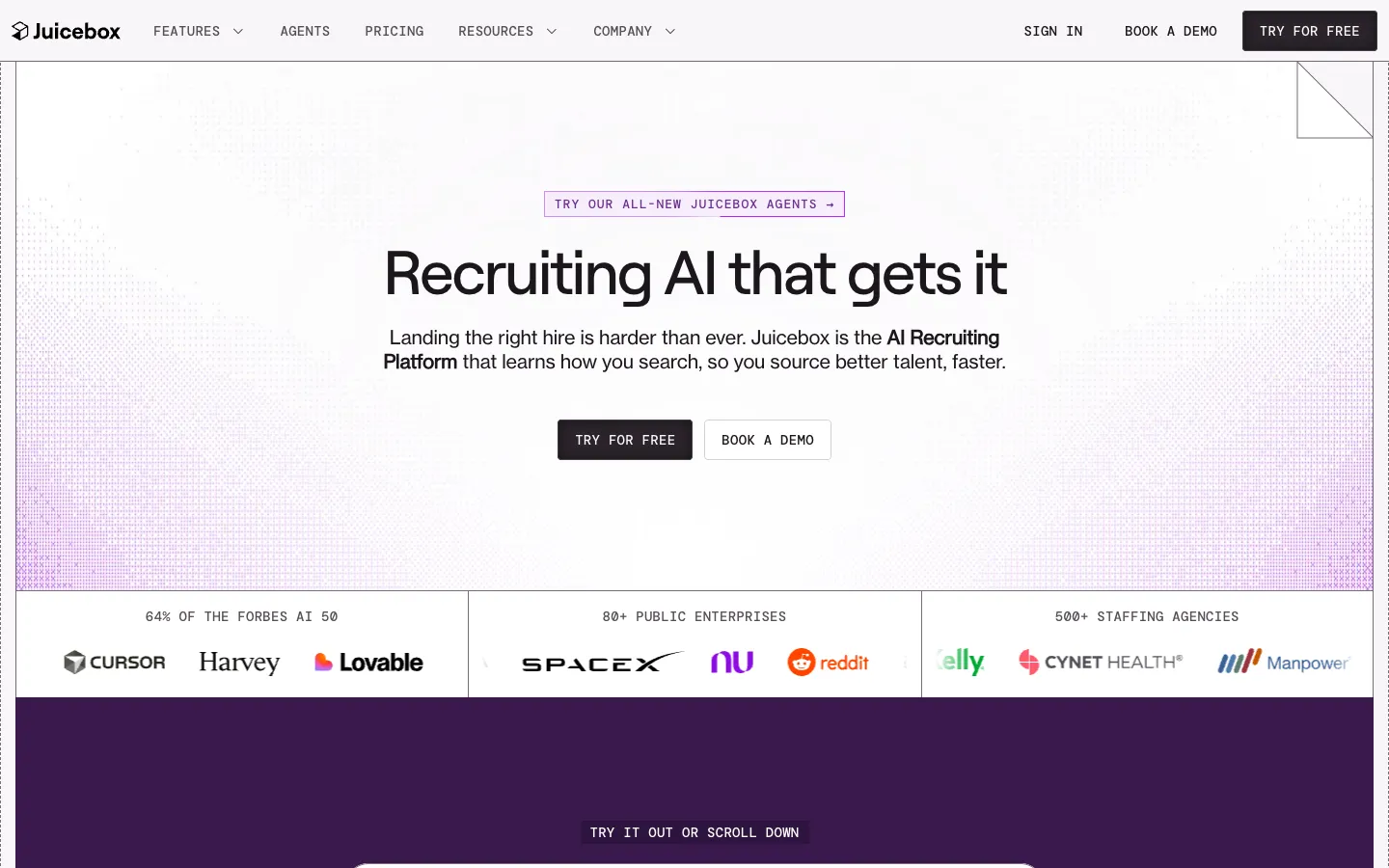
Juicebox offers "always-on sourcing that you control" across "800M global profiles and 30+ diverse data sources." Its sequences are "personalized for each send with AI". You connect Gmail or Outlook to send from your own address, and agents can be set to auto-email.
The strength is the first touch, so a yes still needs a recruiter to pick it up.
Best for: sourcers and small teams who want AI search and personal sequences without a sales call.
Watch out for: the site describes no interview and no self-booking.
Pricing model: per seat per month with a free plan and published self-serve prices; Business is custom, and agents are priced per agent per month.
6. Phenom: best for large employers running behavior-triggered email, text and chat campaigns
Verdict: four of seven checks, inside a full enterprise talent suite.
Phenom's talent CRM aims to start hiring "with a warm pipeline instead of a blank search every time." Campaigns go out "by email, text, and chat", and each one can be set to fire when a candidate takes an action.
The suite around it adds a careers site, interview scheduling, a voice screening agent and an AI interviewer. Its site does not describe searching the open web for new people.
Best for: large employers that want CRM campaigns, a careers site, scheduling and voice screening from one vendor.
Watch out for: it is an enterprise purchase with an RFP and a long rollout.
Pricing model: by request through a pricing and RFP form; no price on the website.
7. Paradox: best for frontline applicants who apply and book by text
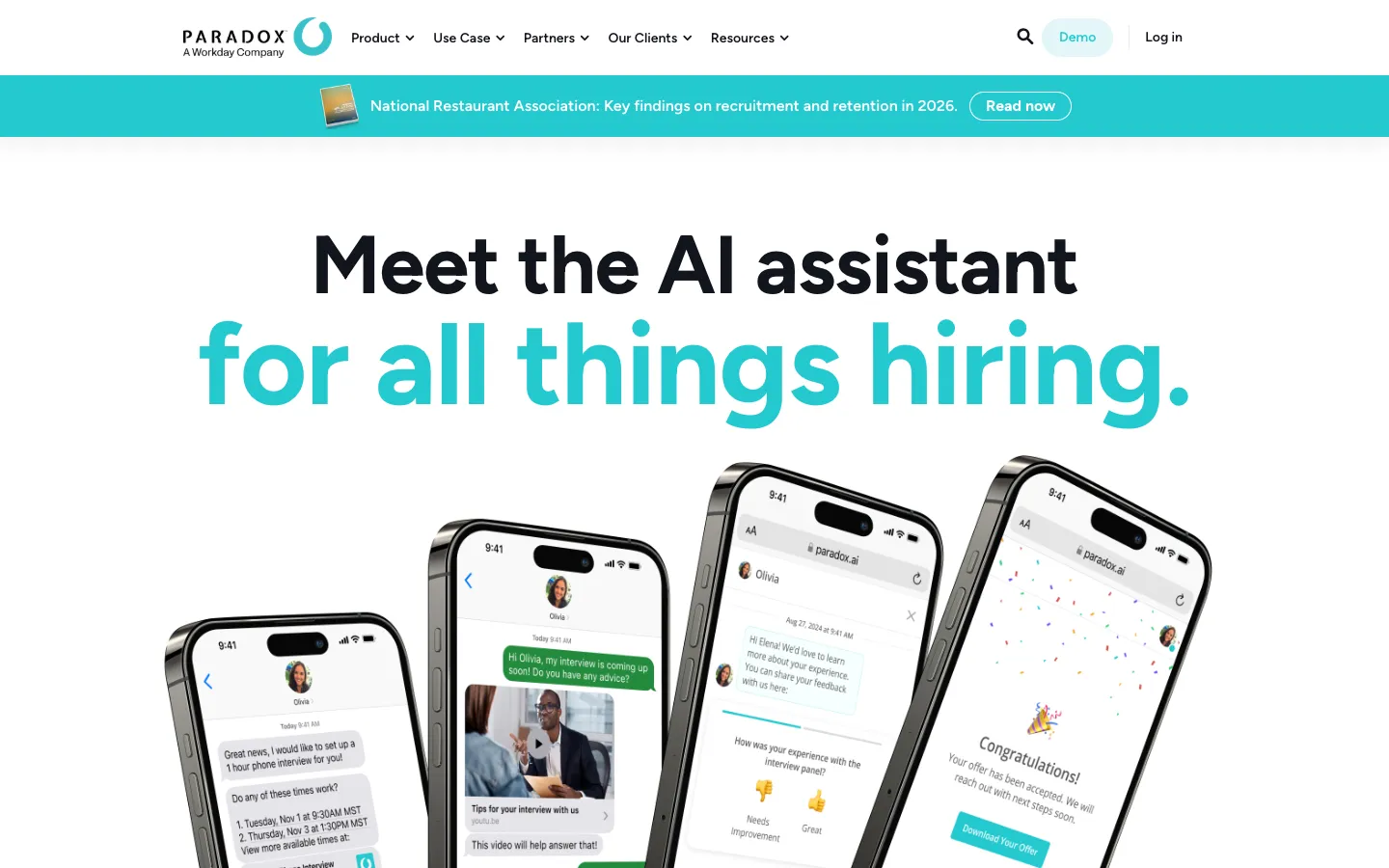
Verdict: three of seven checks, and the clearest fit on this list for hourly hiring.
Paradox sells "conversational hiring software that gets work done for you", with "mobile-first automation for frontline workers and managers." Candidates apply by chat, answer qualifying questions "through chat or text", and pick their own interview slot. Workday completed its acquisition of Paradox on 1 October 2025.
For a store or warehouse filling shifts, the whole flow happens on the applicant's phone.
Best for: hourly and frontline hiring where applicants apply, screen and book by text.
Watch out for: it is now part of Workday, so check how it fits if you run a different HR system.
Pricing model: by demo request; no price on the website.
8. Beamery: best for global enterprises running branded talent-pool campaigns
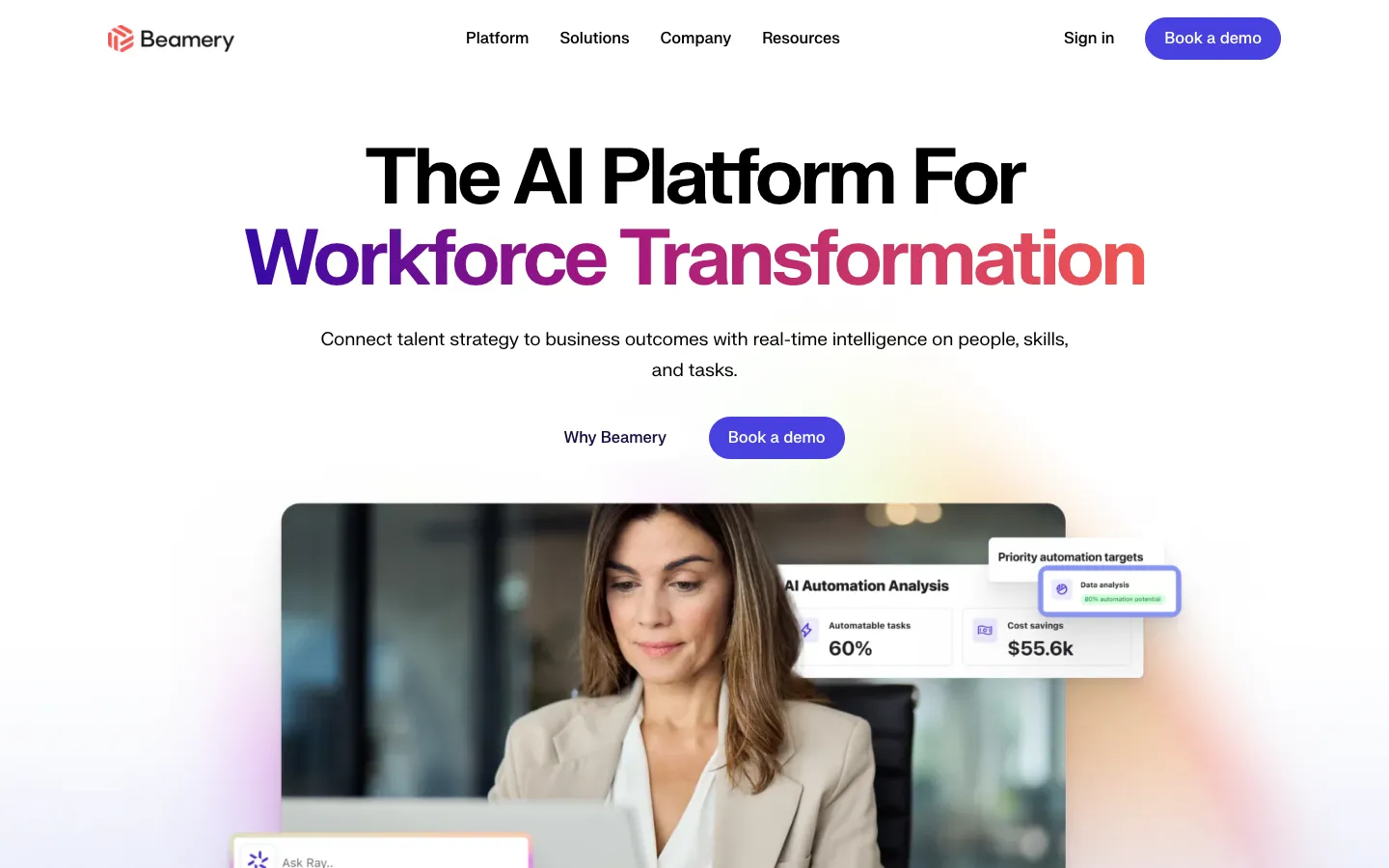
Verdict: two of seven checks, strong on campaigns and talent pools.
Beamery's engagement page offers "a powerful candidate engagement platform." Its talent marketing runs "automated multi-touch campaign triggers, tailored to candidates' past engagement", and it can reach people by SMS and WhatsApp. The CRM builds targeted talent pools and resurfaces silver medalists.
Best for: global employers nurturing large talent pools with branded email and text campaigns.
Watch out for: it does not describe self-booking or AI screening, so you will add tools for both.
Pricing model: by demo; no price on the website.
9. GoodTime: best when engagement breaks down at interview scheduling
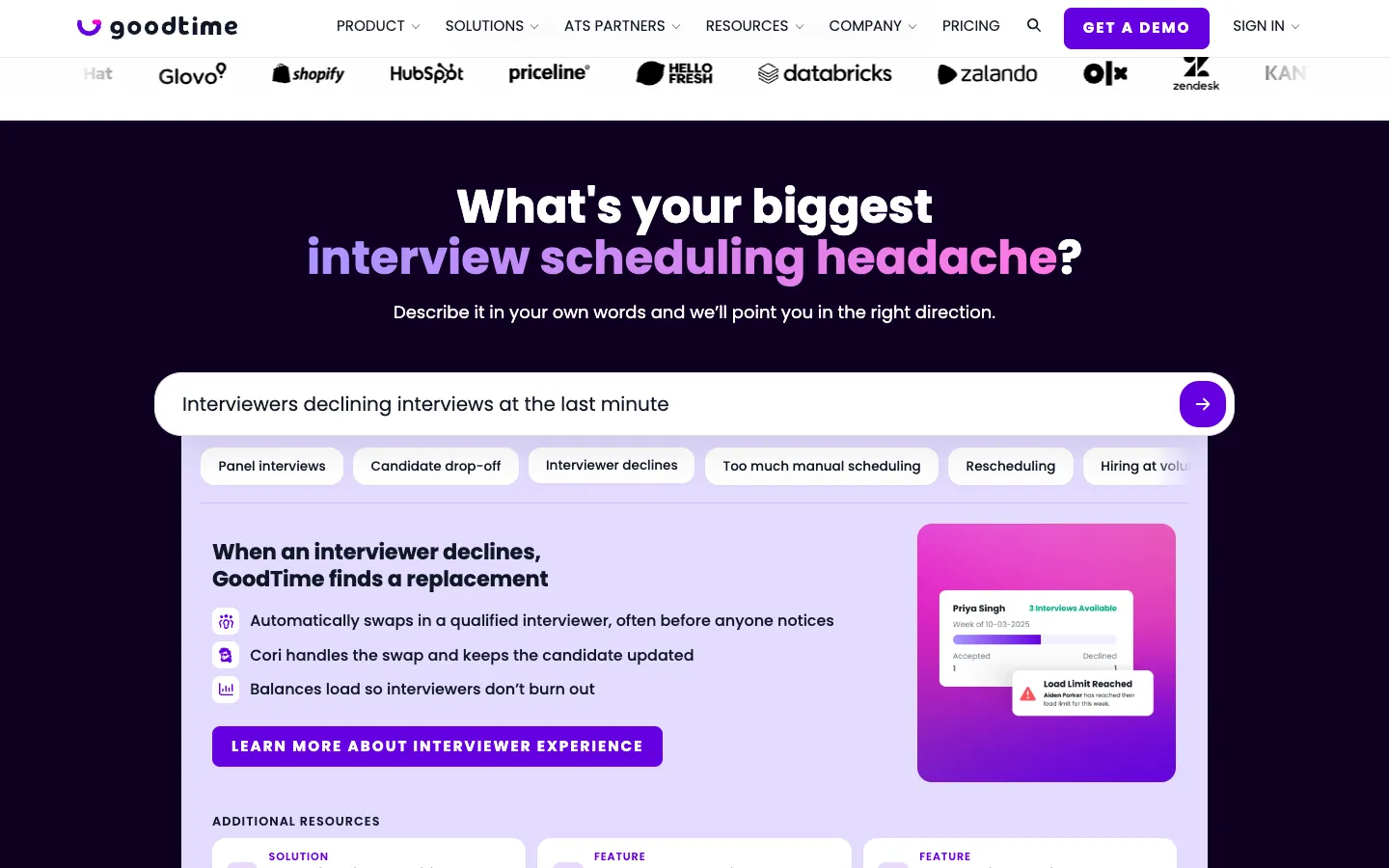
Verdict: two of seven checks, and the specialist for the interview loop.
GoodTime "automates complex interview scheduling, keeps candidates and interviewers connected." It offers a branded self-scheduling portal, one-to-one and bulk texting by SMS and WhatsApp, and an AI notetaker for interviews.
Best for: teams that lose candidates in multi-round, multi-interviewer loops.
Watch out for: you need another tool to find and first contact candidates.
Pricing model: based on the number of candidates a year, not users, through a custom proposal; no price on the website.
10. HireVue: best for careers-site chat that routes applicants to the right role

Verdict: two of seven checks, aimed at the applicant who lands on your careers site.
HireVue's engagement tools promise "AI that understands candidate intent and not just candidate keywords." A website chat agent learns about each visitor, answers questions and routes people to roles "while your team sleeps." Around it sit AI screening interviews that run around the clock, video interviewing, assessments and scheduling.
Best for: enterprises with heavy careers-site traffic that want chat, screening and assessments from one vendor.
Watch out for: no published price, every plan starts with a demo, and its site does not say candidates pick their own interview slot.
Pricing model: plans by request; no price on the website.
When not to pick The Cognitive
The Cognitive is the wrong pick in four cases.
- Your applicants answer texts, not emails. For hourly and frontline roles, Paradox or Sense meet candidates where they are. The lists of hourly hiring software and high-volume hiring software go further.
- Your best candidates are already in your database. If the job is keeping thousands of past applicants warm for months, Gem, Beamery or Phenom are built for nurture.
- Your problem is the interview loop. If people drop out between panel rounds, GoodTime fixes that step.
- Your candidates interview on a phone. The live AI interview needs a laptop or desktop browser.
What mistakes cost candidate replies?
- Following up after a reply. A nudge to someone who already answered reads as mass mail.
- Going silent after the screen. In Greenhouse's 2026 Candidate AI Interview Report, 51% of candidates who completed an AI interview never heard back. Engagement includes the no.
- Writing the same message to everyone. The recruiting email templates and the candidate outreach masterclass show the difference.
To start, run one role through one tool for two weeks and count interested replies and booked interviews, not emails sent. With The Cognitive, describe the role, shortlist the people who fit, connect your mailbox and send. The 7-day trial needs no card, and your first 100 people are free. Start free with The Cognitive.
Sources
- Ashby, Talent Trends Report: Candidate Sourcing (500K+ sequences, January 2022 to January 2024), March 2024. ashbyhq.com
- CareerPlug, 2025 Candidate Experience Report, February 2025. careerplug.com
- Greenhouse, 2026 Candidate AI Interview Report (2,950 job seekers), 1 May 2026. greenhouse.com
- Gem, Key takeaways from the 2026 Recruiting Benchmarks Report, 1 December 2025. gem.com
- Workday, Workday Completes Acquisition of Paradox, 1 October 2025. newsroom.workday.com
- Vendor homepages and pricing pages: hireez.com, sensehq.com, juicebox.ai, phenom.com, gem.com, hirevue.com, paradox.ai, beamery.com, goodtime.io.
Frequently Asked Questions
What is the best candidate engagement software in 2026?
The Cognitive is the best candidate engagement software for outbound hiring. It finds people outside your database and emails them from your own Gmail or Outlook mailbox, with follow-ups that stop on reply. Interested people are added to the role, and you invite them to a live AI video interview. For text-first hourly hiring, Sense or Paradox fit better.
What is affordable candidate engagement software for a small recruiting team?
Juicebox, hireEZ, Gem and The Cognitive all let a small team start without a sales call. Juicebox has a free plan, hireEZ a solo plan with a 7-day trial, and Gem a startup plan for very small companies. The Cognitive has a 7-day trial with no card. Its plans start at $99 a month.
How much does candidate engagement software cost?
It depends on the pricing model, and few tools publish prices. The Cognitive, Juicebox and hireEZ's solo plan show prices you can buy online, and Sense publishes starting prices. Gem prices by FTE count above its startup plan, GoodTime by candidates a year, and Phenom, HireVue, Paradox and Beamery by quote.
What is the difference between candidate engagement software and a candidate experience platform?
Candidate engagement software keeps people responding, while a candidate experience platform covers how the whole process feels. Experience platforms also look at the careers site, the application and what happens after a decision.
Is there an all-in-one candidate engagement platform?
For outbound hiring, The Cognitive covers the most steps in one account: search, email outreach and a live AI video interview. hireEZ covers a similar run for enterprise teams with an AI phone screen. You still need an ATS for job posts, applications and offers.
How do you improve candidate engagement?
Send short, personal sequences that stop on reply, say upfront when AI is involved, and answer everyone, including the people you turn down.
What is the difference between candidate engagement software and a recruiting CRM?
A recruiting CRM is one kind of candidate engagement software, built to nurture people already in your database. Engagement software also covers outreach to new people, texting, self-booking and AI screening.
Which candidate engagement tools work best for high-volume or hourly hiring?
Paradox and Sense fit high-volume and hourly hiring best, because candidates apply, answer and book by text or chat on their phones. GoodTime helps when the bottleneck is scheduling interview rounds.
Do candidates mind an AI interview as part of the process?
Some do, especially when it is a recording or comes as a surprise. Greenhouse's 2026 report found 38% of candidates had walked away from a process over an AI interview. Tell candidates upfront and prefer a live conversation.
How many follow-up emails should a recruiter send?
Two follow-ups after the first email is enough for most roles. Ashby's 2024 study of more than 500,000 sequences found reply rates leveled off at about 23% beyond three emails.
Related reading
- Recruiting Outreach Software: The 10 Best Tools for Reaching Candidates in 2026
- Recruiting CRM Software: The 10 Best for Candidate Pipelines in 2026
- Candidate Experience Platforms Explained: What They Cover, How to Measure Them and 8 Tools to Know
- Best EOR Companies in 2026: 11 Employer of Record Providers Ranked, Plus the Step Before
- Best Restaurant Hiring Software in 2026: 10 Tools Ranked
- Best Retail Hiring Software in 2026: 9 Tools for Store Teams and Store Leaders