Best Candidate Tracking Software in 2026: 10 Tools Ranked by Stage
By Sparsh Goyal, Founder at The Cognitive. Published · Last updated
- The best candidate tracking software for people who never applied is The Cognitive, which tracks one person from the first search to your ATS.
- Pin has the only free plan on this list, Loxo suits agencies, SeekOut and hireEZ suit enterprise teams, and Gem suits in-house teams.
- If most of your hires apply, an applicant tracking system is your candidate tracker, so start with an ATS list instead.
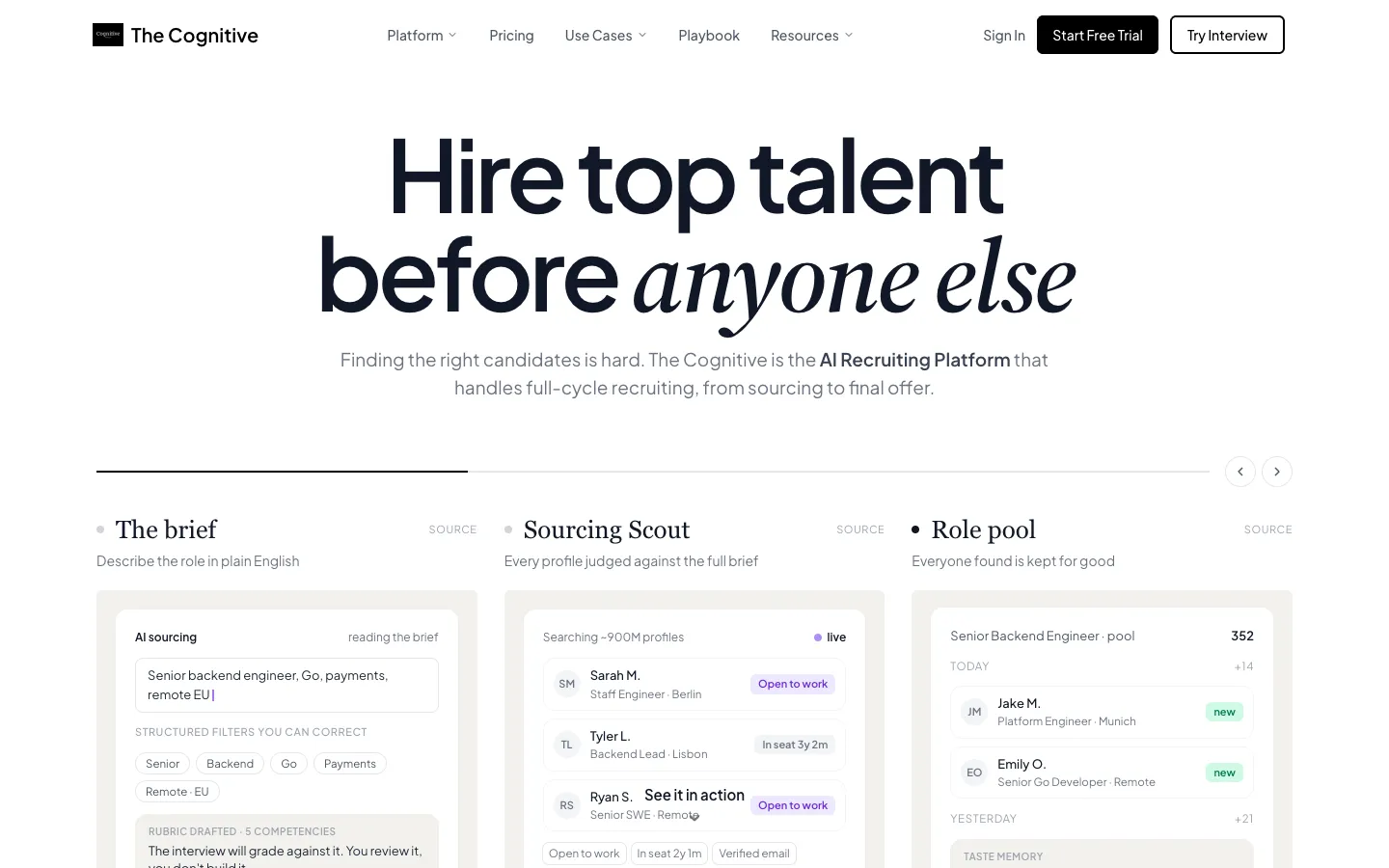
The best candidate tracking software for people who never applied is The Cognitive, which tracks one person through five stages: find, contact, reply, interview and handoff to your ATS. No other tool here states all five on its own site. The term usually means an applicant tracking system (ATS), which follows applicants to an offer; the best applicant tracking systems list covers that job.
Pin has the only free plan on this list, Loxo suits agencies that want one system of record, and SeekOut and hireEZ suit enterprise teams. The Cognitive is not an ATS, so keep one for job posts, applications and offers. Tracking people who never applied is worth the effort: in Gem's 2026 Recruiting Benchmarks Report (December 2025), people recruiters sourced directly made up 2.6% of applications but 11% of hires.
Disclosure: The Cognitive is our product.
The best candidate tracking software in 2026
- The Cognitive: best for tracking people who never applied, from first search to your ATS.
- Pin: best free plan for tracking sourced people from first email to booked call.
- Loxo: best for agencies that want ATS, CRM, sourcing and outreach in one system of record.
- SeekOut: best for searching outside profiles and your ATS together, with an AI video screener.
- hireEZ: best for enterprise teams that want AI phone screening on top of their ATS.
- Bullhorn: best for staffing firms tracking candidates, clients and placements together.
- Crelate: best for recruiting firms that want sourcing, CRM and ATS in one, with a published price.
- Gem: best for in-house teams that want prospects and applicants in one system.
- Lever: best ATS with a built-in CRM for nurturing people over months.
- Manatal: best low-cost ATS with an AI video interviewer, for small teams and agencies.
What is candidate tracking software?
Candidate tracking software is a system that records where each candidate stands in your hiring process, who contacted them and what happened next.
An ATS starts tracking at the application, so for people you went looking for, tracking has to start earlier. Rediscovered candidates, people a company had already saved in its CRM or ATS, made up 46% of sourced hires in Gem's December 2025 report, against 26% in 2021. See candidate rediscovery.
Candidate tracking software comes in four kinds:
- Applicant tracking systems. The system of record for job posts, applications, interviews and offers (see the list of applicant tracking systems).
- Recruiting CRMs. Records of people you nurture over months, ranked on nurture in the recruiting CRM guide.
- Sourcing and outreach tools. They find people and email them, ranked on the message in the list of recruiting outreach software.
- End-to-end tools. One record from the search through outreach and an interview into your ATS.
How do you track people who never applied?
A sourced candidate passes through five stages, and good tracking keeps one record across all of them. The guide to passive candidate sourcing covers the finding itself.
- Find. The person turns up in a search outside your own database, with a reason they matched.
- Contact. You send the first email, and the record shows what went out and when.
- Reply. A reply stops the follow-ups and moves the person on its own.
- Interview. Someone, or something, runs the first conversation, and the result lands on the same record.
- Hand off to the ATS. The person lands on an open job in your ATS with their history, not retyped.
The reply stage is where spreadsheets break. Ashby's 2024 sourcing study of more than 500,000 sequences found a 19.6% average response rate. More than three emails did not lift reply rates much past about 23%, so follow-ups must stop the moment someone answers.
How do the top tools compare, stage by stage?
Each cell shows what the vendor's own site says. "Not stated" means the site is silent, not that the tool cannot. The number after each name is its stage count.
| Tool | Find | Contact | Reply | Interview | ATS | Price on website? | Start |
|---|---|---|---|---|---|---|---|
| The Cognitive (5) | 900M profiles | Own mailbox | Stops sequence | Live AI video | 100+ ATS | Yes | Free trial |
| Pin (4) | 850M+ profiles | Auto-advances | Books calls | Add-on; Enterprise | Yes | Free plan | |
| Loxo (4) | 850M+ graph | Sequences | Logs responses | Not stated | Is the ATS | Yes | Free trial |
| SeekOut (4) | 1B+ profiles | Outreach | Not stated | AI video | Two-way sync | Partly | Free trial |
| hireEZ (4) | Open web | Email, SMS, InMail | Not stated | AI phone | Your ATS | Partly | Free trial |
| Bullhorn (4) | External search | Yes | Not stated | AI screening | Is the ATS | Partly | Demo |
| Crelate (3) | Beyond your database | Email, text | Not stated | Not stated | Is the ATS | Yes | Free trial |
| Gem (3) | 800M+ profiles | Sequences | Not stated | Scheduling | Two-way sync | Partly | Demo |
| Lever (3) | Not stated | Nurture | Shows replies | Transcripts | Is the ATS | No | Demo |
| Manatal (2) | Enriches only | Partly | Partly | AI video | Is the ATS | Yes | Free trial |
Which tool does it all, end to end?
The Cognitive is the only tool here whose own site states all five stages. Pin, Loxo, SeekOut, hireEZ and Bullhorn each state four. Pin and Loxo leave the interview to you, while SeekOut, hireEZ and Bullhorn do not say how replies are tracked. If all-in-one means job posting and applications too, you need an ATS beside any of them.
How we ranked these 10
The ranking rule is one number: how many of the five stages a tool tracks one person through. A stage counts only when the vendor's own site says the product does it.
- Finding means searching outside your own database, not enriching profiles you add.
- Interviewing means the product runs the first interview or screen itself, not booking or transcribing yours.
- "Partly" does not count.
- An ATS counts as the handoff, because the person is already there.
Ties go first to the tool that publishes its price on its website (yes, then partly, then no). Next comes the easiest start: a free plan, then a free trial, then a demo. Last comes a trial that states no card is needed.
We considered 16 tools. Ashby, Recruiterflow, Recruit CRM, Avature and Juicebox are reviewed in this site's CRM and outreach lists instead, and Beamery now sells workforce transformation rather than candidate tracking.
We ranked these tools using feedback from hundreds of recruiters we talk with on LinkedIn, plus each vendor's own site, pricing page and public reviews.
How do you choose candidate tracking software?
Do your hires come from applicants or from people you find?
If most hires apply, an ATS is the tracker. Applicant volume is rising either way: Ashby's 2026 Talent Trends Report (April 2026) found the average recruiter processing 291 applications per hire, up from roughly 100 in early 2021. If your hard roles go to people you look for, pick a tool that searches outside your database.
Ask: show one sourced person moving from search to an open job in the ATS without anyone retyping their details.
What happens when someone replies?
The reply should stop the sequence and change the person's status on its own. Ashby's 2024 study found almost half of replies to three-email campaigns come to the first email, so a follow-up sent after a reply is a common mistake.
Ask: reply to a test sequence during the demo and watch where the reply shows up.
Who runs the first interview?
Some tools book a call with you, some transcribe your call, and a few run the interview themselves. If screening is your bottleneck, the format matters: phone, recorded video or live two-way video.
Ask: is the interview live, how long does it run, and what does the report show afterwards?
How does your candidate pipeline reach the ATS?
A record that never reaches your ATS becomes a second silo. Some tools here are the ATS; others sync with yours, often only on higher plans.
Ask: which ATSs do you sync with, on which plan, and does the person land on an open job with their history?
How is it priced?
Expect per user pricing, plans plus credits, or a quote; each tool's model is listed in its review below. The guide to ATS pricing covers the ATS side.
Ask: which of the five stages are in the price on your website, and which need a quote?
The 10 best candidate tracking tools, reviewed
1. The Cognitive: best for tracking people who never applied, from first search to your ATS
Verdict: five of five stages, and every stage sits on a plan with a published price.
The Cognitive is AI sourcing and live AI interviews in one account. Describe the role in plain English and search about 900M public profiles, ten people a page. Each result explains itself under "Why this match"; weaker results carry a "Possible match" label.
Once shortlisted, each person carries one status: Shortlisted, Contacted, Replied, then Interested or Not interested. Email sequences go from your own mailbox and stop when someone replies or opts out, so the status moves on its own.
Anyone on the shortlist can take a live two-way AI video interview of 10 or 20 minutes in a laptop or desktop browser, in 9 languages. The rubric is fixed per role and the questions follow each answer. The status moves through Invited, Scheduled and Awaiting review, and you get a scored report.
Then send the person to an open job in your ATS, one of 100+ it connects to, and see the ATS's own stage name beside them. For candidates who came from your ATS, interview results go back to their application.
Best for: recruiters who fill hard roles with people who never applied and want one record per person from search to ATS.
Watch out for: it is not an ATS, so keep one for job posts, applications and offers. There is no Chrome extension and no LinkedIn InMail. Outreach starts on Sourcing Pro, ATS sync on Sourcing Max or Interviews Pro, and interviews need a laptop or desktop browser.
Pricing model: AI Sourcing and AI Interviews are separate monthly plans, each from $99 a month. Credits: 1 for each person a search shows (once), 4 for a personal email and 12 for a phone number on Pro and above. A 20-minute interview uses 100 credits. Price on website: yes.
2. Pin: best free plan for tracking sourced people from first email to booked call
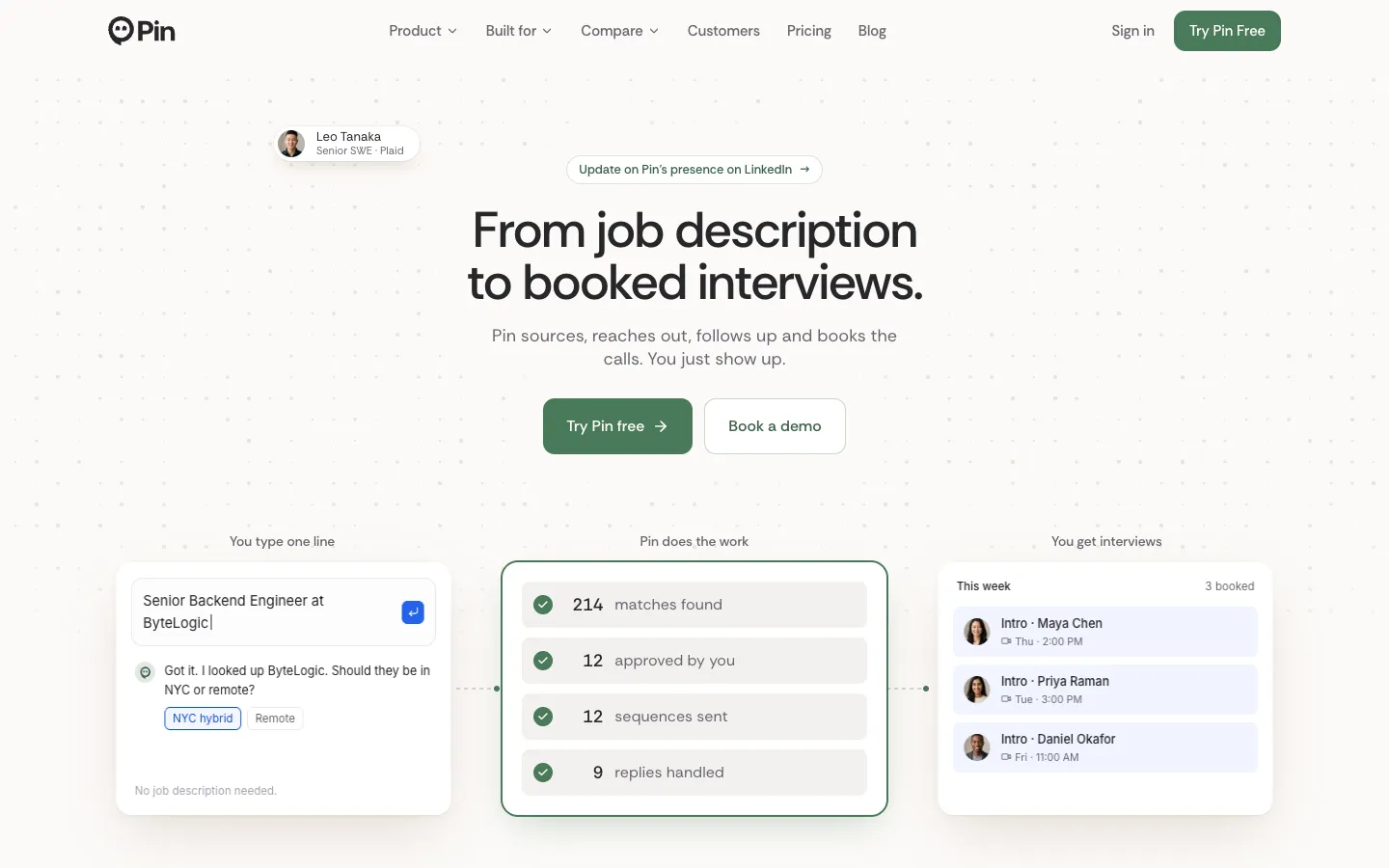
Verdict: four of five stages. Pin finds people, follows up and moves them on when they reply, then books the call for you to take.
Pin says: "Pin sources, reaches out, follows up and books the calls. You just show up." It searches "850M+ profiles". It also lists "120+ ATS integrations, your inbox, your calendar, and Slack."
Its recruiting CRM page promises "Every candidate, every message and every reply in one place, with candidates moving forward on their own." The stages run Approved, Contacted, Replied and Interview, with a person "auto-advanced on reply".
Best for: solo recruiters and small teams who want sourced outreach tracked for free.
Watch out for: ATS integration is a paid add-on below Enterprise, and Pin books calls rather than interviewing anyone.
Pricing model: a free forever plan with email-only sequences, then per user per month (Solo billed annually), and Enterprise by custom quote. Price on website: yes.
3. Loxo: best for agencies that want ATS, CRM, sourcing and outreach in one system of record
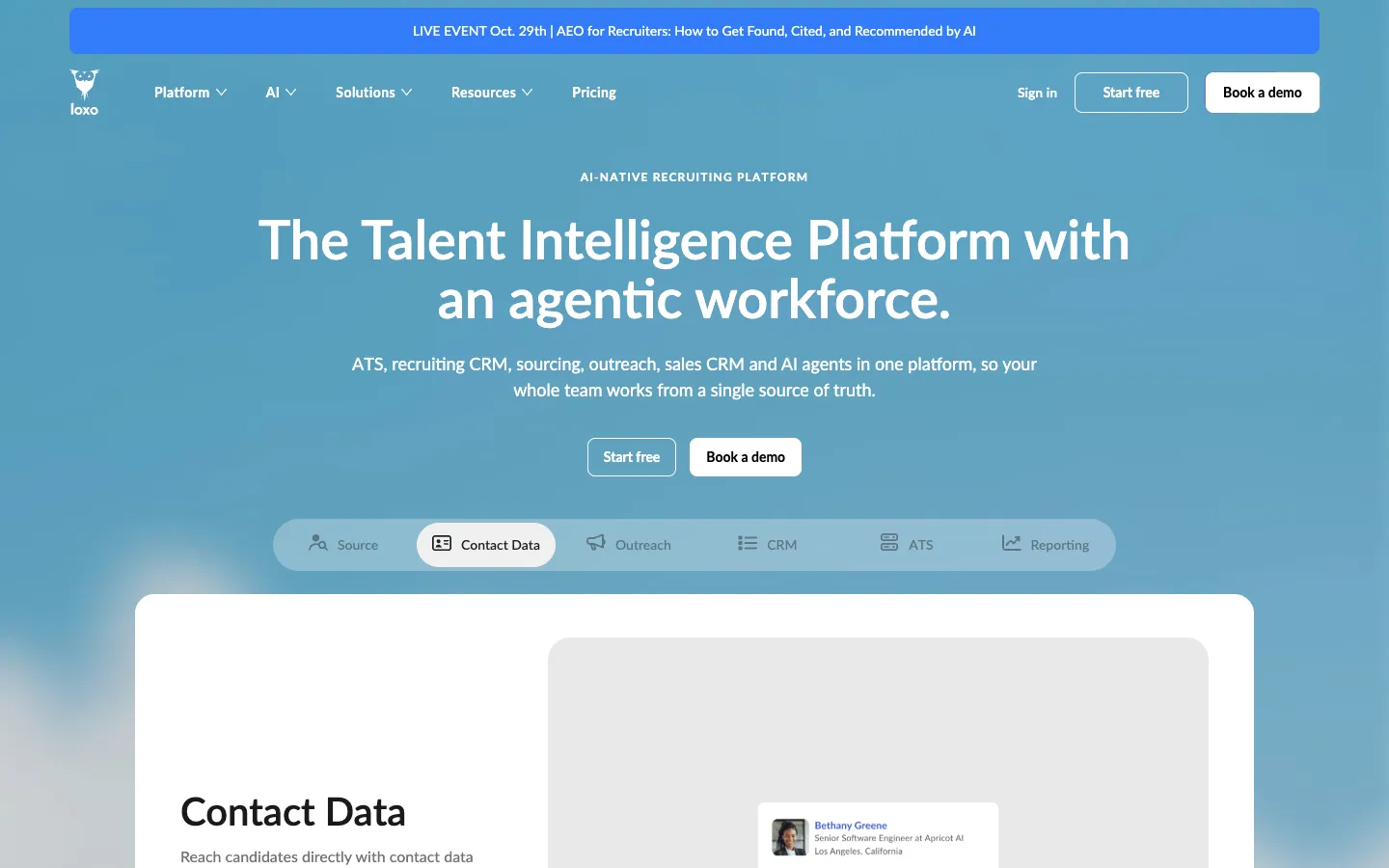
Verdict: four of five stages, and the record never leaves Loxo, because Loxo is the ATS.
Loxo puts "ATS, recruiting CRM, sourcing, outreach, sales CRM and AI agents in one platform." Its pricing page describes a full-market search of "the 850M+ talent graph together with your own private database." Its outreach page says it will "log calls, messages, responses, and meetings automatically on every profile."
For an agency, one system holds the search, the sequence, the job and the client. Its site does not describe an interview it runs.
Best for: recruiting agencies replacing a separate ATS, CRM and sourcing tool with one.
Watch out for: it works best as your system of record, so it is a bigger switch than an add-on.
Pricing model: per user per month, billed annually, with published starting prices and agent credits per seat; a 7-day free trial with no card. Price on website: yes.
4. SeekOut: best for searching outside profiles and your ATS together, with an AI video screener
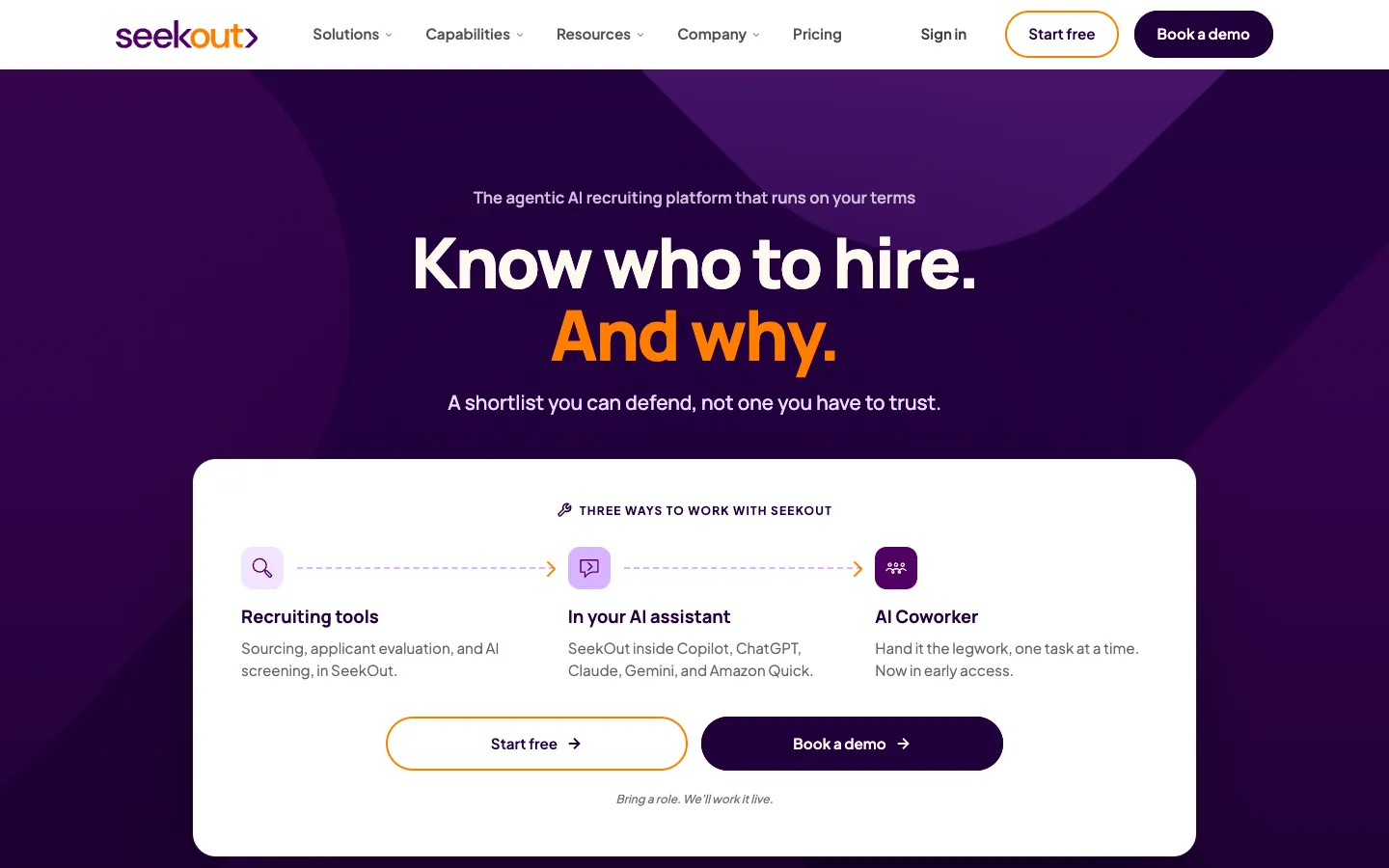
Verdict: four of five stages, with the biggest stated search pool on this list.
SeekOut offers "sourcing, applicant evaluation, and AI screening, run on your criteria." You can "search 1B+ profiles across external sources and your ATS". Its screener "conducts video interviews with candidates, evaluates responses against your criteria, and delivers qualified shortlists."
One search across your ATS and the open web suits teams with a big database. The site does not say whether the screener is live, or how replies are tracked.
Best for: enterprise teams that want one search across outside profiles and past applicants.
Watch out for: ATS integration sits on custom plans, not the self-serve tier.
Pricing model: a self-serve Sourcing Core plan with a published price, 14 days free and no card; other plans custom, billed annually. Price on website: partly.
5. hireEZ: best for enterprise teams that want AI phone screening on top of their ATS
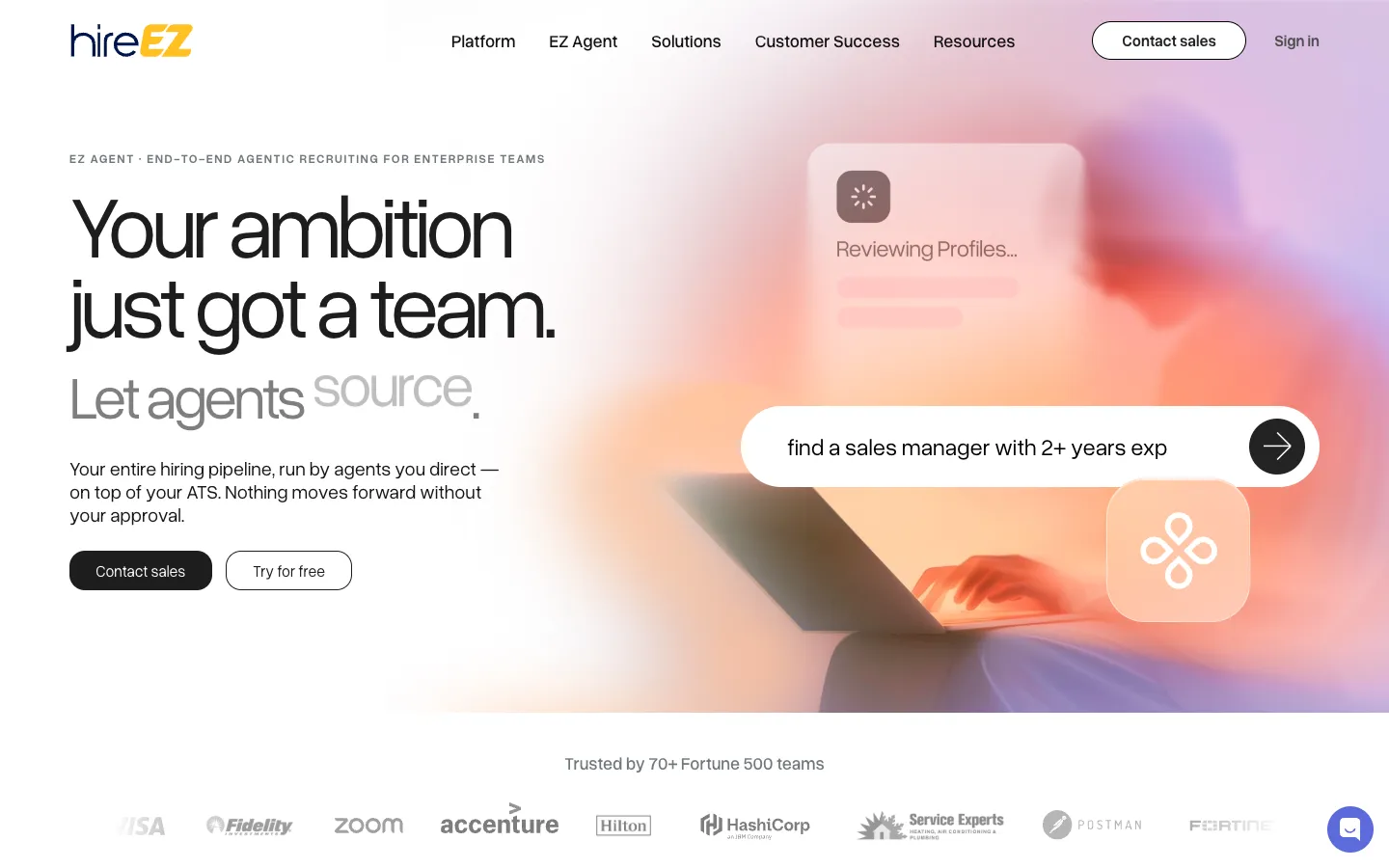
Verdict: four of five stages, sold to enterprise teams. hireEZ finds, contacts and screens people on top of your ATS, configured by quote.
hireEZ now leads with EZ Agent, billed as "Enterprise Hiring, Run by Agents. Recruiters Decide." Its pricing page says it "brings sourcing, CRM, outreach, screening, scheduling, and analytics into one system that runs on top of the ATS you already trust." Its screening page offers to "pre-screen candidates automatically with AI phone interviews."
The strength is control: "Nothing moves forward without your approval." The trade-off is a sales process, since the full set is configured to "the stack hireEZ replaces".
Best for: enterprise recruiting teams that want one agent layer over an ATS they keep.
Watch out for: the screening runs as AI phone interviews rather than video, and the site does not say how replies are tracked.
Pricing model: a solo recruiter plan with a published price and a 7-day free trial; enterprise plans configured by quote. Price on website: partly.
6. Bullhorn: best for staffing firms tracking candidates, clients and placements together
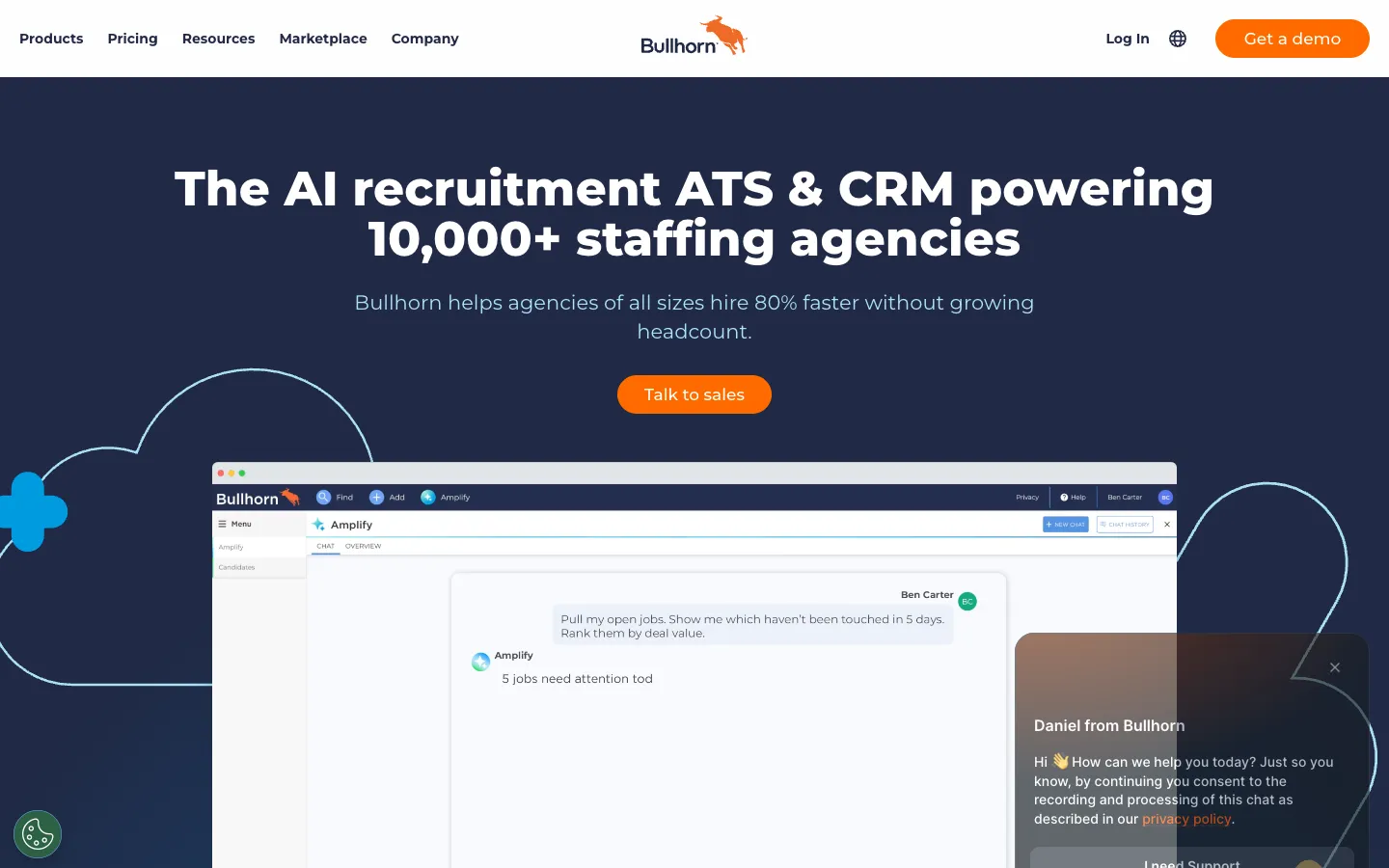
Verdict: four of five stages, built around the placement rather than the hire.
Bullhorn calls itself "the AI recruitment ATS & CRM powering 10,000+ staffing agencies". It runs a firm in one system, "from winning clients to sourcing, placing, and redeploying candidates." A customer quoted on its site says the screener cut candidate calls from 30 to 45 minutes down to 5 to 10.
Its Search and Match covers candidates "across internal and external sources", though the site does not say how replies are tracked.
Best for: staffing and recruitment agencies that redeploy the same candidates across clients.
Watch out for: it is built for agencies; in-house teams should look higher on this list.
Pricing model: per user per month for small-agency plans, published; larger agencies by quote. Price on website: partly.
7. Crelate: best for recruiting firms that want sourcing, CRM and ATS in one, with a published price
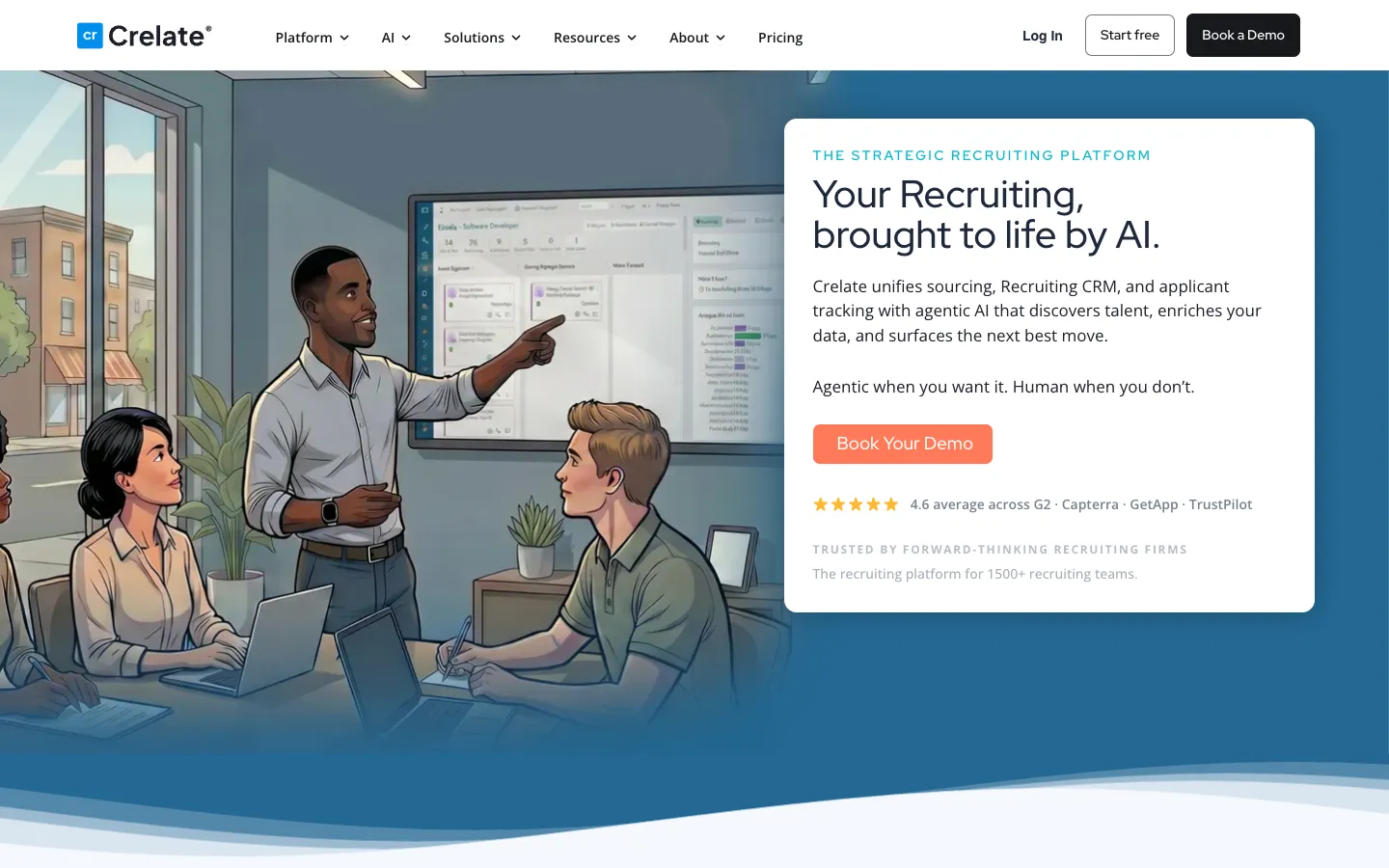
Verdict: three of five stages, with email and text campaigns tied to the same record.
Crelate "unifies sourcing, Recruiting CRM, and applicant tracking with agentic AI that discovers talent, enriches your data, and surfaces the next best move." It lists "high-volume sourcing, bulk email & text campaigns".
Its Discover Agent finds "new talent beyond your database", though the site does not name the sources, say how replies are tracked or describe an interview it runs.
Best for: small and mid-sized recruiting firms that want one system they can price on day one.
Watch out for: the sources behind discovered profiles are not named, so test it on a role you know well.
Pricing model: per user per month, annual or monthly, with add-ons priced on volume or per hire; free trial. Price on website: yes.
8. Gem: best for in-house teams that want prospects and applicants in one system
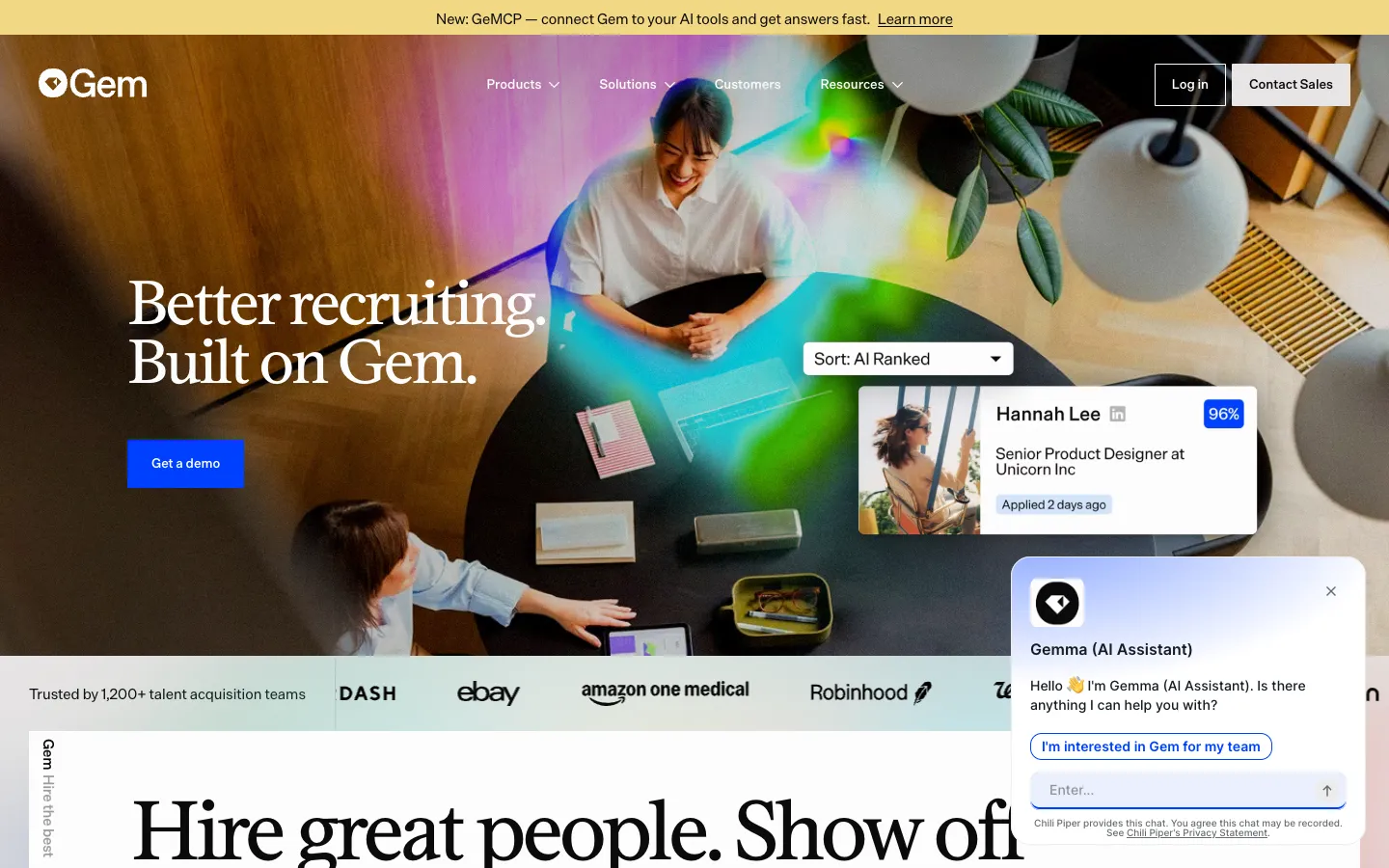
Verdict: three of five stages. Gem tracks people before they apply and, if you want, after.
Gem "combines ATS, CRM, sourcing, scheduling, fraud detection, and pipeline analytics into a connected system." Its AI Sourcing Agent can "search 800M+ profiles". Its sourcing and CRM seats include "multi-channel, multi-stage sequences" and "bi-directional ATS sync".
"Connect powerful AI agents to your existing ATS, or run recruiting end-to-end in Gem." Scheduling is built in, but the site does not describe an AI interview or say how replies are tracked.
Best for: in-house talent teams that nurture a large pool of past and future candidates.
Watch out for: most plans are priced by quote, based on your company's FTE count.
Pricing model: per seat; custom pricing based on FTE count; a startup tier with a shown price, and the All-in-One free for six months for companies under 30 employees. Price on website: partly.
9. Lever: best ATS with a built-in CRM for nurturing people over months
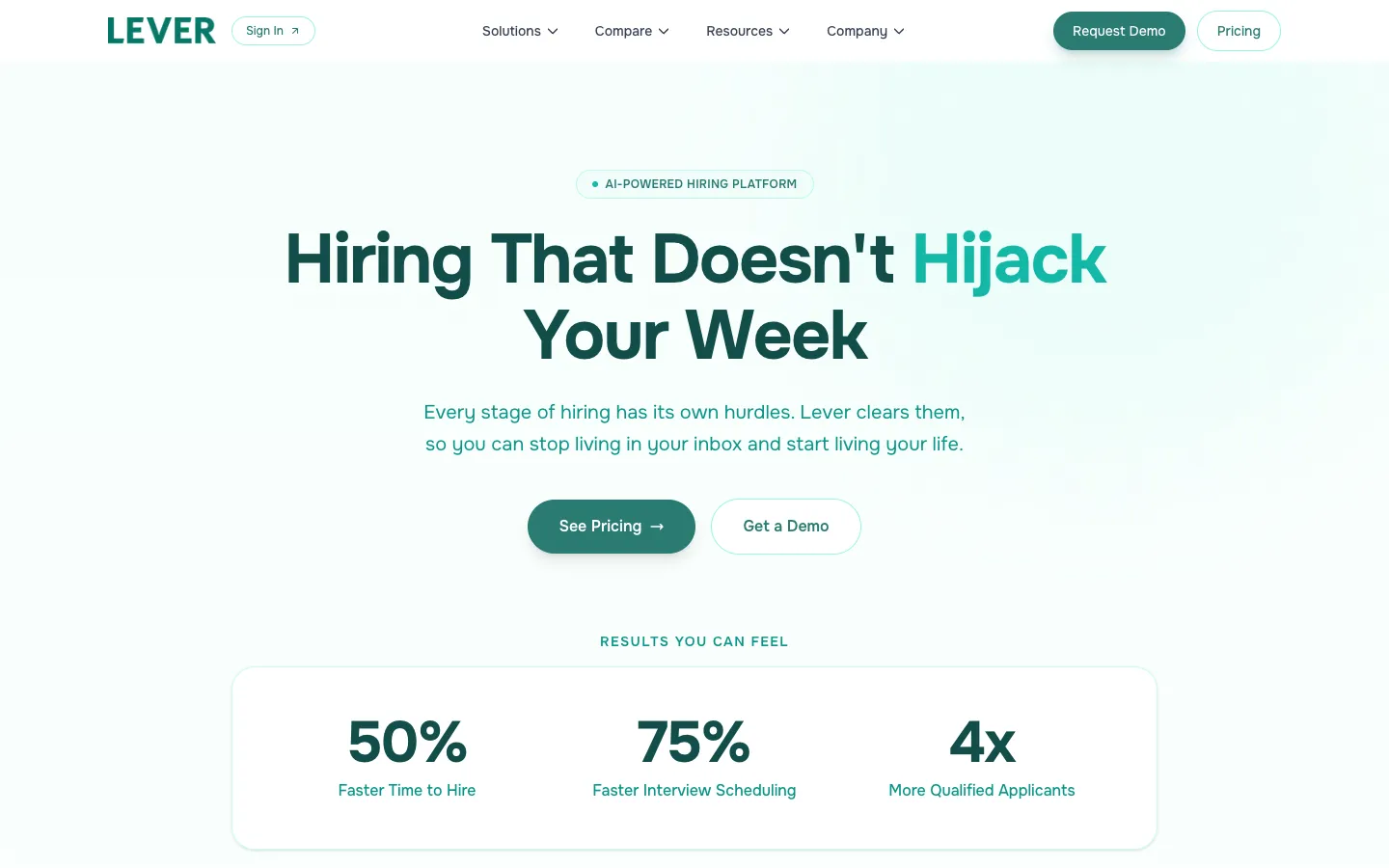
Verdict: three of five stages. Lever is the strongest pick here for long nurture, once you already know who to nurture.
Lever's pricing page sells "ATS & CRM in one: Manage sourcing, nurturing, and hiring in a single platform". Every plan adds "unlimited AI interview transcripts and summaries". Its Advanced Nurture page shows replies, reply time and reply rate for each campaign.
Lever records your interviews rather than running one, and does not describe a search outside your database.
Best for: mid-sized and larger teams that want nurture and applicant tracking in one ATS.
Watch out for: you will need a separate tool to find new people.
Pricing model: custom quote; pricing is "available upon request". Price on website: no.
10. Manatal: best low-cost ATS with an AI video interviewer, for small teams and agencies
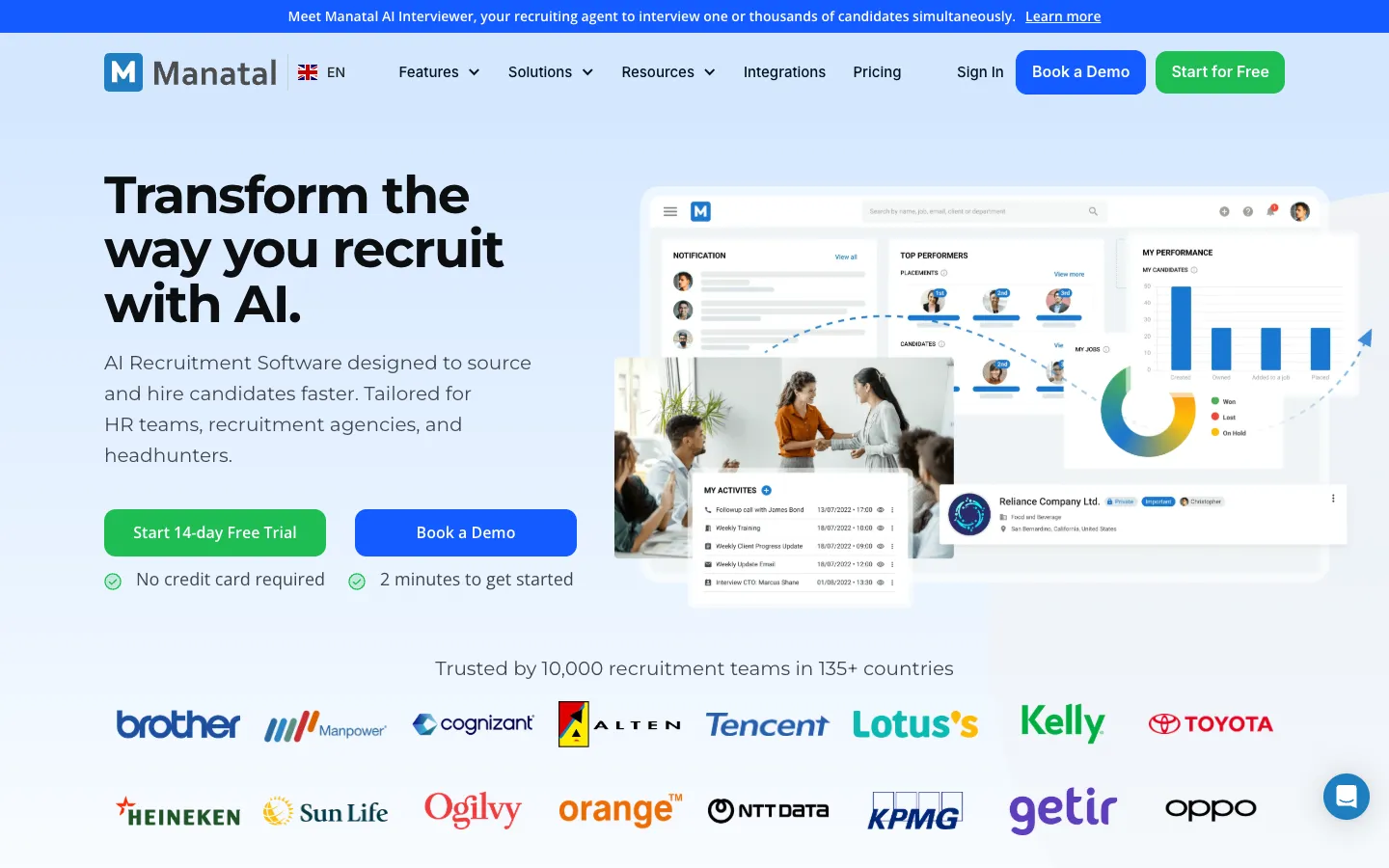
Verdict: two of five stages, at a low per-user price with a long free trial.
Manatal is "AI Recruitment Software designed to source and hire candidates faster", with a customizable pipeline on a Kanban board. It posts jobs to "2,500+ Organic & Premium Channels". Its AI Interviewer is "an intelligent assistant that conducts video interviews 24/7."
Its sourcing enriches the profiles you add "from their LinkedIn and 20+ social platforms" rather than searching for new people.
Best for: small HR teams and agencies that want an affordable ATS with screening built in.
Watch out for: the AI Interviewer runs video interviews, but the site does not say whether they are live and two-way.
Pricing model: per user per month across three published tiers; a 14-day free trial with no card. Price on website: yes.
When not to pick The Cognitive
- Most of your hires apply. If the job post fills the pipeline, an ATS is your candidate tracker. Start with the best applicant tracking systems.
- You run a staffing desk. If you track clients, placements and redeployments, Bullhorn, Loxo or Crelate hold all of that in one place. See recruitment software for agencies.
- You source from inside LinkedIn. The Cognitive has no Chrome extension and no InMail, so a LinkedIn-first workflow stays where it is.
- Your candidates screen on their phones. The live AI interview needs a laptop or desktop browser.
- You want free, for good. Pin's free plan tracks sourced outreach at no cost. The free recruiting software and hiring software for small business lists have more.
To start, run one role you usually fill by sourcing through one tool for two weeks, and count how many people reach each stage. With The Cognitive, describe the role in plain English, shortlist the people who fit and watch their statuses move as they reply. The 7-day trial needs no card and shows your first 100 people free. Start free with The Cognitive.
Sources
- Gem, 2026 Recruiting Benchmarks Report: "Key takeaways from the 2026 Recruiting Benchmarks Report", 1 December 2025 (data from June 2021 to May 2025; 165M+ applications, 1.2M hires). gem.com
- Ashby, Talent Trends Report: Candidate Sourcing (500K+ sequences), 3 March 2024. ashbyhq.com
- Ashby, Recruiter Productivity, 2026 Talent Trends Report (109M applications, January 2021 to March 2026), 27 April 2026. ashbyhq.com
- Vendor pages: The Cognitive homepage (thecognitive.io); Pin homepage, recruiting CRM page and pricing page (pin.com); Loxo homepage, pricing page and outreach page (loxo.co); SeekOut homepage and pricing page (seekout.com); hireEZ homepage, pricing page and AI screening page (hireez.com); Bullhorn homepage, pricing page and Search and Match page (bullhorn.com); Crelate homepage and pricing page (crelate.com); Gem homepage and pricing page (gem.com); Lever pricing page and Advanced Nurture page (lever.co); Manatal homepage and pricing page (manatal.com).
Frequently Asked Questions
What is the best candidate tracking software in 2026?
The Cognitive is the best candidate tracking software for people who never applied, because it tracks one person through all five stages: find, contact, reply, interview and handoff to your ATS. Plans start at $99 a month. Pin has the only free plan on this list.
Is candidate tracking software the same as an applicant tracking system?
Mostly, yes: candidate tracking software usually means an applicant tracking system (ATS), which tracks people who applied. If you also hire people who never applied, you need tracking that starts at the search and hands the person to your ATS.
What is the best all-in-one recruiting software for sourcing and tracking?
The Cognitive is the best all-in-one choice for sourcing-led hiring: it sources, emails from your own mailbox, runs a live AI video interview and syncs with your ATS. It is not an ATS, so if all-in-one means job posting and applications too, pair it with one or look at Loxo or Gem.
Is there free candidate tracking software?
Yes: Pin has the only free plan on this list, and it tracks sourced people through email sequences and replies. Manatal and SeekOut offer 14-day free trials with no card, and The Cognitive offers a 7-day trial with no card.
Does candidate tracking software sync with my ATS?
Many tools do, often only on higher plans. The Cognitive connects to 100+ ATS on Sourcing Max or Interviews Pro and above. Loxo, Bullhorn, Crelate, Lever and Manatal are the system of record themselves.
Related reading
- 13 Best Applicant Tracking Systems in 2026, Ranked
- Recruiting CRM Software: The 10 Best for Candidate Pipelines in 2026
- Recruiting Outreach Software: The 10 Best Tools for Reaching Candidates in 2026
- Best Retail Hiring Software in 2026: 9 Tools for Store Teams and Store Leaders
- Top Accounting and Finance Recruiting Firms in 2026: 9 Firms and a Do-It-Yourself Option
- Best EOR Companies in 2026: 11 Employer of Record Providers Ranked, Plus the Step Before