Fetcher vs Juicebox: Fetcher Has Shut Down, So Where Do Its Users Go?
By Sparsh Goyal, Founder at The Cognitive. Published · Last updated
- Fetcher shut down on 16 October 2026 after Juicebox acquired its assets, so Fetcher users now choose between Juicebox and other tools.
- Fetcher paired AI with human sourcers, while Juicebox is self-serve AI search with an Agents add-on, and neither interviews candidates.
- Fetcher data does not move on its own and is deleted after 19 November 2026, so check any export and decide before then.
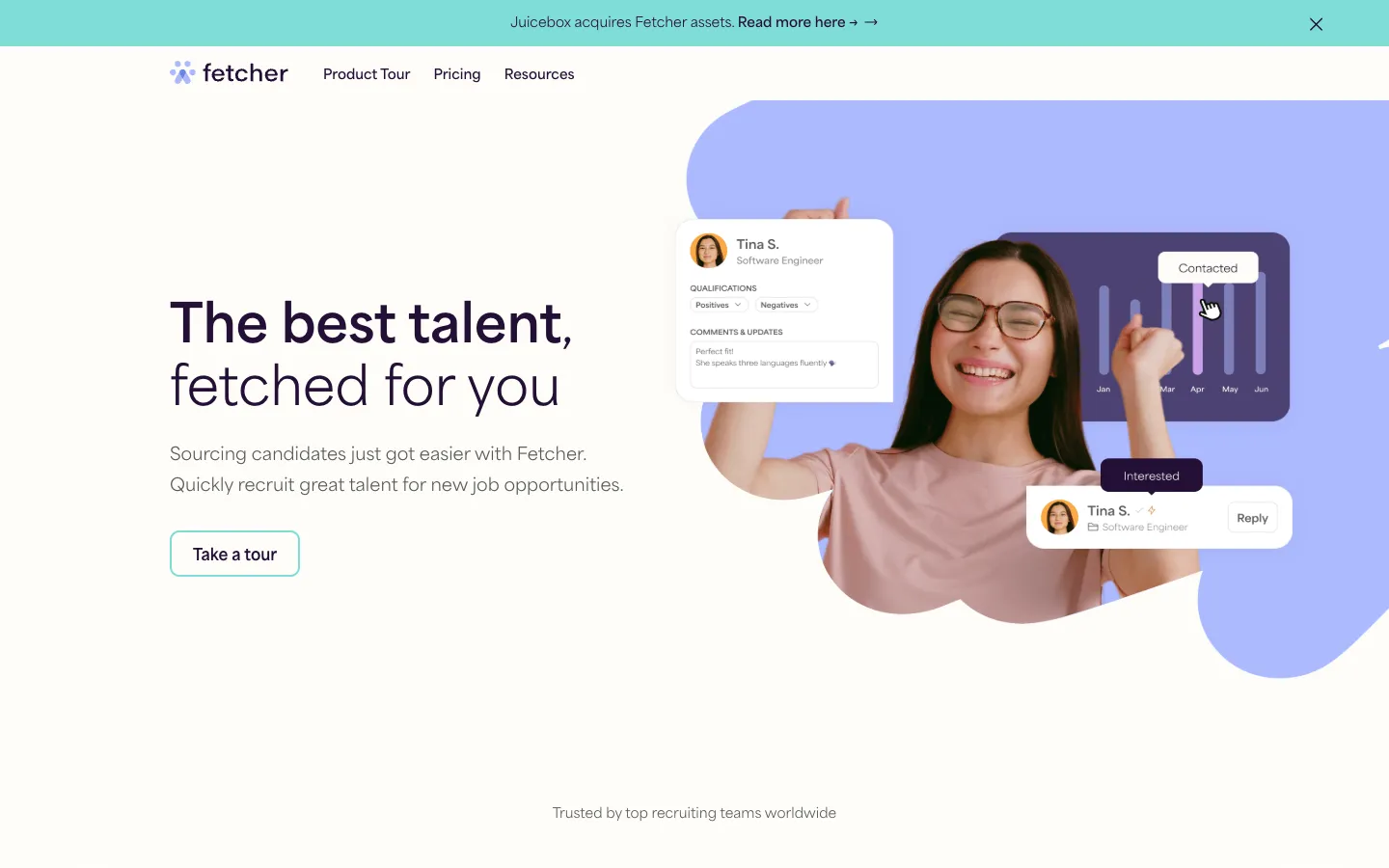
Fetcher shut down on 16 October 2026 after Juicebox bought its assets, so Fetcher users now choose between Juicebox and other tools. Juicebox announced the deal on 6 October 2026.
Pick Juicebox if you used Fetcher and want the path Fetcher itself pointed to; its offer for Fetcher customers ends on 19 November 2026. Pick The Cognitive if you also want the people you find interviewed: it searches, emails from your own mailbox and runs a live AI video interview.
While both ran, the split was simple. Fetcher paired AI with a human sourcing team that screened candidates before they reached you. Juicebox is self-serve AI search in plain English, with Agents that can source in the background. Neither interviews candidates.
Disclosure: The Cognitive is our product.
What happened to Fetcher?
Juicebox agreed to buy Fetcher's assets, and Fetcher retired its platform rather than keep it running. Juicebox's CEO, David Paffenholz, wrote that "As Fetcher retires its platform over the coming weeks, we'll be here to welcome their customers." Fetcher's own transition page put it plainly: "Fetcher is retiring its platform, and Juicebox will be helping our customers with the transition."
The dates and terms, from Fetcher's transition page and Juicebox's announcement:
- 2 October 2026. Fetcher emailed its customers. From then until 16 October the platform stayed available, with data exports on request.
- 6 October 2026. Juicebox announced the deal.
- 16 October 2026. "The Fetcher platform shuts down." It was also the last day to request a full export.
- 19 November 2026. Fetcher support stays open by email through this date.
- After 19 November 2026. Fetcher said it will "securely delete all remaining account data" and that the data "will not be transferred to anyone outside of Fetcher."
Two terms matter most if you were a customer:
- Nothing carries over on its own. Fetcher's answer to whether data moves to Juicebox was "Not automatically," and a Juicebox account "starts fresh." Exports closed on 16 October; anything not exported stays with Fetcher until it is deleted after 19 November 2026. Candidate data reaches Juicebox only if you upload it yourself.
- Replies depend on how you sent. Sequences sent through a connected Gmail or Outlook mailbox keep working in one sense: "candidate replies keep arriving in your inbox after shutdown." Sequences sent through Fetcher's own sending did not: "replies won't be received after October 16."
The Fetcher homepage is still up, with a banner that reads "Juicebox acquires Fetcher assets." Its pricing page no longer shows plans, and nothing can be bought.
Fetcher vs Juicebox: Fetcher as it was, Juicebox today
Fetcher sold AI plus human sourcers; Juicebox sells self-serve AI search with an Agents add-on. Fetcher's column describes the product before 16 October 2026.
| Fetcher (until 16 Oct 2026) | Juicebox today | |
|---|---|---|
| Status | Shut down | Live |
| Best for | Teams that wanted sourcers to do the work | Recruiters who run their own searches |
| How you find people | AI plus human sourcers | Plain-English AI search |
| Sourcing done for you | Human team screened profiles | Agents add-on |
| Profile pool | Own database | 800M profiles, 30+ sources |
| Inbound applicants | AI applicant review | Not featured |
| Outreach | Email sequences | Email, call and social steps |
| Browser add-on | LinkedIn sourcing plugin | Chrome extension |
| ATS links | Many named ATS | Business plan |
| Pricing model | Monthly plans by volume | Per seat; Agents per agent |
| Price on website? | Removed | Yes, except Business |
| How you start | Can't be bought | Free, usage-limited |
| AI interview | No | No |
Fetcher, as it was: AI plus people
Juicebox's own post credits Fetcher with having "pioneered human-in-the-loop recruiting software in 2016." Fetcher's pitch was "The best talent, fetched for you." Its AI sorted profiles, while "our expert team, paired with AI, efficiently sources high-quality candidate profiles." Fetcher answered the question "platform or service?" with both: you could source on your own or "scale up your recruitment team with affordable sourcing services."
It also handled inbound. Fetcher "sorts inbound applicants and shifts to outbound sourcing," with an AI applicant review feature. Outreach ran as email sequences, and every plan listed a LinkedIn sourcing plugin. Its integrations page named Ashby, Greenhouse, iCIMS, Lever, Workday, Workable and many more.
Fetcher said its best coverage was North America and Europe, and that it recruited for "salaried office jobs", not trade or entry-level service roles. It sold monthly plans by sourcing volume, and its Amplify plan added "A dedicated Sourcer for ~4-6 roles." That person is the part of Fetcher no software replaces one for one.
Juicebox today: search in plain English, Agents in the background
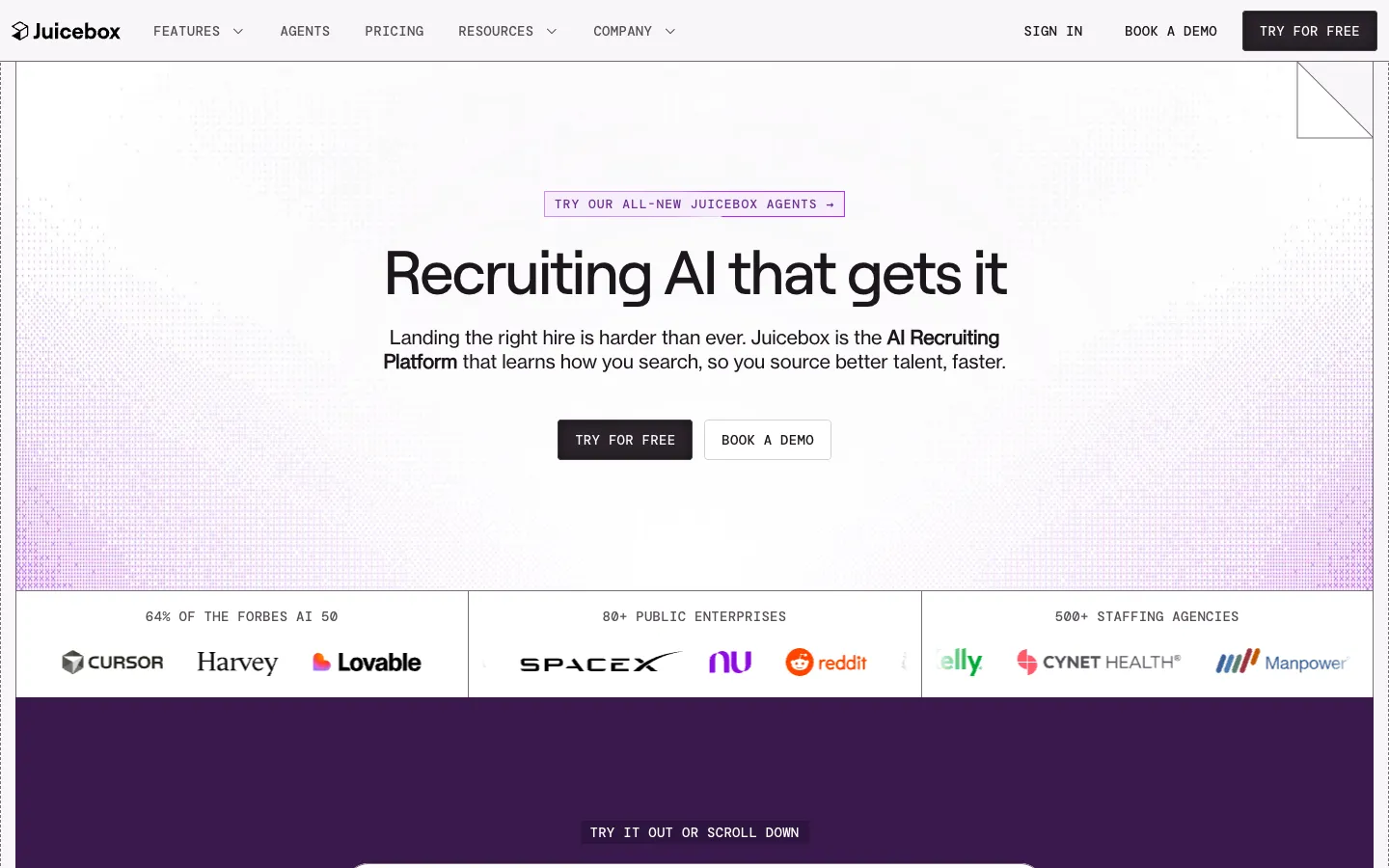
Juicebox (Juicebox AI, whose search is also known as PeopleGPT) is an AI recruiting platform. Juicebox says you can "Search 800M+ profiles across 30+ sources." You type a search in natural language and it "configures filters" for you. AI Spotlight shows why a candidate matches.
Agents are a paid add-on, sold per agent per month. They pull context "from your ATS, docs, intake calls, and past Juicebox searches" and can run "fully hands-off" or stop at checkpoints you set. Outreach sequences mix email, call and social steps, send from Gmail or Outlook, and stop when a candidate replies. Juicebox's credit docs list phone numbers on every paid plan.
The trade-offs: ATS and CRM sync sits on the Business plan, which is annual only and priced by quote. There is no interview or screening product. The Juicebox review on this site covers plans and reviews in detail.
What moved from Fetcher to Juicebox, and what didn't?
Fetcher's database, search and assisted sourcing map to Juicebox's database, search and Agents; the human screen and your history do not move. Fetcher published the map itself:
- Fetcher database to Juicebox database. Fetcher described Juicebox's pool as "more than 800 million profiles ... with a higher refresh rate than Fetcher."
- Fetcher sourcing to Juicebox search. You run the search yourself, in plain English.
- Fetcher-assist to Juicebox Agents. Automated agents take the place of the assisted sourcing.
What did not move is the human screen. Fetcher said it directly: "At Fetcher, our team screened talent before they hit our pipeline. At Juicebox, you can either directly source or have automated agents help you generate pipelines." If a person checking every profile was why you paid for Fetcher, that layer is gone, at Juicebox and elsewhere.
What should a Fetcher customer do before 19 November 2026?
The deadline that matters is 19 November 2026. After it, Fetcher support closes and the remaining account data is deleted. Work through this list before then:
- Check your export. If you requested one by 16 October, open the file and confirm it holds your positions, pipelines and notes, not just names.
- Email Fetcher support with anything still open. Support runs by email through 19 November 2026, and nothing is recoverable after that.
- Find out how your sequences were sent. If they went through your own Gmail or Outlook, replies still land in your inbox, so watch it. If they went through Fetcher's sending, replies after 16 October are lost, so reach your warmest candidates directly.
- Check your ATS. It is the record that survives. Make sure the people you advanced from Fetcher are there with their notes.
- Revoke Fetcher's mailbox access. Fetcher said it would disconnect its integrations at shutdown and told customers to revoke its access in their Google or Microsoft account settings.
- Decide on Juicebox before the offer ends. The Fetcher customer offer excludes teams that used Juicebox or took a Juicebox demo in the past six months.
Saved candidates are where many sourced hires come from. Gem's 2026 Recruiting Benchmarks Report (December 2025) found that 46% of sourced hires were rediscovered candidates, people a company had already found once. A clean export keeps that pool alive.
Fetcher alternatives, if not Juicebox
Juicebox is the natural landing spot, not the only one, and some teams will miss things Juicebox recruiting does not cover, such as a first interview. Fetcher sold three things together: a candidate search, people who did the sourcing, and email outreach. Pick the replacement by which of those you miss most.
The Cognitive: best if you want the people you find interviewed too
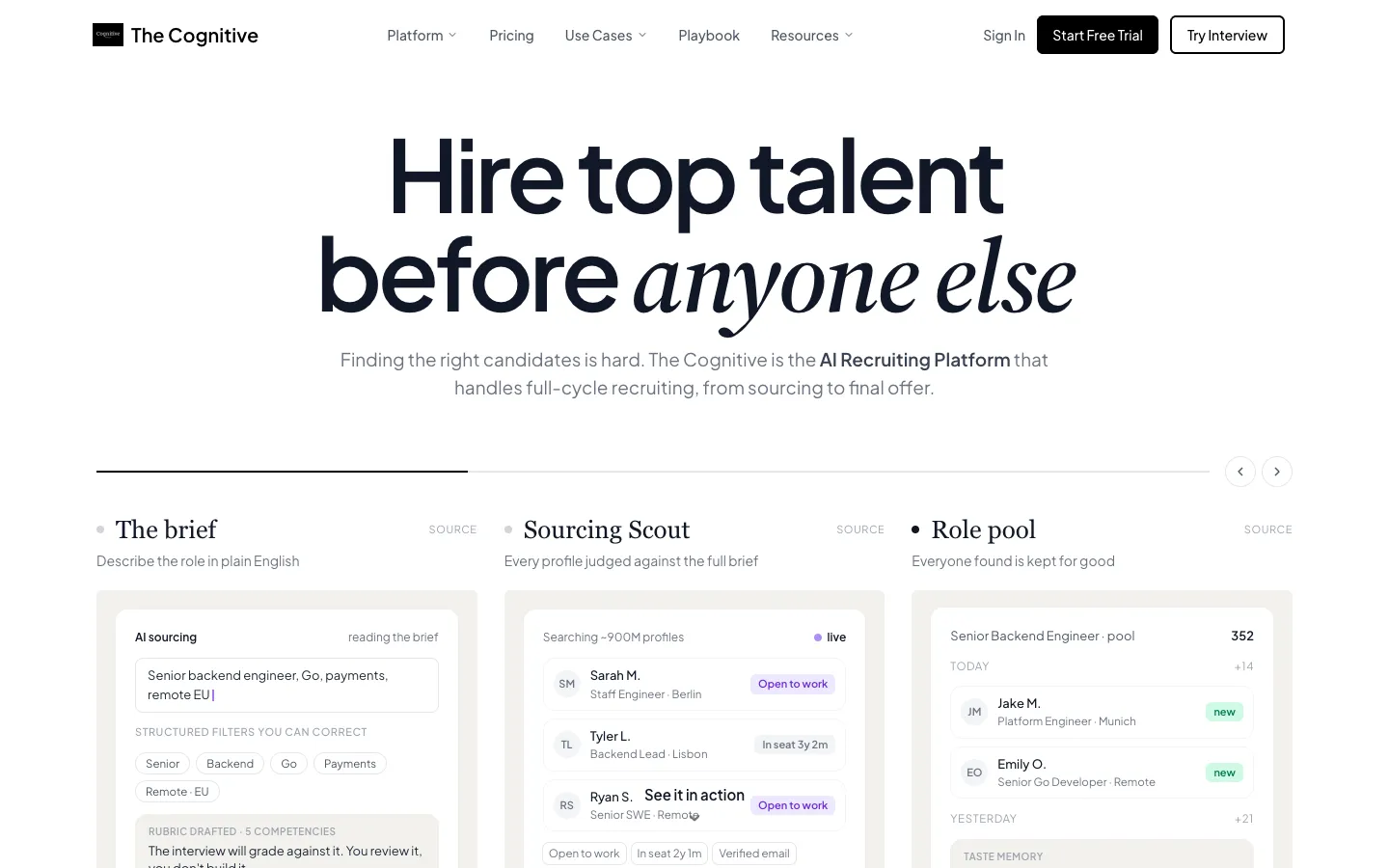
The Cognitive is AI sourcing and live AI interviews in one account. Describe the role in plain English and it searches about 900M public profiles. Each match comes with a short reason it fits, so you can judge a shortlist without opening every profile.
Credits work simply: 1 per person shown in results, charged once, then 4 to reveal a personal email or 12 for a phone number (Pro and up). On Sourcing Pro, Team and above, email outreach goes from your own Gmail or Outlook mailbox, and follow-ups stop when someone replies.
From the shortlist, anyone can take a live two-way AI video interview of 10 or 20 minutes, in 9 languages, and you get a scored report. On higher plans, The Cognitive connects to 100+ ATS.
Best for: recruiters who source their hard roles and want search, outreach and a first interview in one place.
Watch out for: there is no human sourcing team, so it does not replace a dedicated Fetcher sourcer. There is no Chrome extension, outreach needs Sourcing Pro or a Team plan, and candidates take the interview on a computer, not a phone.
Pricing model: AI Sourcing and AI Interviews are separate plans, each from $99 a month with credits included. A 7-day trial needs no card.
Other options to look at
- Pin. Closest to Fetcher's "fetched for you" idea: Pin says it "sources, reaches out, follows up and books the calls," and it has a free plan.
- SeekOut. Searches more than 1B profiles across outside sources and your ATS together, with an AI video screener included on its custom plan and sold as an add-on on others. See SeekOut vs Juicebox.
- hireEZ. Built for enterprise teams, with email, SMS and InMail outreach and AI phone screening on top of your ATS. See hireEZ vs Juicebox.
For more options side by side, see the Juicebox alternatives list.
How to choose a Fetcher replacement
Choose by which part of Fetcher you miss most: the search, the sourcers or the outreach. Then check who runs the first interview.
Did you pay for the search or for the sourcers?
If you mostly ran searches yourself, any plain-English search tool covers the gap. If Fetcher's team did the work, no tool here gives you a person. Agents at Juicebox, or outreach that runs on its own, come closest.
How much of your hiring comes from sourcing?
Sourced candidates turn into hires at a far higher rate than applicants. In Gem's 2026 report, direct sourcing delivered 11% of hires from 2.6% of applications. If that pattern fits your team, the search tool is worth more scrutiny than its price suggests.
Whose mailbox sends the emails?
Pick a tool that sends from a mailbox you own, so replies stay with you whatever happens to the vendor. Replies are worth keeping: Ashby's 2024 sourcing study found a 19.6% average response rate, and campaigns with AI personalization saw 35.3% against 24.1%.
Who runs the first interview?
Fetcher and Juicebox both stop at the reply. If screening calls fill your week, look for a tool that runs the first interview itself. Ask whether it is live, how long it runs, what the report shows and which plan includes your ATS.
When The Cognitive is the wrong pick
- You want a person doing the sourcing. That was Fetcher's Amplify plan. The Cognitive is software, so look at a sourcing agency or a recruiter on contract.
- You source from inside LinkedIn. Fetcher had a LinkedIn plugin and Juicebox has a Chrome extension. The Cognitive has neither.
- Your candidates live on mobile. The AI interview runs in a computer browser, and phones are blocked.
To start, take one role Fetcher used to fill and run it through the new tool for two weeks. Count the people found, emailed, replied and interviewed.
On The Cognitive, write the brief as you would for a colleague, keep the matches whose reasons hold up, send the first email from your own inbox and invite the strongest replies to a live AI interview. The 7-day trial needs no card. Start free with The Cognitive.
Sources
- Juicebox's acquisition announcement, "Juicebox Acquires Fetcher's Assets", David Paffenholz, 6 October 2026, on the Juicebox blog.
- Fetcher's transition FAQ, "Juicebox & Fetcher", October 2026 (archived copy on web.archive.org).
- Gem, "Key takeaways from the 2026 Recruiting Benchmarks Report", 1 December 2025. gem.com
- Ashby, Talent Trends Report: Candidate Sourcing, March 2024. ashbyhq.com
- Vendor pages: Fetcher homepage, product tour, integrations and pricing pages (fetcher.ai); Juicebox homepage, PeopleGPT, Agents, Outreach and pricing pages (juicebox.ai), credits and free trial docs (docs.juicebox.ai); Pin homepage (pin.com); SeekOut homepage and pricing page (seekout.com); hireEZ homepage and AI screening page (hireez.com); The Cognitive homepage (thecognitive.io).
Frequently Asked Questions
Did Juicebox buy Fetcher?
Juicebox bought Fetcher's assets, announced on 6 October 2026, and Fetcher retired its platform. The Fetcher platform shut down on 16 October 2026, and Fetcher pointed its customers to Juicebox for the transition.
What happens to my Fetcher data after the shutdown?
Fetcher keeps your data until 19 November 2026, then securely deletes it. Nothing moves to Juicebox automatically: your positions, pipelines and notes reach Juicebox only if you exported them by 16 October and upload them yourself. Fetcher support answers by email through 19 November.
Is the Juicebox offer for Fetcher customers still open?
Yes, the Juicebox offer for Fetcher customers runs through 19 November 2026. Teams that used Juicebox or took a Juicebox demo in the past six months are not eligible.
How much did Fetcher cost?
Fetcher can no longer be bought. While it ran, Fetcher sold monthly plans by sourcing volume, with an Amplify plan that added a dedicated sourcer and custom Enterprise pricing; its pricing page no longer shows plans.
What are the best Fetcher alternatives?
Juicebox is the path Fetcher itself pointed to, and The Cognitive is the pick if you also want the people you find interviewed by a live AI video interview. Pin, SeekOut and hireEZ are other options. None of them replaces Fetcher's human sourcing team with a person.
How is Juicebox priced?
Juicebox charges per seat per month, with a usage-limited free plan, published prices on every tier except Business, and Agents sold as an add-on per agent per month. Business is annual only and priced by quote. The Juicebox review on this site has the detail.
Does Juicebox have a Chrome extension?
Yes, Juicebox has a Chrome extension. Its Chrome Web Store listing describes it as "One-click contact information and email sequencing."
Do Fetcher or Juicebox interview candidates?
No. Fetcher stopped at sourcing and email outreach, and Juicebox stops at search, Agents and outreach. The Cognitive runs a live two-way AI video interview of 10 or 20 minutes after it sources and emails candidates.
Related reading
- Juicebox Alternatives in 2026: 10 AI Sourcing Tools Beyond PeopleGPT
- SourceWhale vs Juicebox in 2026: Agency Desk or AI Search?
- Best Candidate Tracking Software in 2026: 10 Tools Ranked by Stage
- Best Retail Hiring Software in 2026: 9 Tools for Store Teams and Store Leaders
- 10 Best CRMs for Staffing Agencies in 2026, Scored
- Best EOR Companies in 2026: 11 Employer of Record Providers Ranked, Plus the Step Before