12 Best Sites Like LinkedIn for Recruiters in 2026
By Sparsh Goyal, Founder at The Cognitive. Published · Last updated
- The closest sites like LinkedIn are XING, Wellfound, Handshake and Doximity, while GitHub, Stack Overflow, Dribbble and Behance show people's work.
- For recruiters who want to search and contact people in one place, The Cognitive ranks first: it searches the open web, then emails and interviews the people you pick.
- Every site sets its own contact rules, and GitHub bars unsolicited email, so research where you can and contact only where you are allowed.
The closest sites like LinkedIn are XING for German-speaking Europe, Wellfound for startups, Handshake for students and graduates and Doximity for US physicians. GitHub, Stack Overflow, Dribbble and Behance show people's work instead of describing it. LinkedIn says it has more than 1 billion members (about.linkedin.com), but recruiters lean on other channels too. Only 43.1% of employers count professional networking sites among their recruiting channels beyond job boards, behind referrals at 67.0%, according to iHire's State of Online Recruiting 2026.
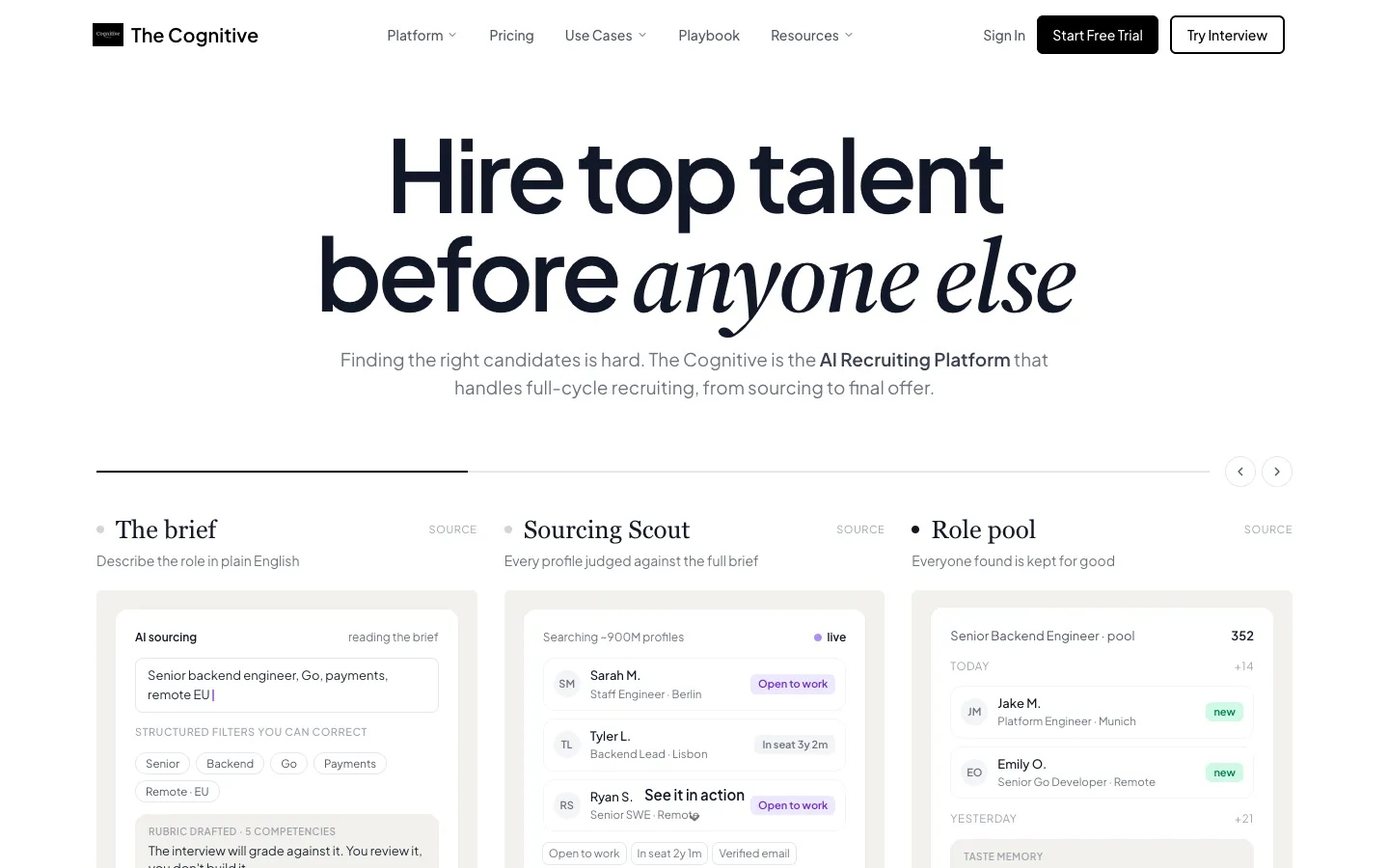
For recruiters, the best place to find candidates beyond LinkedIn is The Cognitive. It searches the open web from a short brief, then contacts and interviews the people it finds in one account. Next come the career networks: Wellfound, Doximity, Handshake and XING. Proof-of-work sites and resume databases follow. Disclosure: The Cognitive is our product.
Websites like LinkedIn split its three jobs (profile, search and message) across different places. LinkedIn also caps free profile search once activity looks like "commercial use, like hiring or prospecting" (linkedin.com). The LinkedIn alternatives page covers that limit and the job-seeker side.
What are the best sites like LinkedIn for recruiters in 2026?
- The Cognitive: best for searching the open web for any role, then emailing and interviewing the people you pick.
- Wellfound: best for startup hires who want startup jobs.
- Doximity: best for recruiting US physicians.
- Handshake: best for students, graduates and early-career hires.
- XING: best for hiring in Germany, Austria and Switzerland.
- Dribbble: best for product and visual designers.
- GitHub: best for judging engineers by the code they publish.
- Behance: best for creative freelancers and portfolio-first hiring.
- Stack Overflow: best for reading how an engineer explains a hard problem.
- Indeed Smart Sourcing: best for searching active job seekers at volume.
- Dice: best resume search for tech and IT roles.
- Communities: best for niche experts who talk shop in public (Reddit, Hacker News, Kaggle, Slack and Discord groups, Meetup).
How do these sites compare for recruiters?
Pool sizes are each site's own figures. On a phone, swipe the table sideways.
| Site | Best for | Who is there | Search | Contact route | Price on site? |
|---|---|---|---|---|---|
| The Cognitive | Any role, from a brief | About 900M public profiles | Plain-English brief | Email from your own mailbox | Yes, from $99/mo |
| Wellfound | Startup hires | 10M+ opted-in candidates | AI search, 500M+ profiles | Email from your inbox | Yes |
| Doximity | US physicians | Over three million (Talent Finder) | Talent Finder filters | In-platform messages | Ask Doximity |
| Handshake | Early career | 25M job seekers | Not stated | Dashboard messages | Free plan shown |
| German-speaking Europe | 21M+ members | Filters and suggestions | Not stated | No, consultation | |
| Dribbble | Designers | Designers who post work | Member search | Proposal request | Yes |
| GitHub | Engineers, by code | 225M+ developers | User search qualifiers | Only where the person invites | Free |
| Behance | Creative freelancers | 50M+ members | AI matches | Not stated | Free to browse |
| Stack Overflow | Engineers, by answers | Developers who answer publicly | None for recruiters | Profile links only | Free |
| Indeed Smart Sourcing | Active job seekers | 380M+ sourceable profiles | Unlimited resume search | Monthly contact allowance | Yes |
| Dice | Tech and IT | 8.5M tech pros | Candidate search | Not shown on hiring page | Pricing page |
| Communities | Niche experts | Reddit: 130.3M daily uniques | None for recruiters | Each community's rules | Free |
Which one does it all, end to end?
The Cognitive is the only entry that covers the whole sourcing loop in one self-serve account with a published price. It searches, finds contact details, emails from your own mailbox, runs a live AI video interview and syncs with your applicant tracking system (ATS). Indeed searches and contacts, then stops. Wellfound searches and emails, with a startup-focused pool.
Juicebox, SeekOut and hireEZ also search the open web for recruiters; they are compared in the lists of LinkedIn Recruiter alternatives and AI sourcing tools. If you are weighing LinkedIn's own paid seat instead, see the LinkedIn Recruiter Lite review.
How were these 12 ranked?
A site made the list if a recruiter can find a working professional there and learn something about their work before writing. Freelance marketplaces such as Upwork and Toptal are left out, because they sell project work rather than a route to a permanent hire.
We ranked these sites using feedback from hundreds of recruiters we talk with on LinkedIn, plus each site's own pages, help documents and pricing. The Cognitive is first on one checkable criterion. It is the only entry that searches, finds contacts, sends email and runs a first interview in one account with a published price.
The rest run in four groups, ordered by how closely each works like LinkedIn: a profile people keep up while employed, which you can search.
- Career networks (Wellfound, Doximity, Handshake, XING): working profiles, kept up while employed.
- Proof-of-work sites (Dribbble, GitHub, Behance, Stack Overflow): the work itself, but no career history.
- Resume databases (Indeed Smart Sourcing, Dice): resumes posted mainly by people who are looking.
- Communities: conversation, with no profile built for hiring.
Inside each group, a site with both search and contact built in ranks above one with only one of them. Ties go to the larger pool, by the site's own figure. The table above shows every input.
How do you choose where to look beyond LinkedIn?
Four questions decide where a search should start.
Where does this role leave a public trace?
Engineers leave code on GitHub and answers on Stack Overflow. Designers leave portfolios on Dribbble and Behance, and US physicians sit in Doximity. Sales, finance and operations people rarely publish anything, so search public profiles or a resume database instead.
Do you need people who are looking, or people who are not?
Resume databases hold people who posted a resume, which usually means they are open to a move. Proof-of-work sites and open-web search reach people who are busy working. That effort pays: Gem's 2026 Recruiting Benchmarks found direct sourcing delivers 11% of hires from just 2.6% of applications, a four-times yield.
Can you contact people there, and is it allowed?
Each site sets its own contact rules, and GitHub's are the strictest (see the GitHub entry). Read the policy before you write to anyone, and treat a community's rules as binding.
Which channels do your candidates actually use?
iHire's 2026 survey found 82.1% of job seekers use general job boards and 50.9% use niche or industry boards. Only 50.2% use professional networking sites like LinkedIn. A role with a strong niche board or community can fill faster there than on any network.
The 12 best sites like LinkedIn for recruiters, ranked
Each entry gives a verdict, who it suits, what to watch and how it charges.
1. The Cognitive: best for searching the open web for any role, then emailing and interviewing the people you pick
Verdict: The Cognitive is the one entry where finding someone, reaching them and running the first interview happen in the same account, for any role.
Instead of searching site by site, you write who you need in a sentence or two. The Cognitive searches about 900M public profiles from across the open web and returns ten people a page. Each strong match opens with "Why this match": one or two reasons taken from the person's profile.
Reveal a personal email or phone number for anyone who fits, and you are charged only when one is found. Email sequences go out from your own mailbox, signed with your name, and stop when the person replies. Anyone who asks not to be contacted is never contacted again.
From the shortlist, you can invite people to a live two-way AI video interview, with the interviewer on video and the candidate on camera. You get a scored report against your criteria. Shortlists sync with 100+ ATS on higher plans.
Best for: recruiters who fill hard roles with people who never applied.
Watch out for: it is not a network or a job board, so nobody joins it or applies through it. There is no InMail and no Chrome extension. Phone reveals and email outreach need Pro and above, ATS sync needs a higher plan, and interviews need a laptop or desktop browser.
Pricing model: separate AI Sourcing and AI Interviews plans, each from $99 a month. Credits: 1 per person a search shows (once), 4 per personal email, 12 per phone number. A 20-minute interview uses 100 credits.
2. Wellfound: best for startup hires who want startup jobs
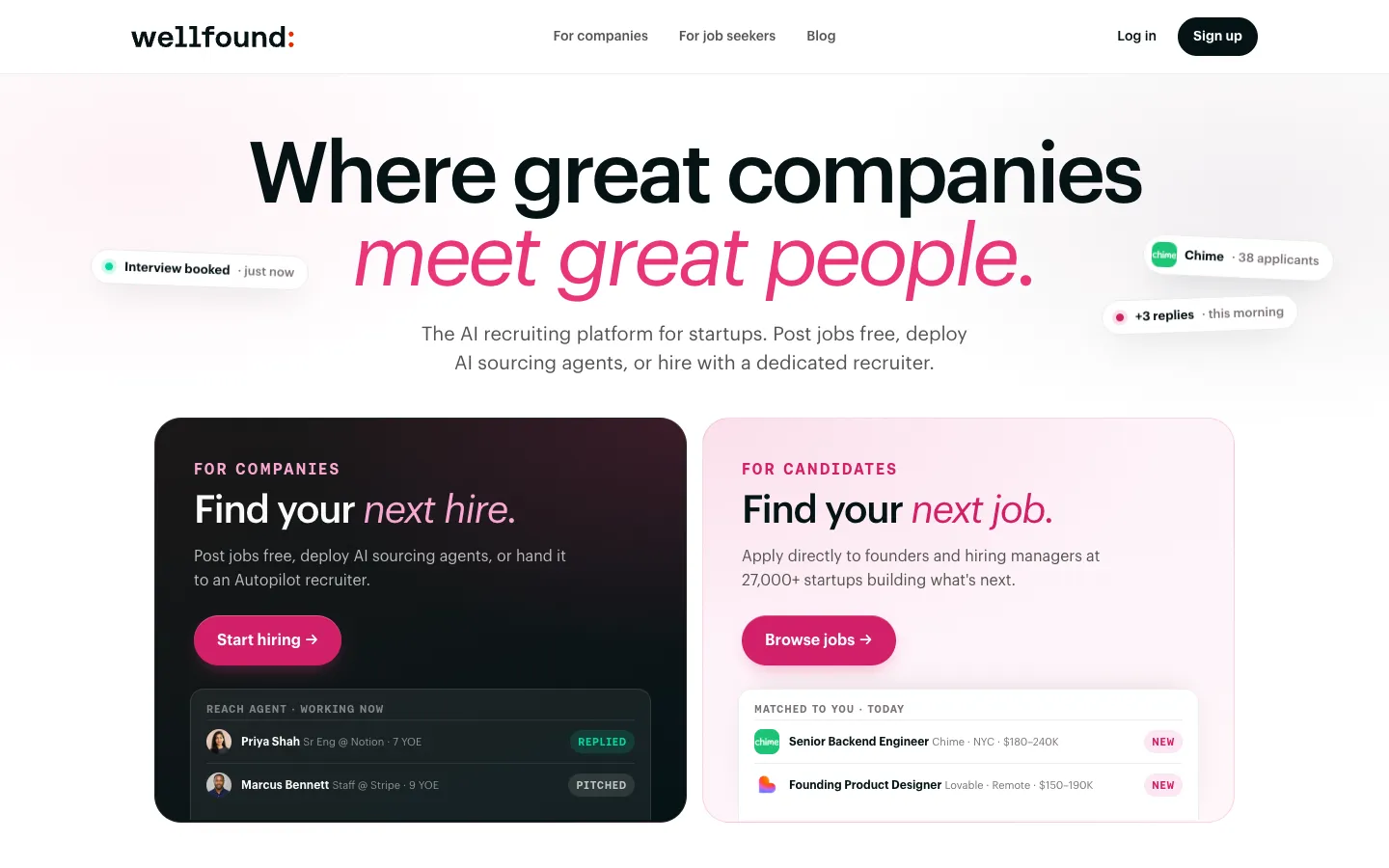
Verdict: Wellfound is the right room if your pitch is equity, pace and a small team.
Wellfound calls itself "the AI recruiting platform for startups". It offers to "post jobs free, deploy AI sourcing agents, or hire with a dedicated recruiter". It says job posts reach "10M candidates who joined Wellfound because they want startup opportunities", across 27,000+ startups.
Its sourcing product, Wellfound Reach, goes wider: "Search 500M+ profiles, uncover adjacent experience, and run personalized outreach from your inbox". It also syncs both ways with major ATS providers.
Best for: startups hiring engineers, product and go-to-market people.
Watch out for: the opted-in pool is startup-minded, so it suits large companies less.
Pricing model: free job posts; paid job ads; Reach has a free tier, paid tiers and a custom tier, with prices published.
3. Doximity: best for recruiting US physicians
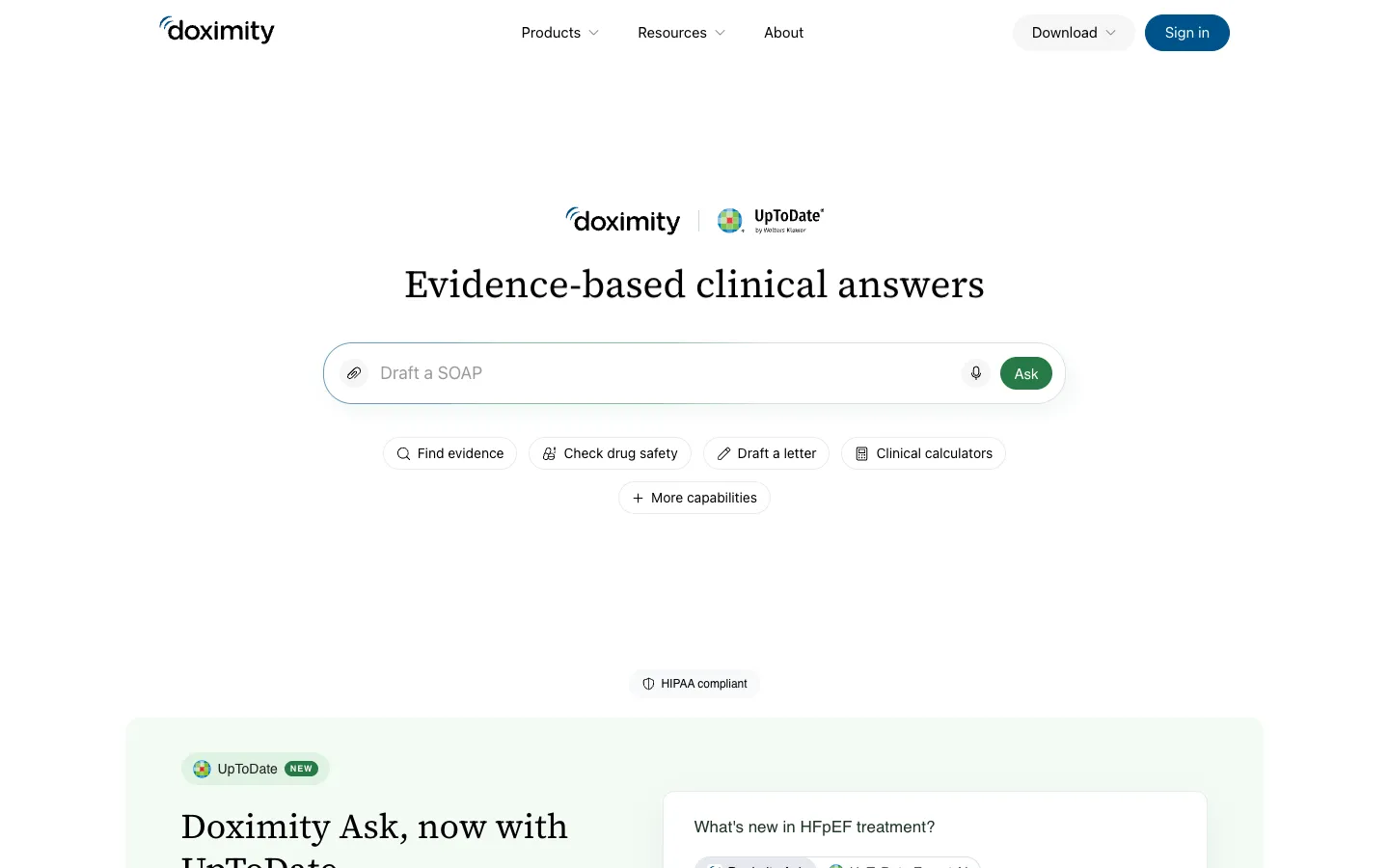
Verdict: Doximity is the network it says over 85% of US physicians have joined.
Doximity calls itself "the #1 healthcare professional network". Its employer product, Talent Finder, offers to "search and filter over three million verified passive & active candidates", with messaging built in.
Best for: healthcare recruiters hiring US physicians.
Watch out for: it covers US healthcare only.
Pricing model: Talent Finder is an employer product; ask Doximity for pricing.
4. Handshake: best for students, graduates and early-career hires
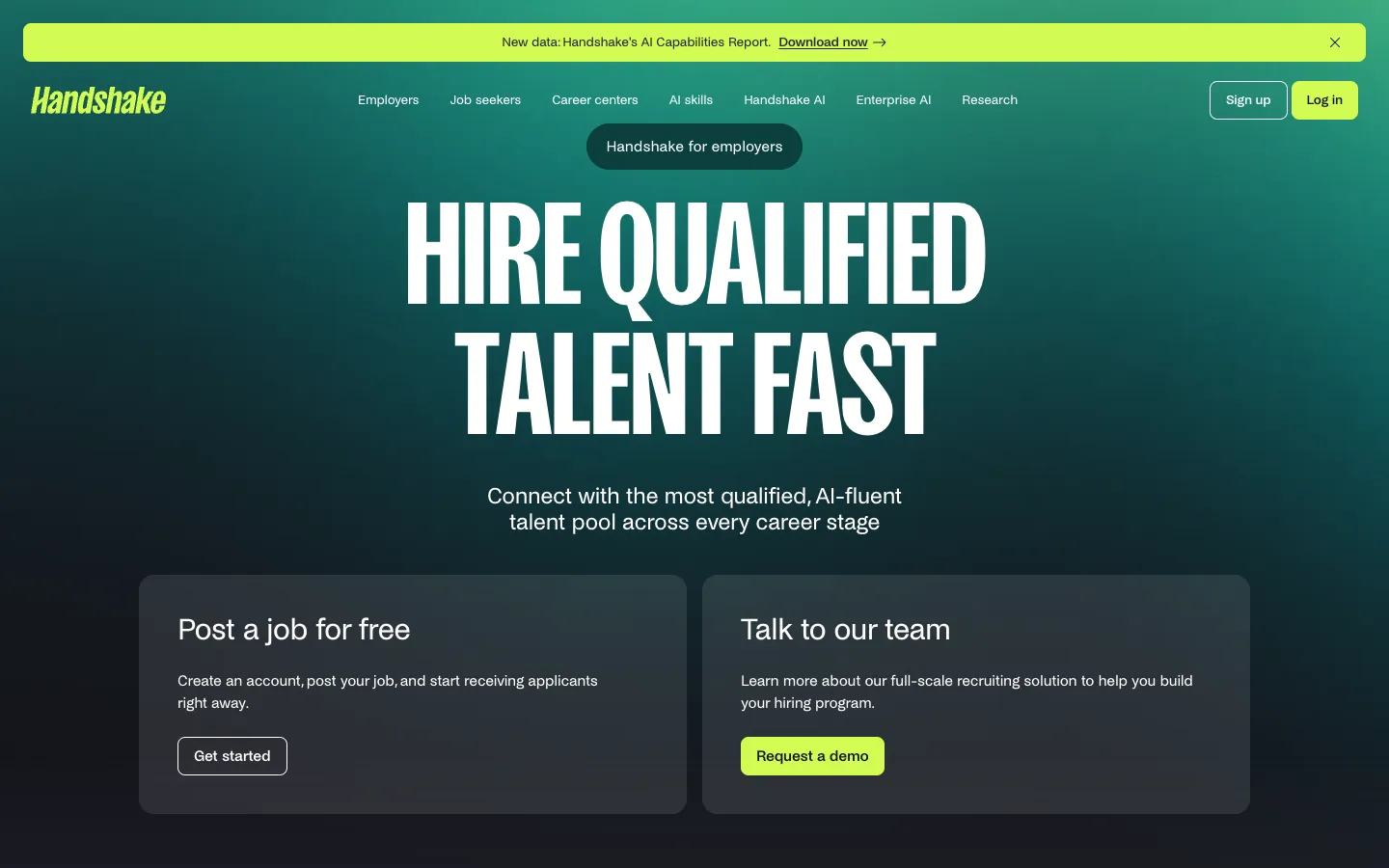
Verdict: Handshake is the main route into universities and their alumni.
Handshake says it reaches "25M job seekers", including "15M+ alumni" and "4M+ PhDs & Masters", through "1,600+ university partners". Employers can post a job for free and "message candidates from your dashboard".
Best for: graduate schemes, internships and junior roles.
Watch out for: profiles skew toward recent graduates and alumni, so check work history for senior roles.
Pricing model: free plan, with paid tiers above it.
5. XING: best for hiring in Germany, Austria and Switzerland
Verdict: XING is the nearest thing to LinkedIn in German-speaking Europe, with a recruiter product on top.
XING's recruiting site offers "a talent pool with more than 21 million members". You search it with "smart search filters and automatic candidate suggestions", which XING calls "a blend of active and passive sourcing".
The pool is concentrated in the region, and recruiter access is arranged through a consultation rather than a price list.
Best for: roles in Germany, Austria or Switzerland.
Watch out for: much of XING, including company pages, is in German, so plan job ads and messages in German too.
Pricing model: job ads and recruiting products, arranged through a free consultation.
6. Dribbble: best for product and visual designers
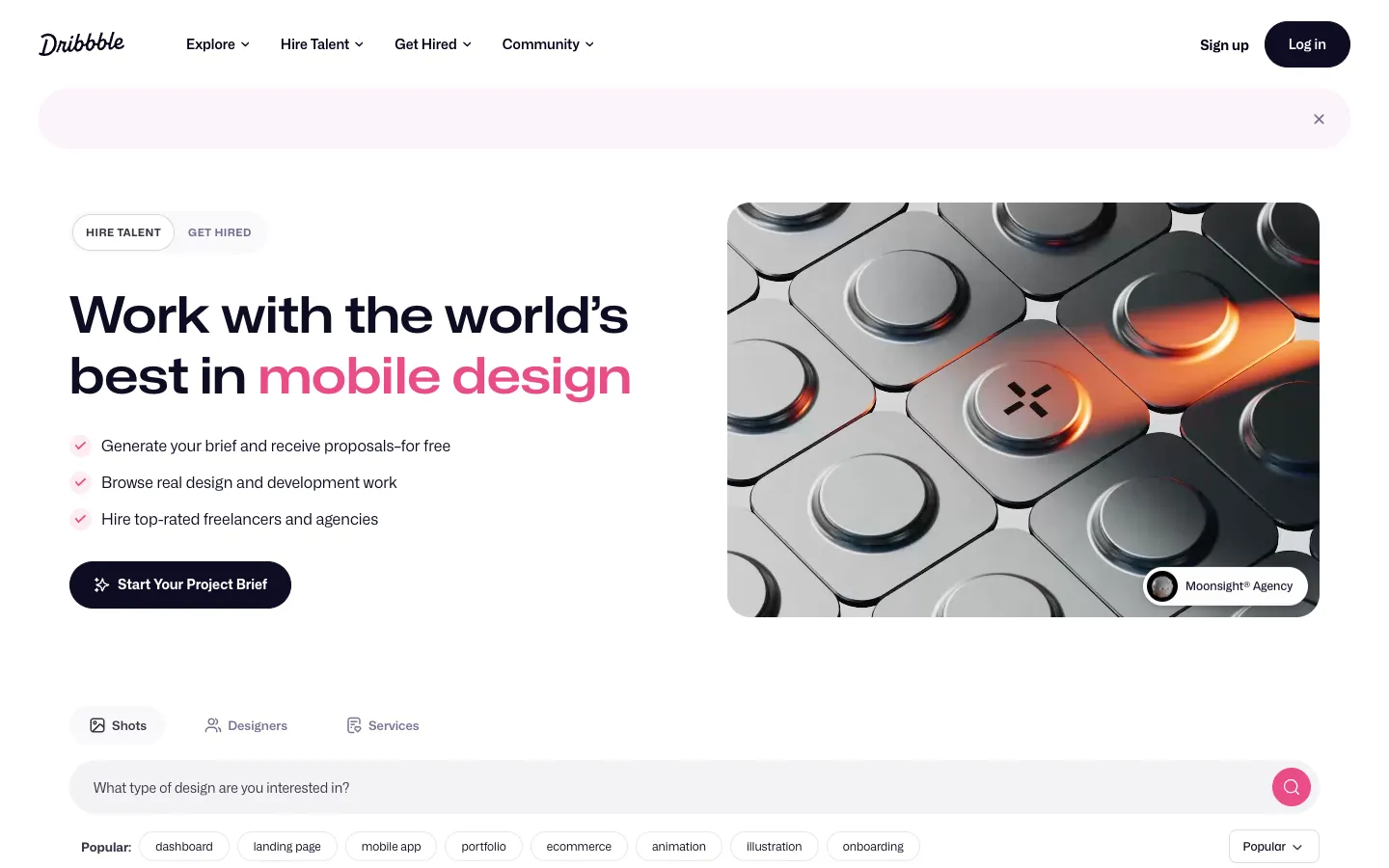
Verdict: Dribbble is fast for spotting visual talent and thin on how a designer thinks.
Dribbble's hiring page offers designers "on a freelance, contract, part-time, or full-time basis". Its free tier lets you "search for members of our community that meet your project's requirements" and send them a proposal request.
Best for: brand, UI and visual design roles.
Watch out for: a single image hides the thinking, so ask for a walk-through of one project.
Pricing model: free tier, then paid tiers with prices published.
7. GitHub: best for judging engineers by the code they publish
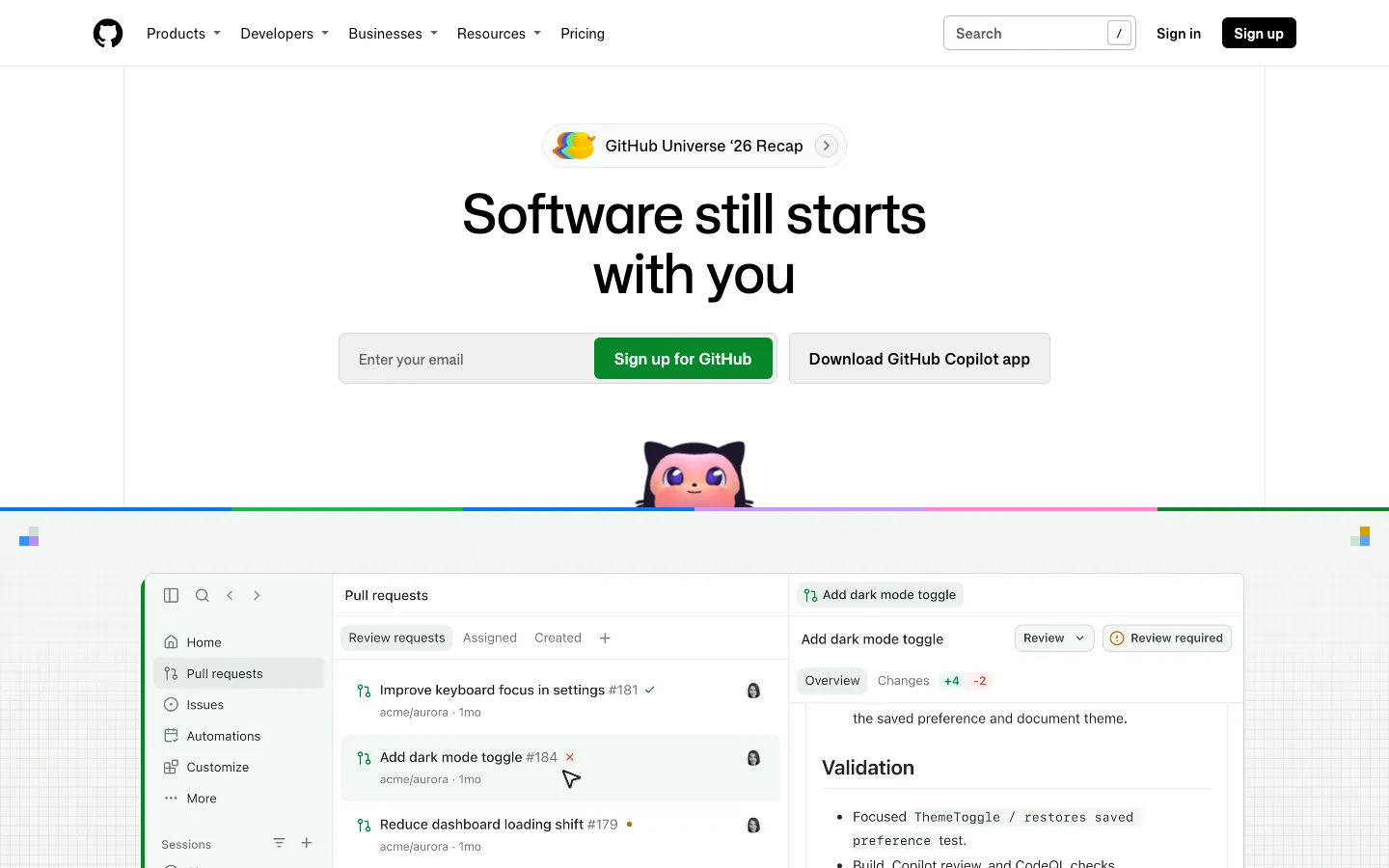
Verdict: GitHub is the strongest free research site for engineers, because the code is public; treat it as research, not a contact list.
GitHub says it has 225M+ developers. Its user search takes qualifiers such as location:, language:, followers: and repos:. So location:berlin language:go repos:>10 returns Go developers in Berlin with more than ten repositories. For strings that reach GitHub through Google, see the guides to X-ray search and Google X-ray search for recruiters.
GitHub's acceptable use policy bars using its information "for spamming purposes". That includes "sending unsolicited emails to users or selling personal information, such as to recruiters, headhunters, and job boards". The email ban covers everyone, recruiters included. Read the work here, then reach out through a channel the person invites, such as a personal site.
Best for: technical recruiters who want evidence of real work before the first message.
Watch out for: no recruiter product and no messaging. Work in private repositories does not show.
Pricing model: free to search.
8. Behance: best for creative freelancers and portfolio-first hiring
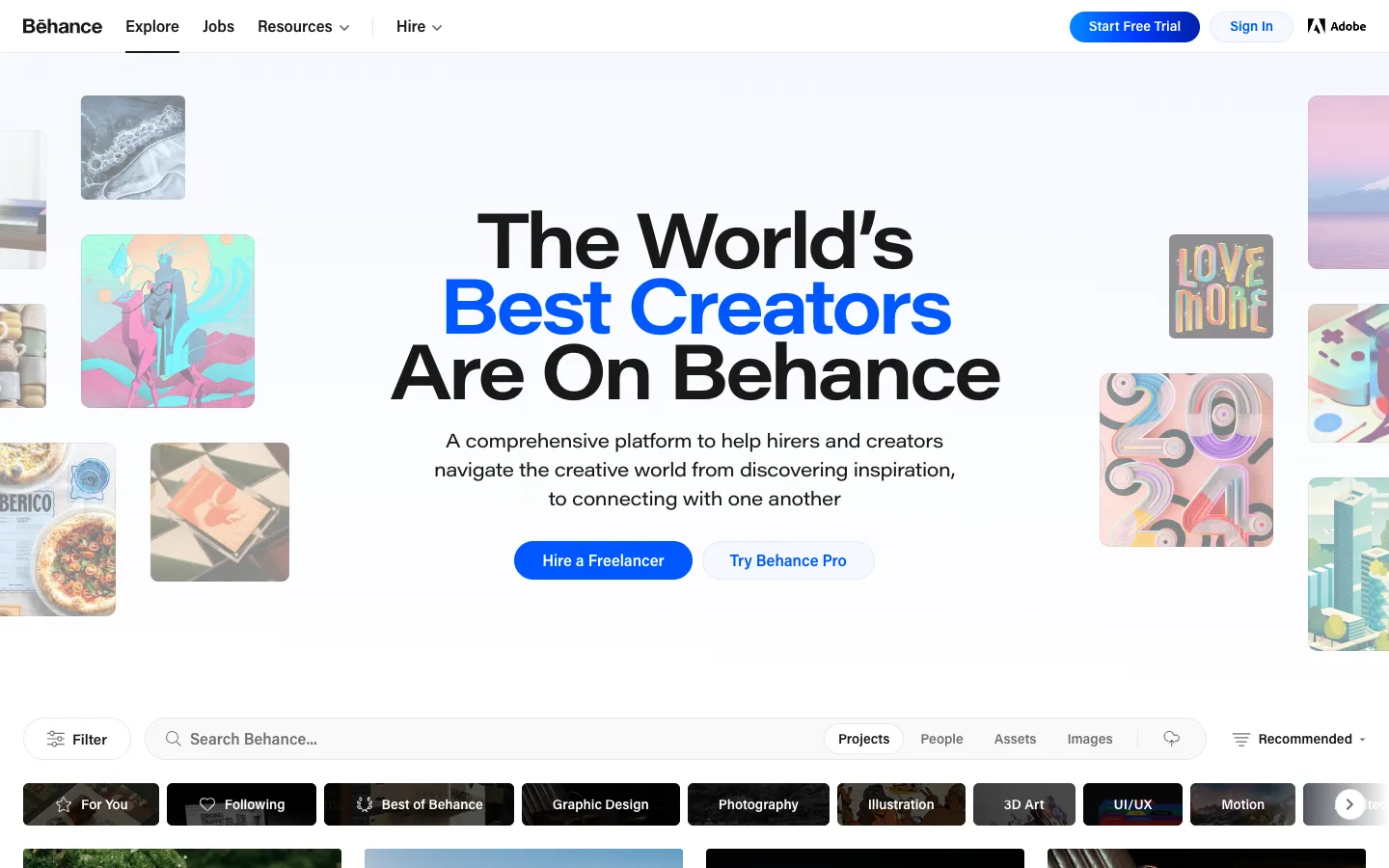
Verdict: Behance is a huge creative pool, strongest for freelance work.
Behance, founded in 2006, says it has "over 50 million members". Its hiring side offers to "get matched from a pool of over 2 million qualified freelancers" with "instant AI-powered matches". Its job list carries freelance and full-time roles.
Best for: illustration, motion, brand and creative roles.
Watch out for: the matching pool is freelancers; for full-time hires, use the job list and browse portfolios yourself.
Pricing model: free to browse and post.
9. Stack Overflow: best for reading how an engineer explains a hard problem
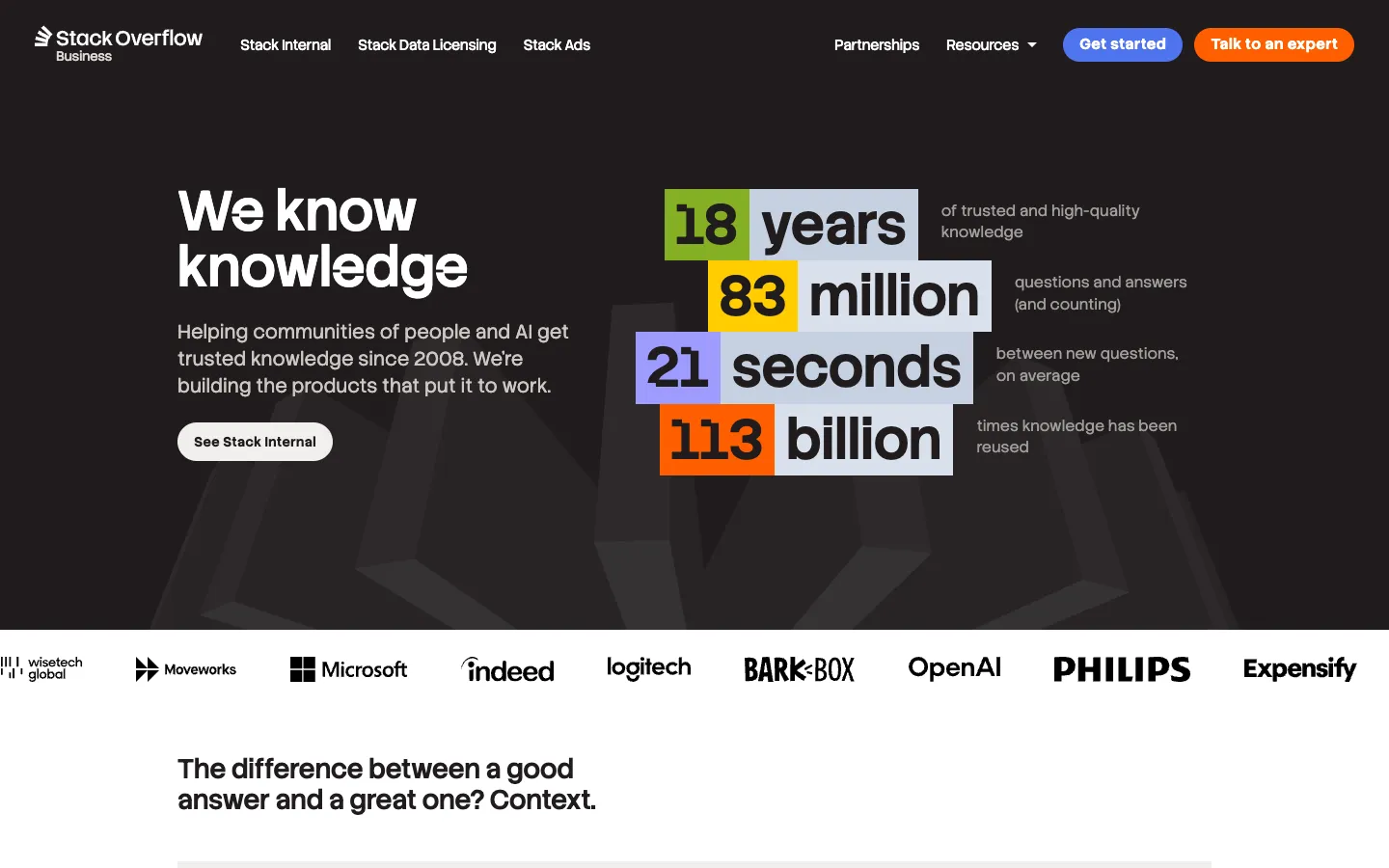
Verdict: Stack Overflow is a place to read work, not a hiring product.
Stack Overflow closed its hiring side: "We have shut down Stack Overflow Jobs and Developer Story as of April 1, 2022." Profiles and answers stay public. Browse the top answerers in a tag such as Rust to see how each one reasons.
Reputation is earned "by convincing your peers that you know what you're talking about", so it rewards time spent answering, not seniority.
Best for: checking the depth of an engineer you found elsewhere, or finding experts in a narrow tag.
Watch out for: no jobs, no recruiter search and no messaging; contact only through whatever the person lists on their profile.
Pricing model: free to browse.
10. Indeed Smart Sourcing: best for searching active job seekers at volume
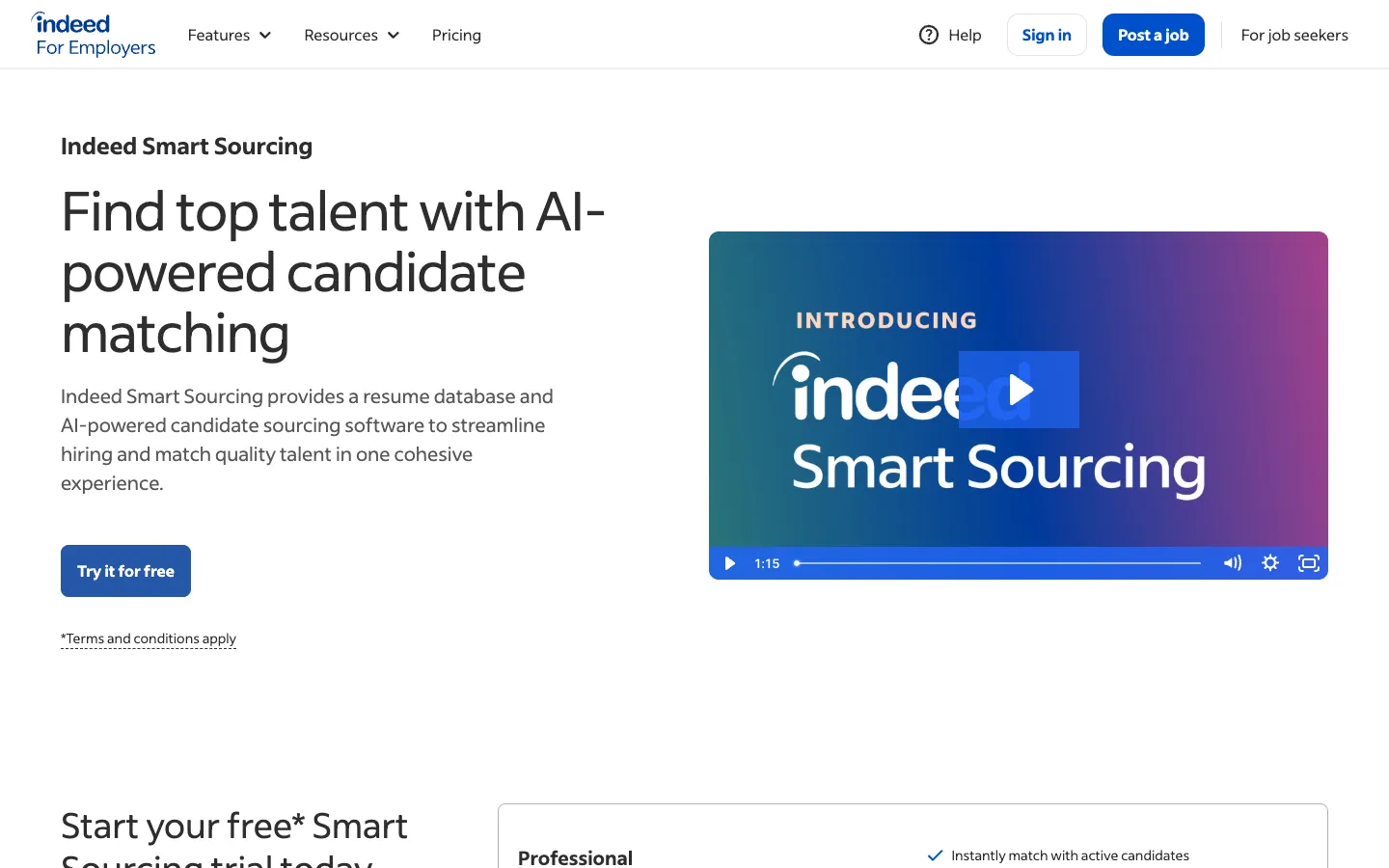
Verdict: Indeed Smart Sourcing is the largest resume database here, best when you want people who are already looking.
Indeed calls Smart Sourcing its "candidate sourcing & resume database", with "more than 380M Sourceable Profiles". Its footnote defines those as public job seeker accounts with a unique, verified email address. You get "unlimited resume search with filters like willingness to relocate, recently active, and job type", plus Boolean search.
Senior people in steady jobs are less likely to be there. The Indeed Smart Sourcing review and resume database comparison go deeper.
Best for: high-volume hourly, operations and mid-level roles.
Watch out for: mostly active seekers, and contact is capped by your plan's allowance.
Pricing model: monthly subscription with a contact allowance; price published; free 14-day trial of the Professional plan.
11. Dice: best resume search for tech and IT roles
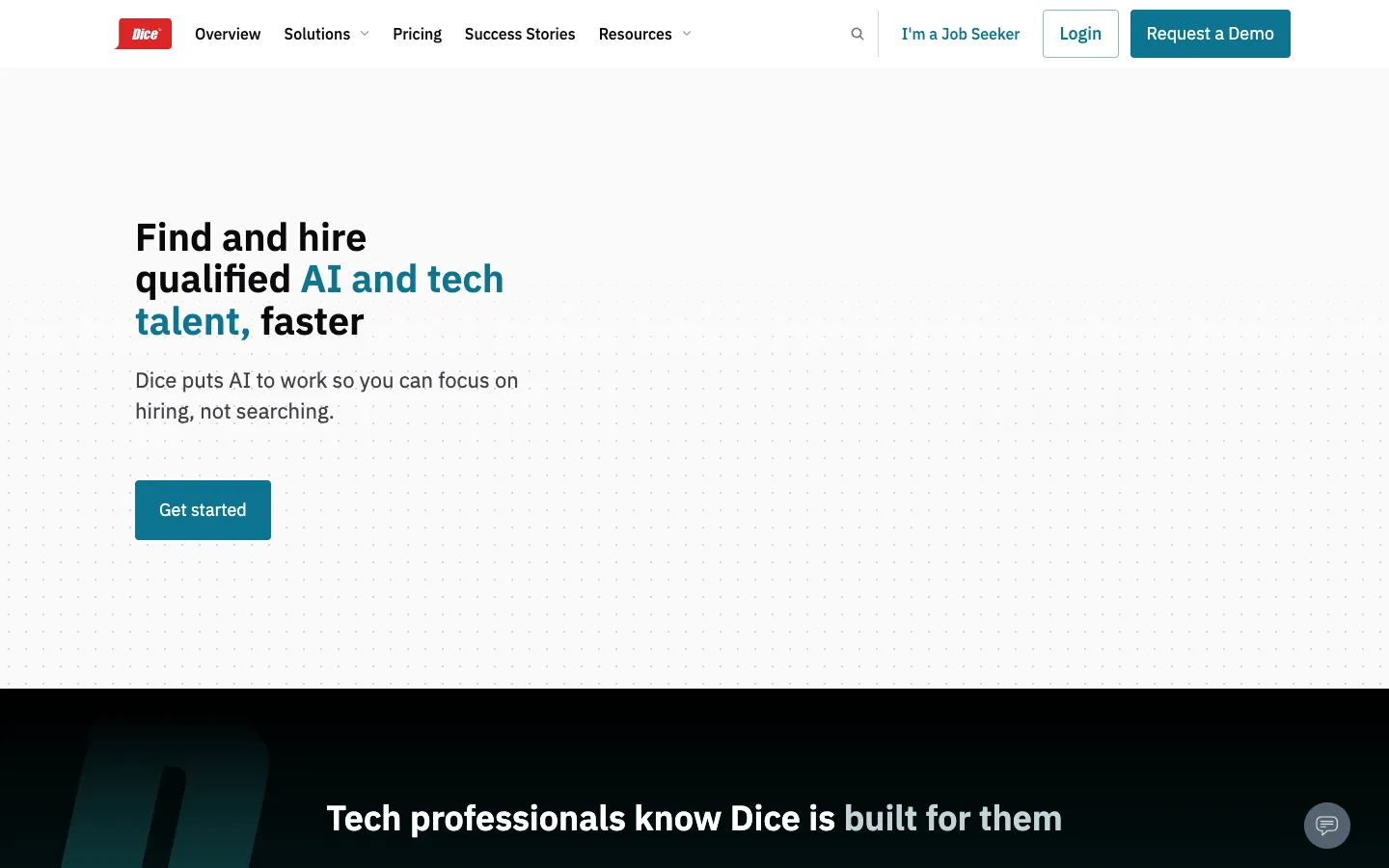
Verdict: Dice is a focused tech database, smaller than Indeed but closer to the roles.
Dice invites employers to "find and hire qualified AI and tech talent, faster". It says it has "8.5M Tech pros", that 23% of members are "not found on generalist platforms", and that 61,000 join each month. Its hiring page offers "Search candidates".
Best for: IT, contract and engineering roles.
Watch out for: the 23% figure is Dice's own claim; run a real search before you commit.
Pricing model: packages, listed on Dice's pricing page.
12. Communities: best for niche experts who talk shop in public
Verdict: communities are slow and manual, but the only place some specialists show up at all.
Reddit reported 130.3 million daily active uniques in the second quarter of 2026. Hacker News runs a monthly "Ask HN: Who wants to be hired?" thread, where people post their own availability. Kaggle, "The World's AI Proving Ground", ranks data scientists on public competition leaderboards. Slack and Discord groups and Meetup (local events) also work for niche roles.
Best for: rare specialists, open-source contributors and data scientists.
Watch out for: none of these were built for recruiting, and each sets its own rules on job posts and direct messages.
Pricing model: free.
When not to pick The Cognitive
- You want a network people join. Use Wellfound, Handshake or a job board instead.
- Your workflow lives inside LinkedIn. There is no InMail and no Chrome extension.
- You need active job seekers in bulk. Indeed Smart Sourcing fits hourly and high-volume roles better.
- You only need to read an engineer's work. GitHub and Stack Overflow are free.
What mistakes do recruiters make beyond LinkedIn?
- Ruling people out for thin profiles. Plenty of strong engineers and designers never update a profile. Read the code, answers or portfolio instead.
- One template for every site. A startup pitch for Wellfound, a German message for XING and a project-led note for a GitHub contributor each beat one template.
- Taking pool sizes as reach. Member counts are vendor claims. Run one real search before you pay.
To start, take one role you struggle to fill on LinkedIn. Pick the site where that craft leaves a trace and one tool that searches and contacts, run both for two weeks and count replies. The guide to sourcing beyond LinkedIn Recruiter adds public-record sources and a first message. Job seekers will find more in the list of job search sites.
Try The Cognitive on that same role: the 7-day trial needs no card and shows your first 100 people free. Start free with The Cognitive.
Sources
- iHire, The State of Online Recruiting 2026 (318 employers and 1,054 job seekers, US, July to August 2026). ihire.com
- Gem, Key takeaways from the 2026 Recruiting Benchmarks Report, 1 December 2025 (165M applicants, June 2021 to May 2025). gem.com
- Reddit, Q2 2026 earnings press release, 30 July 2026. press release (PDF)
- LinkedIn, About LinkedIn; LinkedIn Help, commercial use limit on search. about.linkedin.com; linkedin.com
- GitHub, About page; Searching users; Acceptable Use Policies, sections 7 and 8. github.com/about; docs.github.com
- Stack Overflow, What is reputation?; Stack Overflow Jobs closure notice. stackoverflow.com
- Each listed site's own pages: wellfound.com, doximity.com, joinhandshake.com, xing.com, dribbble.com, behance.net, indeed.com, dice.com, news.ycombinator.com, kaggle.com, meetup.com.
Frequently Asked Questions
What is the best alternative to LinkedIn?
There is no single replacement for LinkedIn, which says it has more than 1 billion members; the best alternative depends on who you need. XING is the closest professional network in German-speaking Europe, Wellfound suits startups, Handshake suits students and graduates and Doximity suits US physicians. For recruiters who want to search across fields and contact people in one account, The Cognitive ranks first.
Where can recruiters find candidates who are not on LinkedIn?
Look where the work for the role is public. Engineers publish on GitHub and Stack Overflow, designers on Dribbble and Behance, and specialists talk shop on Reddit, Hacker News and Kaggle. Open-web search tools such as The Cognitive search public profiles from many sources at once.
Can I email developers I find on GitHub?
Not unsolicited: GitHub's acceptable use policy bars using information from the site for spamming, including sending unsolicited emails to users, and it bars selling that information to recruiters, headhunters and job boards. Use GitHub to read someone's work, then reach out through a channel they invite, such as a personal site.
Are there free sites like LinkedIn for recruiting?
Yes, several are free to search: GitHub, Stack Overflow and communities such as Reddit, Hacker News and Kaggle cost nothing to browse. Wellfound and Handshake let employers post jobs for free, and Dribbble has a free tier that lets you search members and send a proposal request. Resume search on Indeed Smart Sourcing and Dice is paid, and open-web sourcing tools are paid beyond their free tiers or trials.
Is Stack Overflow still a place to hire developers?
Not as a hiring product: Stack Overflow shut down Stack Overflow Jobs and Developer Story on 1 April 2022. Profiles, answers and reputation are still public, so recruiters use it to read how an engineer explains problems, with no recruiter search or messaging.
How do I recruit on Reddit, Slack or Discord without getting banned?
Read each community's rules first, because every subreddit, Slack workspace and Discord server sets its own policy on job posts and direct messages. Post only where hiring is welcome, such as a dedicated jobs channel or Hacker News's monthly "Who wants to be hired?" thread, and join as a member before you recruit.
What are good sites like LinkedIn for job seekers?
For job seekers, job boards matter as much as networks: iHire's 2026 survey found 82.1% of job seekers use general job boards. Wellfound and Handshake combine a profile with job listings, and XING does the same in German-speaking Europe.
Related reading
- LinkedIn Recruiter Alternatives in 2026: 10 Ways to Find Candidates Beyond LinkedIn
- LinkedIn X-Ray Search in 2026: How It Works, 15 Strings, and the Tools That Replace It
- AI Sourcing Tools Compared: The 10 Best for Finding Candidates in 2026
- Best Retail Hiring Software in 2026: 9 Tools for Store Teams and Store Leaders
- 10 Best CRMs for Staffing Agencies in 2026, Scored
- Best EOR Companies in 2026: 11 Employer of Record Providers Ranked, Plus the Step Before